


“Organization Culture Transformation” is one of the Panasonic Group’s major transformative actions in human capital management alongside the other four key elements: “Human Resource Portfolio Transformation,” “Develop & Appoint Transformational Leaders,” “Promotion of Diversity, Equity & Inclusion (DEI),” “Transformation in HR Function (Utilization of AI).” Guided by the 6 Principles of Organization Design, we take a strategic approach to shaping and evolving our organizational culture to accelerate this transformation.

Approach to Transformation
Organization Culture Transformation is not simply about improving the workplace environment by making it more comfortable or fostering better communication. No matter how strong a strategy may be, it is ultimately people who bring it to life. Whether a strategy delivers results depends largely on the actions of each individual and on how the organization operates as a whole.
That is why we believe organizational culture should not be left to develop organically on its own. Instead, it must be intentionally designed and shaped by business leaders and organizational leaders with a clear sense of purpose and direction.
To this end, we have utilized a framework called the Organization Performance Model (OPM) to establish the Group-wide "the 6 Principles of Organization Design," which guides leaders in designing their organizations according to their strategic priorities and business challenges, enabling them to build a culture that drives results.
Organizational Culture Design Framework (OPM※)
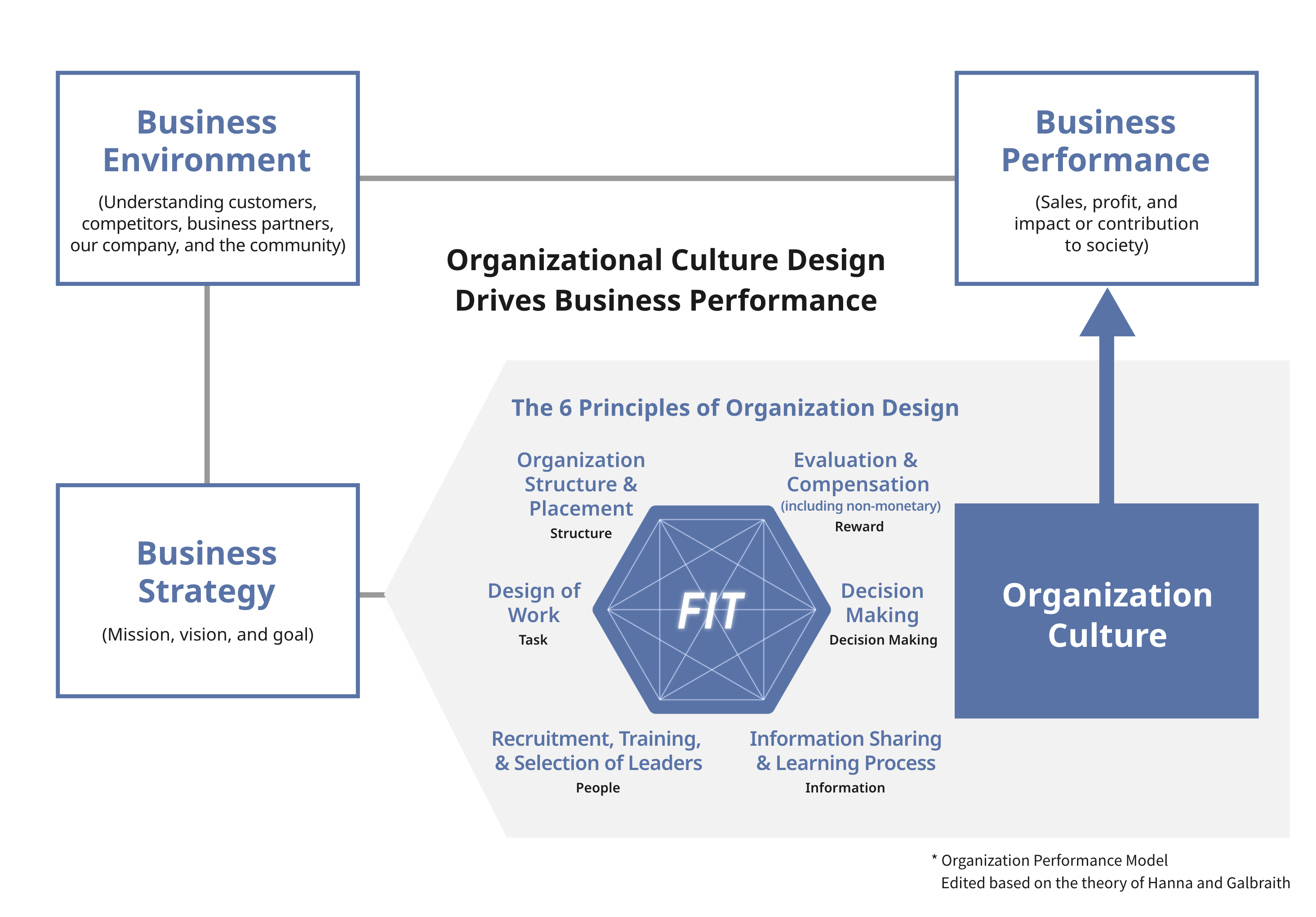
The 6 Principles of Organization Design
The 6 Principles of Organization Design consist of the following elements: “Evaluation & Compensation”, “Decision Making”, “Information Sharing & Learning Process”, “Recruitment, Training, & Selection of Leaders”, “Design of Work,” “Organization Structure & Placement.” The six elements do not function independently. Rather, they are interconnected and work together as an integrated whole to ‘UNLOCK’ the full potential of the organization and support effective strategy execution.
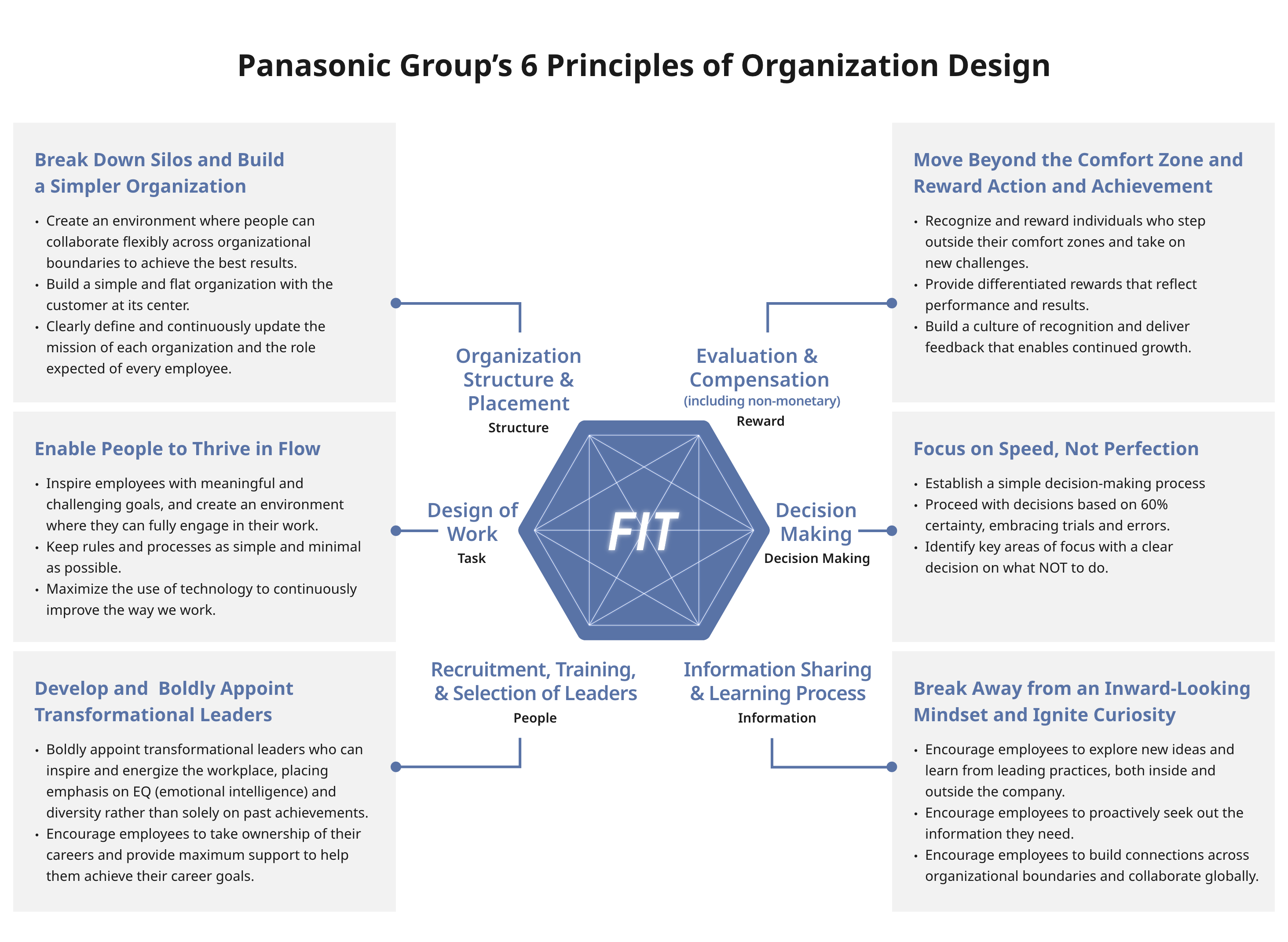
These principles were not created from scratch. They are a structured framework built upon the management philosophy valued by our founder, Konosuke Matsushita, and adapted to the realities of today's organizational environment.
These are intended as Group-wide principles. However, because business strategies, market environments, and organizational challenges vary from one organization to another, there is no one-size-fits-all model for organizational design. If there are 100 organizations, there will be 100 different structures. The key is to translate these principles into the approach that best suits each organization. This requires business leaders and organizational leaders to intentionally design their organizations, foster a culture that enables results, engage employees, and drive transformation in line with their specific challenges and objectives.
A Practical Framework for Executive
Leadership Responsibility
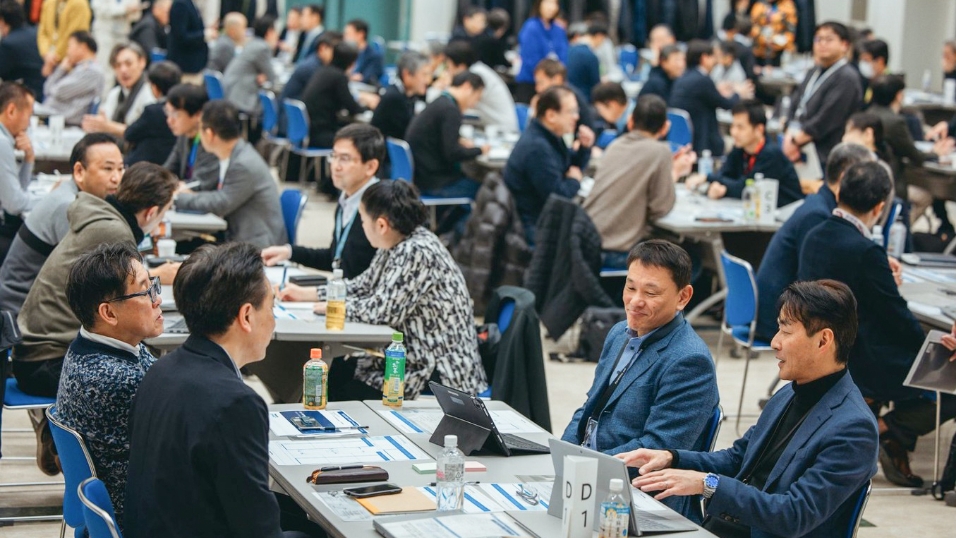
To empower executives and organizational leaders, including heads of business divisions across the Group, to take the lead in driving cultural transformation within their own organizations, we regularly conduct leadership development programs tailored for senior management. Over FY2025 and FY2026, a total of 732 participants attended these programs.
In addition, we have established a cross-Group culture transformation committee, through which selected members from each Group company provide ongoing support for organizational transformation initiatives led by senior executives.
Initiatives for management leaders | Outline |
|---|---|
Organization Design Workshop | Develop practical knowledge and skills for strategically shaping organizational culture, based on the 6 Principles of Organization Design. |
Group Management Workshop | Study leading examples of organization culture transformation from both inside and outside the Group. |
Program for Organization Culture Transformation | Combine case-study learning with hands-on workshops to build skills for organizational culture transformation. |
Resilience Program | A training program grounded in medical and psychological insights that enhances individual performance, enables people to turn adversity into growth for themselves and their organizations, and strengthens their ability to leverage diversity. Learn more about the training |
Through these initiatives, a culture of embracing challenges without being constrained by precedents or fixed assumptions is taking root across our organizations, creating visible signs of change.
Explore examples of these transformation efforts below:
Our Founder’s Philosophy in the 6 Principles of Organization Design
– Concept of “Decision-Making” and “Evaluation & Compensation”–
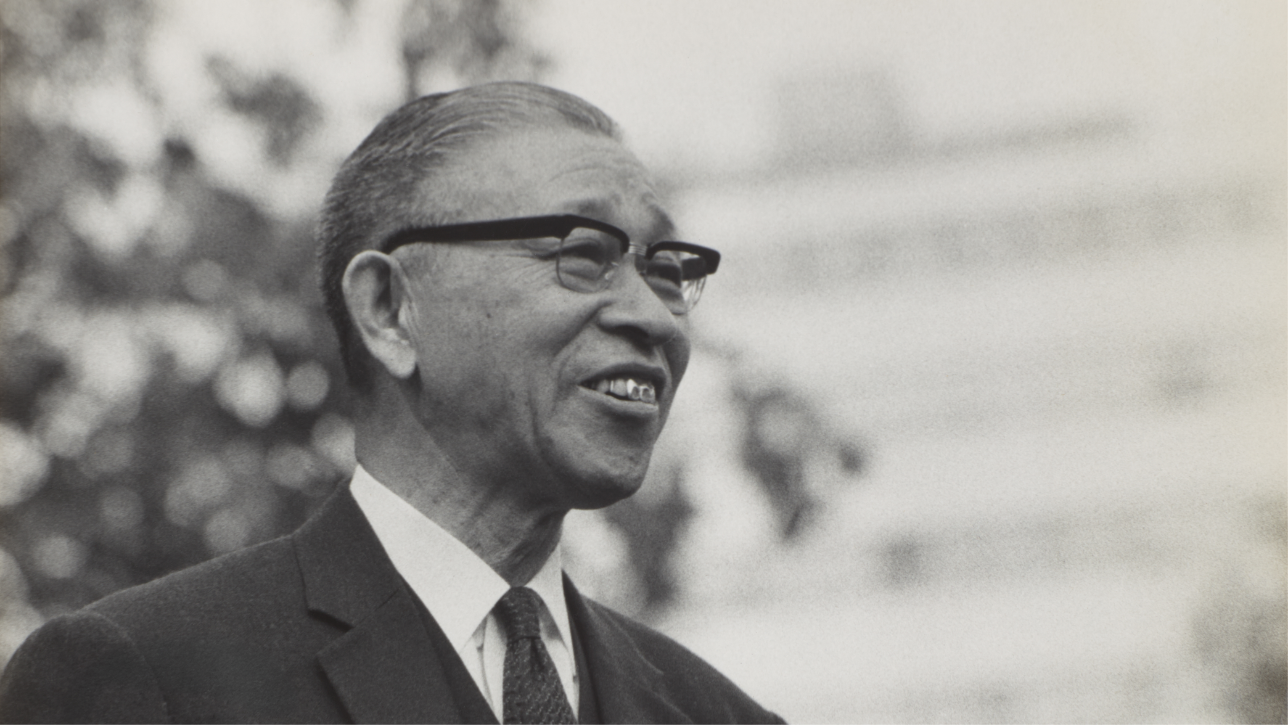
The core concept of “the 6 Principles of Organization Design” is not something new to the Panasonic Group; it is a systematization of the management philosophy that founder Konosuke Matsushita valued, which is adapted to the current organization environment. In his book “Real Leader’s Requirements” (published by PHP Institute, Inc.), the founder outlined 102 principles for what is required of any leader of an organization. Please see our founder’s words (excerpted below).
Essence of Decision-Making
– Strength to Determine and Delegate –
The founder once stated “The ability to make swift decisions and take immediate action for critical matters is an essential requirement for any leader.” He emphasized that leaders in charge must be capable of making agile decisions. As he put it, “It is unacceptable to spend days neither making decisions nor taking action as needed.” His words suggest a delay in judgment can lead to missed opportunities and a loss of competitive edge.
Meanwhile, he also highlighted the importance of not shouldering all decision-making responsibilities alone. His remark is “The power of an individual is inherently limited. When someone tries to push themselves or others beyond those limits, failure results. The best approach is to work within a range that aligns with one’s abilities. If a task appears to exceed those capabilities, it will be preferable to break it down and delegate it among several people.” By proper delegation of authority, we can enhance the speed of decision-making across the entire organization.
Panasonic Group is returning to this philosophy, striving to further instill a culture with decision-making that embodies speed and flexibility.
Concept of Evaluation & Compensation:
Employees’ Challenges & Results
The founder also said, “When there are achievements, they should be rewarded. Then, if there are mistakes, they should be punished accordingly. Only when fairness in reward and punishment is properly implemented, the discipline of the Group can be maintained with its employees having the motivation to strive.” He emphasized that fair evaluation and compensation are essential for the growth of an organization.
By proper assessment of achievements and responding to a spirit of challenge, the enthusiasm of employees can be drawn out further, leading them to take on even greater challenges. He also remarked, “I believe there is nothing lonelier than having your efforts go unrecognized by others. Receiving praise brings joy and boosts your confidence. It also ignites a desire to achieve even more, serving as motivation for growth. Of course, it is important to address failures and mistakes when necessary. However, when any employee does something commendable or achieves certain results, offering heartfelt praise and appreciation is one of the keys in leadership.” Appropriate evaluation and feedback will serve to enhance employee motivation and become a driving force for future growth.
Panasonic Group is working to create a culture which appropriately evaluates each employee based on these values and ideas.
Please visit Human Capital Management Data of the Panasonic Group for information on our key initiatives, including human resources and work styles.