


The environment in which each employee can take on challenges and demonstrate their abilities is the key to the sustainable growth of the Panasonic Group. What are the challenges we are currently facing? We have delved into these challenges from both a group-wide perspective and the unique viewpoint of the Japan region, exploring the direction for their resolution.

Group-wide Challenges
At the Panasonic Group, we conduct an annual Employee Opinion Survey targeting approximately 150,000 employees globally. We have been working to improve “employee engagement” and “employee enablement.” The favorable response rates for these areas have been on the rise due to initiatives such as work style reform, reaching a higher level compared with other Japanese companies. However, in order to stand shoulder to shoulder with globally top-class companies, we aim for even greater heights.
Trends in Favorable Response Rates for “Employee Engagement” and “Employee Enablement”

Employee Opinion Survey results of Panasonic Group employees globally
The key factors are “motivation with encouragement from the company or supervisors” and “no significant barriers to take on challenges.” These are part of the nine questions that make up the two main categories of “employee engagement” and “employee enablement.” However, recent survey results indicate that the favorable response rates for these factors tend to be lower compared to other questions.
Favorable Response Rates for Each Question
(as of FY2025)
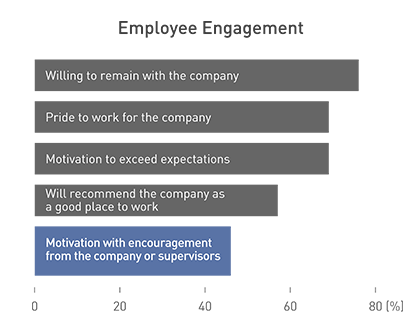
Target: Panasonic Group (Global)
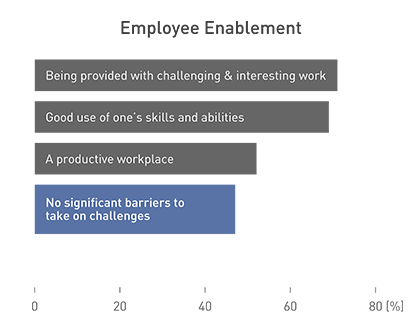
Target: Panasonic Group (Global)
When comparing the favorable response rates for “motivation with encouragement from the company or supervisors” and “no significant barriers to take on challenges” across the Japan region, other regions, and the overall group, the Japan region continues to show lower levels than other regions. This indicates that the environment for each employee to fully realize their potential and take on challenges is not sufficiently established. To further accelerate the group’s transformation and growth, we will address this issue and create an environment where more employees can actively take on challenges and grow.
Trends in Favorable Response Rates for “Motivation with encouragement from the company” and “No Significant Barriers to take on Challenges”
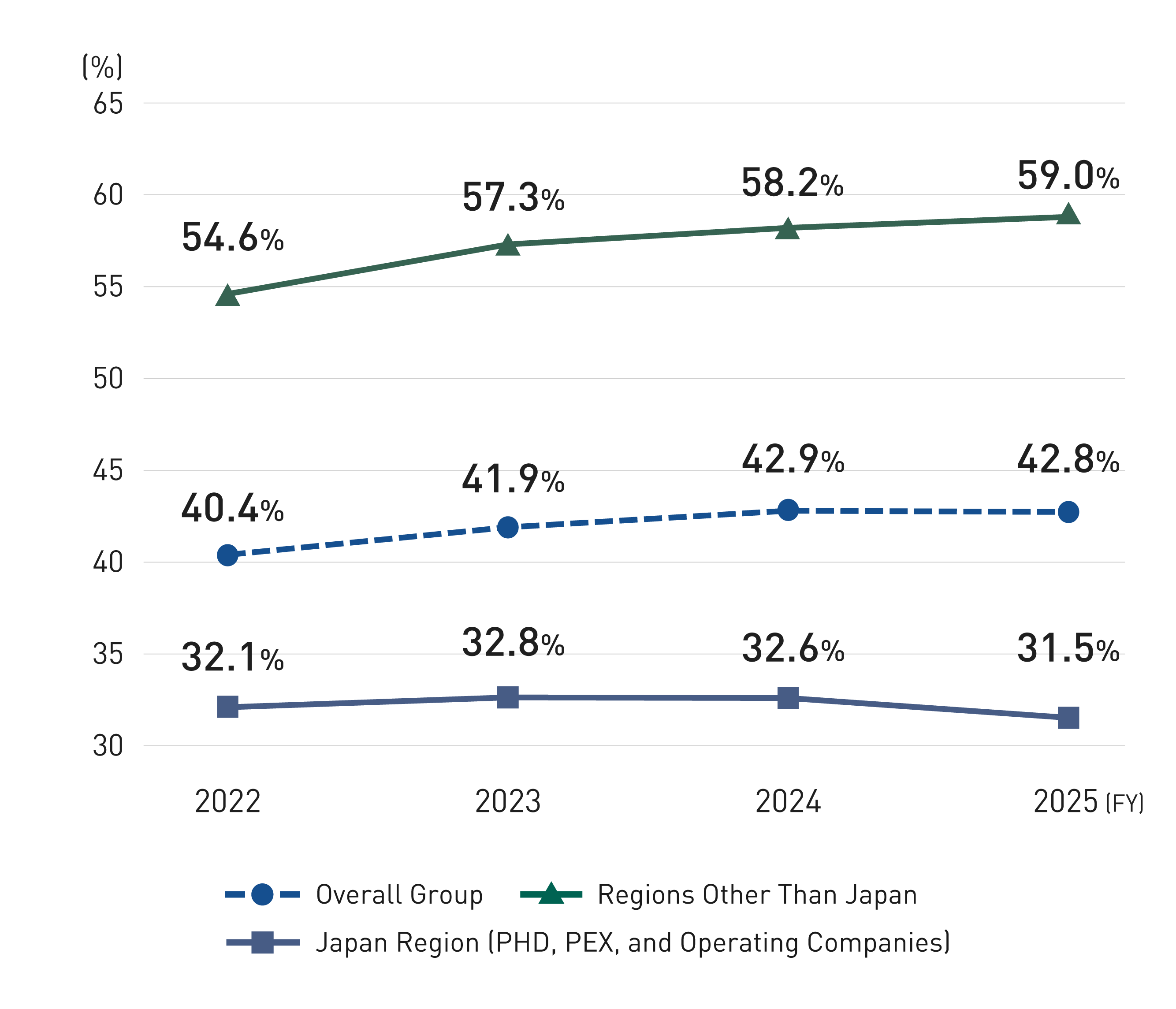
Key Challenges in the Japan Region
When focusing on the Japan region, it has become clear that there is significant room for improvement in the opportunities for the success of “women,” “career-hires,” and “young employees.” Creating an environment where these diverse talents can maximize their abilities is an important theme for the sustainable growth of the entire group.
Women and Career-hires
- Leveraging Diversity in Decision-Making -
The greater success of women and career-hires is essential for decision-making that leverages diversity. While the percentage of women among all management positions (hereafter referred to as “female managers”) has been increasing year by year, the percentage of women among all employees in Japan is about 22%, whereas the percentage of female managers is only 7.9%, indicating a significant gap. Additionally, the Employee Opinion Survey revealed that the favorable response rate to the question “I can achieve my career goals at this company” is lower for women compared to men.
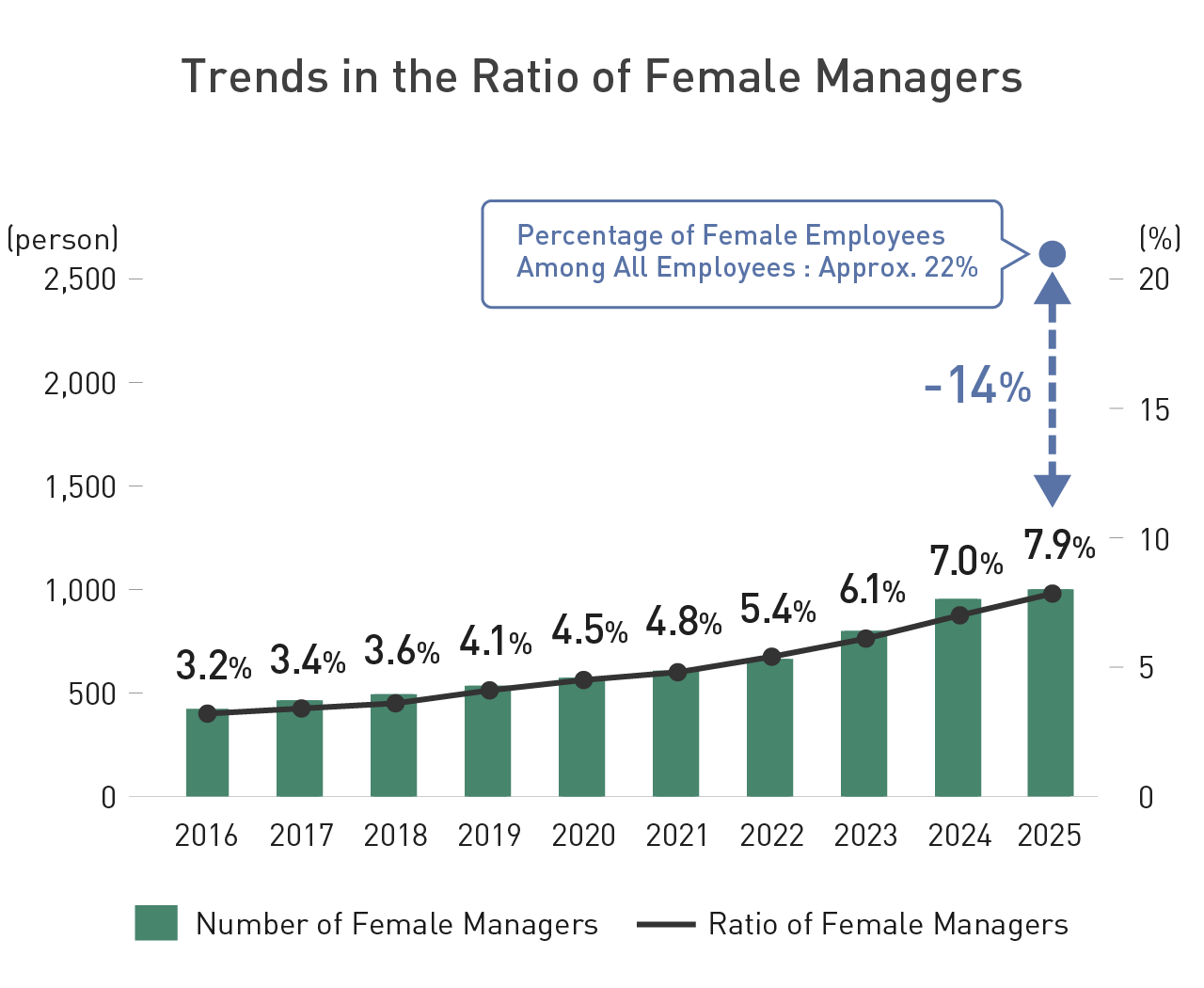
Target: Panasonic Group (Japan Region (PHD,PEX, and Operating Companies))
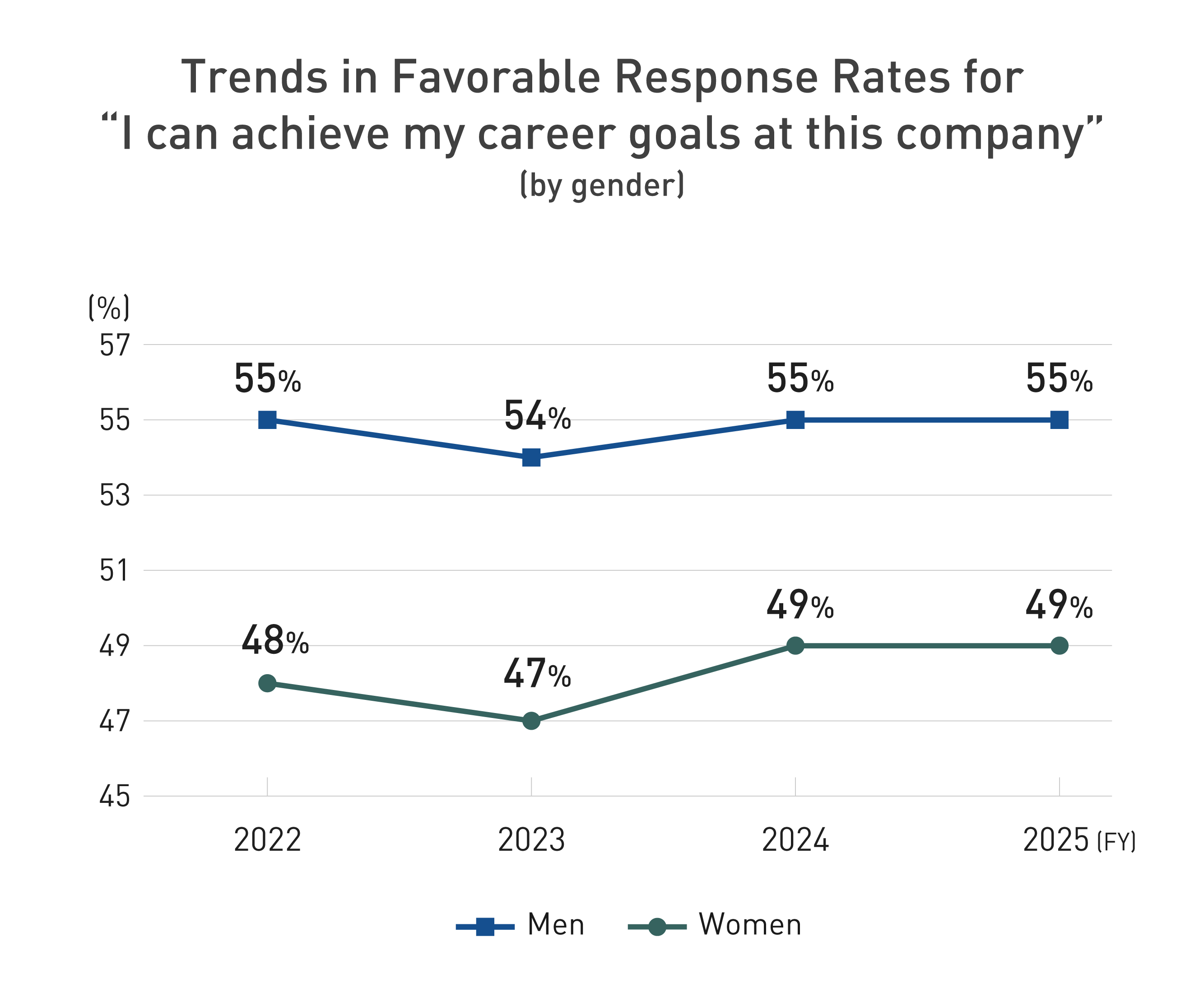
Target: Panasonic Group (Japan Region (PHD,PEX, and Operating Companies))
On the other hand, career-hires account for approximately 26% of all employees, indicating a steady increase in diversity. However, their proportion among decision-making positions, such as department heads, remains around 13%.
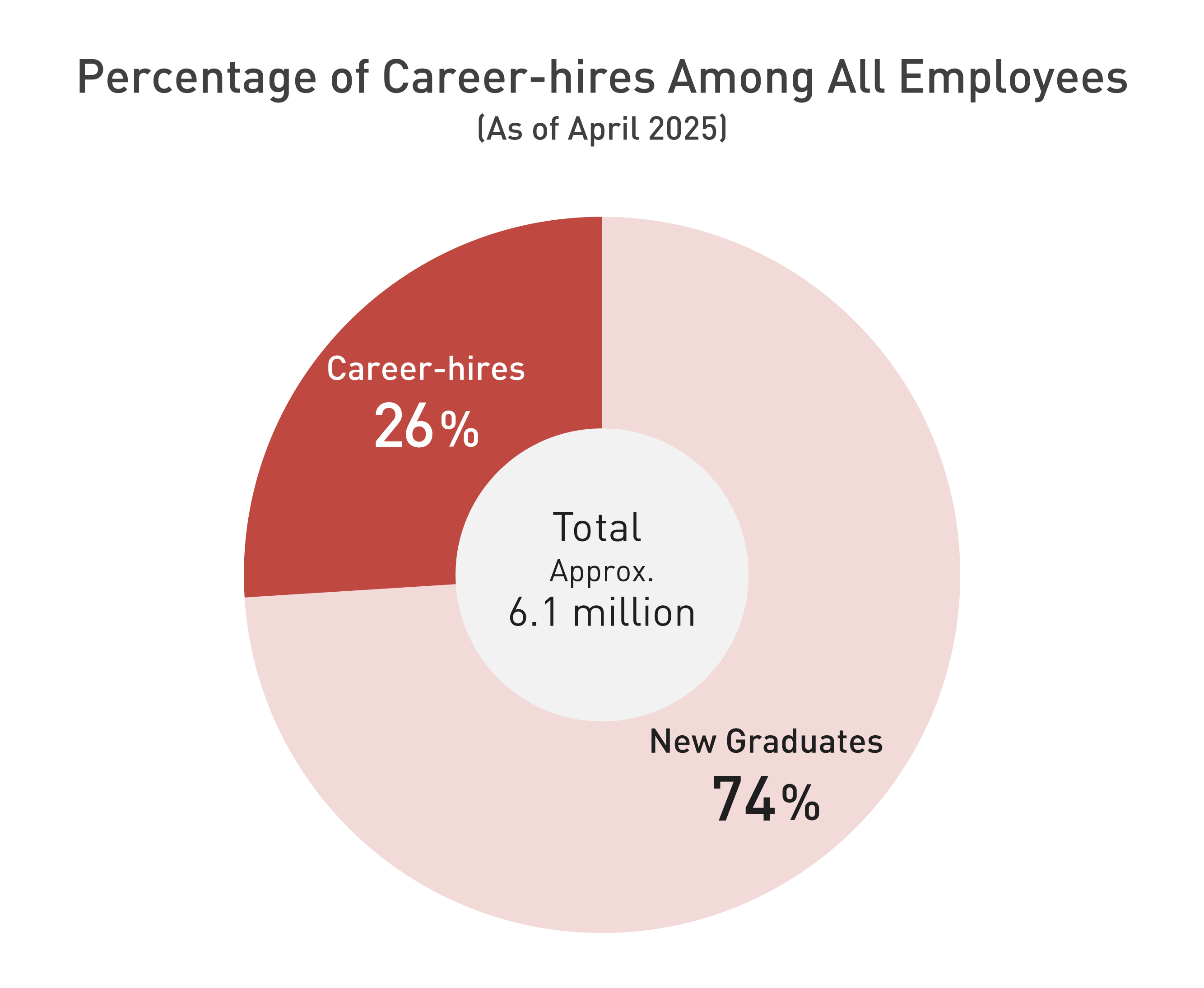
Target: Panasonic Group (Japan Region (PHD,PEX, and Operating Companies))
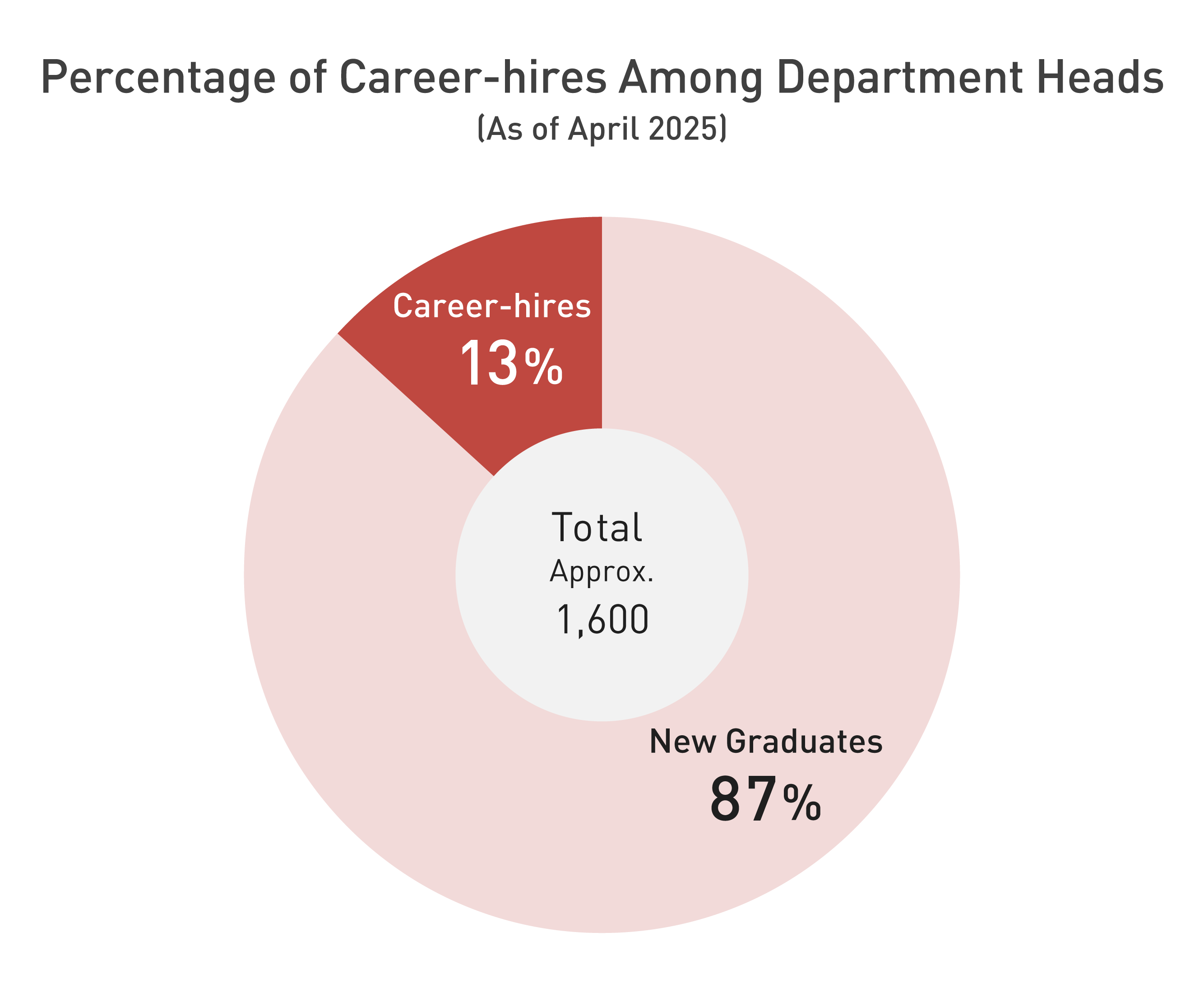
Target: Panasonic Group (Japan Region (PHD,PEX, and Operating Companies))
Young Employees
- Expanding Opportunities for Future Leaders to Thrive -
We must take action to provide young employees with more opportunities that can foster their high morale further. The turnover rate for those with less than 10 years of service is rising and remains high, while the favorable response rate for employee engagement tends to decline as employees enter their second and third years with the company.

Target: Panasonic Group (Japan Region (PHD,PEX, Operating Companies, and some affiliate companies))

Target: Panasonic Group (Japan Region (PHD,PEX, Operating Companies, and some affiliate companies))
Solving These Challenges
We believe that these challenges we face are common to many Japanese companies. That is why we believe that by transforming and evolving the Panasonic Group, we can have a significant impact on Japanese society as well.
Realizing decision-making that leverages diversity and creating an environment where future leaders can thrive with enthusiasm is not only important for companies but also for society as a whole. In order to remain a company that meets the expectations of society and our customers in the future, we will advance the following initiatives to address these challenges.
Three Initiatives to Realize our Aspiration

Strategy based on the 6 Principles of
Organization Design
Appoint diverse, transformation leaders filled
with potential
Enhance employee experience & HR
management with cutting-edge technology