

The "Friendly Menu"
Healthy dishes that reduce environmental impact
to change your awareness and behavior
2025.12.3
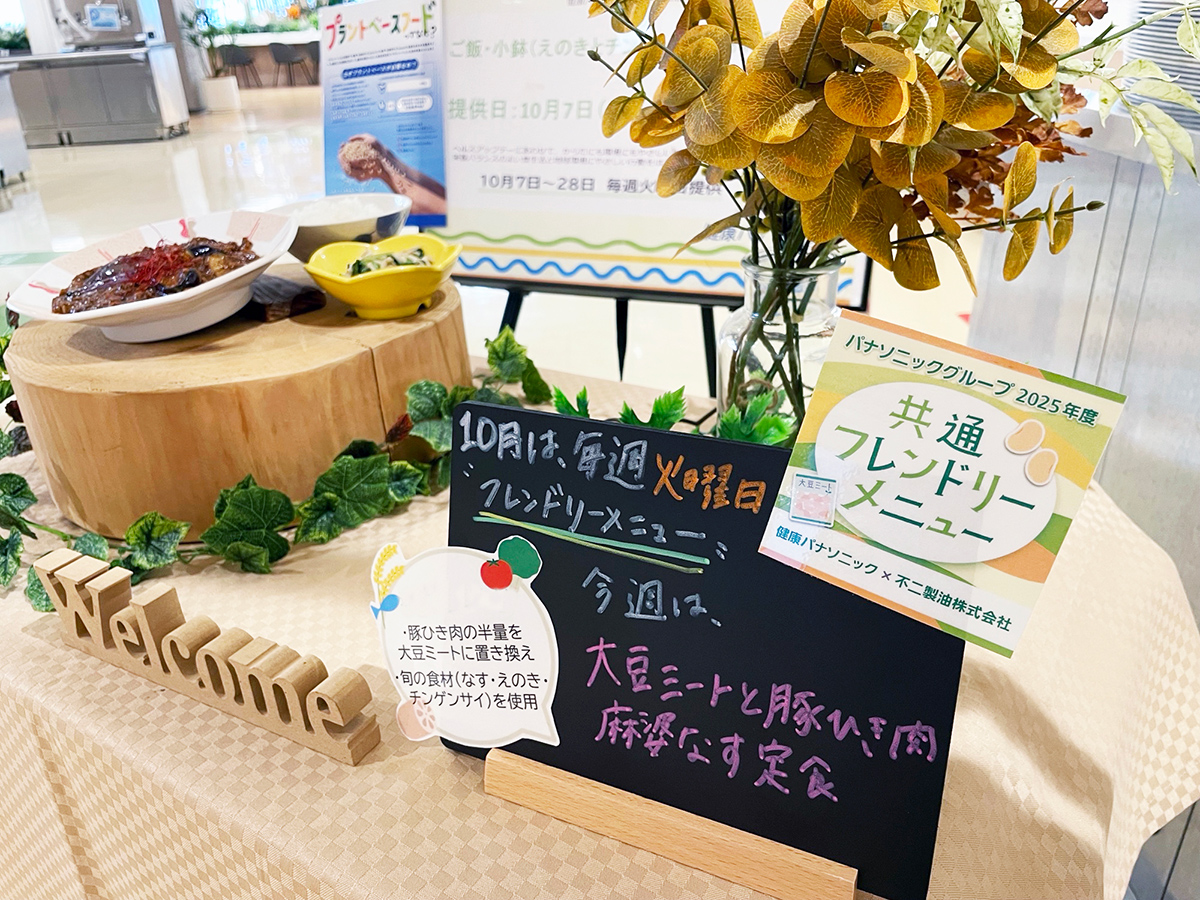
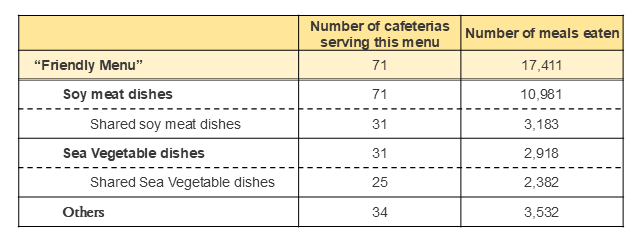
A display card appeared next to the menu in the employee cafeteria. Dishes billed as the "Friendly Menu" that are healthy and aim to reduce environmental impact were served at the Panasonic Group's employee cafeteria. The campaign ran from October 1 to 31, 2025, and a total of 17,411 servings of menu items designed to reduce environmental impact were eaten across 71 locations. Dishes using soy meat, which is more effective at reducing greenhouse gas emissions than livestock products, are available at all locations; dishes using seaweed from “Sea Vegetable”, which is attracting attention as a sustainable form of farmed seaweed, are available at 31 locations. Naturally, these meals are nutritionally balanced, with attention to the amount of salt and vegetables.
This event, which combines food education and environmental activities, was led by the Panasonic Health Promotion Department of Panasonic Health Insurance Organization and the Corporate Citizenship Department of Panasonic Operational Excellence Co., Ltd. (hereinafter referred to as PEX). The “Friendly Menu” items shared across the Group were developed with the cooperation of Fuji Oil Co., Ltd. And SEA VEGETABLE COMPANY, and a total of 5,565 servings were offered during the period. “Small contributions” that promote everyday awareness of the global environment are being implemented in employee cafeterias nationwide, helping to raise employees’ environmental awareness.
Addressing social issues through everyday mealtimes
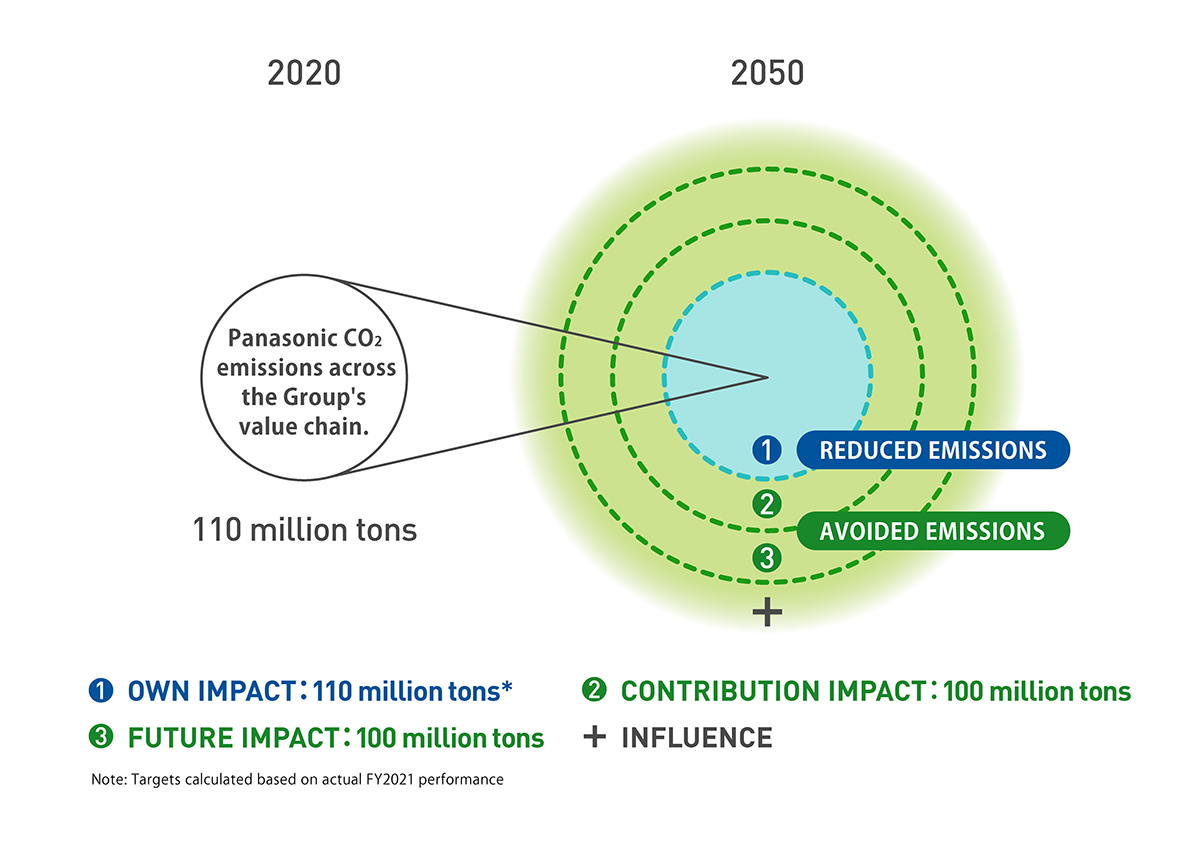
The Panasonic Group has launched the environmental initiatives "Panasonic GREEN IMPACT" (hereinafter referred to as PGI), aiming to "reduce CO₂ emissions by more than 300 million tons" by 2050. Among these initiatives, "+INFLUENCE" positions corporate citizenship activities as a key pillar for involving many people and fostering individual behavioral change and environmental awareness. The “Friendly Menu” acts as the gateway to this initiative. Eating from the Menu prompts employees to take a moment to choose options that reduce environmental impact, providing an opportunity for behavior change.
At each site, employees engage in their daily work, aiming to address global environmental issues as a key business materiality. On the other hand, when asked about their individual actions, many of them say that they are unsure how to contribute to addressing the issues. The advantage of the “Friendly Menu” is its simplicity: all they have to do is to choose a single dish. They can take part in environmental initiatives through their meal.
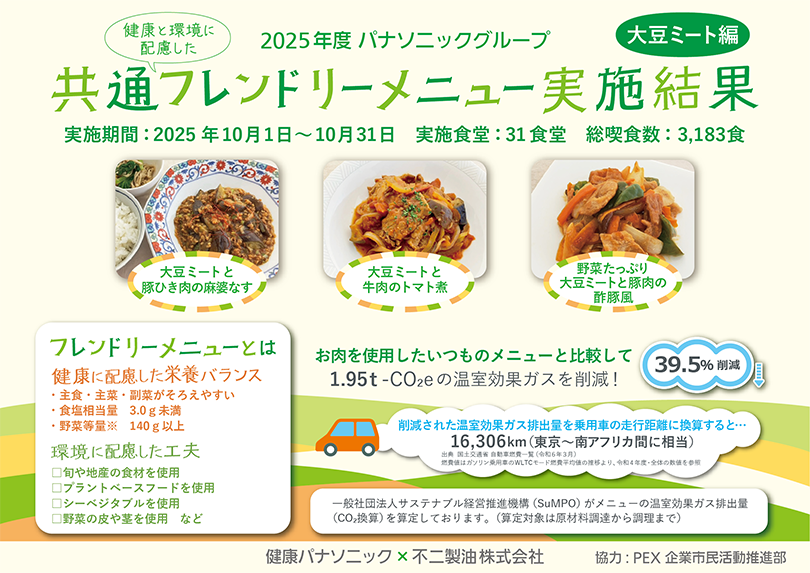
Furthermore, this time the results were quantified so that employees could reflect on their participation even after the event, thinking, “Oh, that’s right, I ate that on that day.” The number of meals (3,183 servings) of the shared “Friendly Menu” using soy meat was tallied, and the total greenhouse gas emissions reduction effect (CO₂ equivalent) was shared with employees. The results were reported by showing that the accumulated selection of the “Friendly Menu” was equivalent to a reduction in greenhouse gas emissions produced by a car traveling 16,306 kilometers.*
* The reduction amount was calculated by the Sustainable Management Promotion Organization (General Incorporated Association).
Keyword 1: "Turn interest into action"
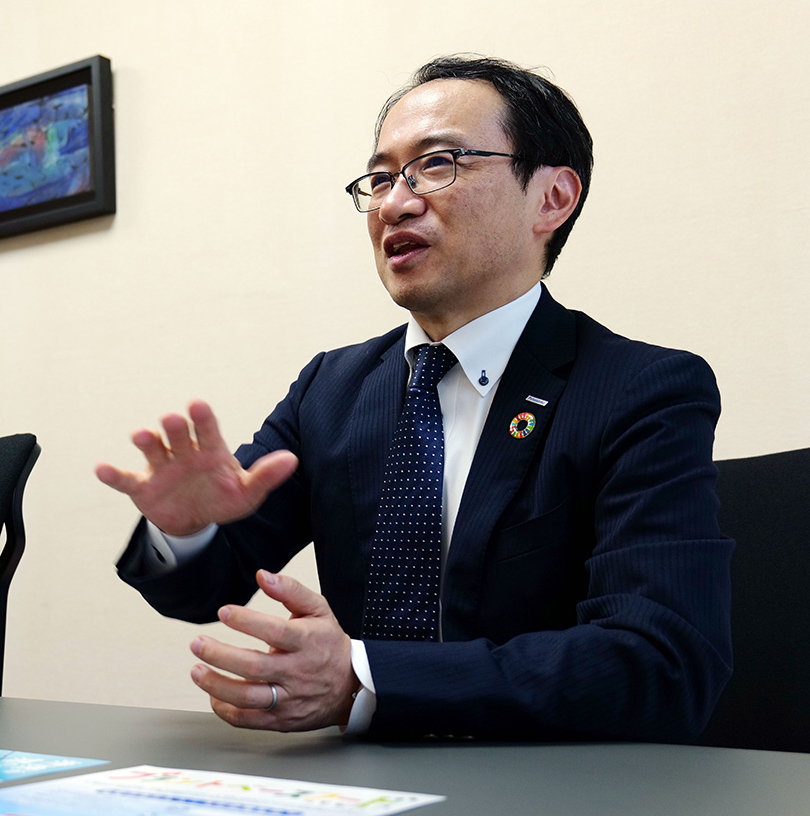
Shuji Shigyo, Corporate Citizenship Department of PEX
The “Sea Vegetable” used in these dishes was produced by SEA VEGETABLE COMPANY, which has entered into a joint demonstration agreement with the technology division of Panasonic Holdings. This “Sea Vegetable” is a new ingredient that has also been featured on news programs, and the Panasonic Group promotes understanding of nature-positive practices and encourages behavioral change through technological collaboration. I feel that, along with global environmental changes, interest in these ingredients is also increasing.
When we consider the topic of food from the perspective of corporate citizenship activities, it encompasses a wide range of issues, including climate change, virtual water, resource circulation, and human rights. However, when we surveyed employees, many said that they are interested in these issues but haven’t taken any action yet. They may be unsure how to participate by themselves, but the “Friendly Menu” creates a more accessible environment. We believe that choosing an appropriate meal is the first step and that continuing this action along with a growing understanding of the need to reduce environmental impact will lead to a significant positive effect.
Health literacy and food literacy
In 2001, the Panasonic Group launched “Healthy Panasonic,” a health promotion initiative, through a three-way collaboration of the company, the labor union, and the health insurance association, and in 2012 it began offering group-wide health event dishes in employee cafeterias. Panasonic's health activities, which began in 2019, aim to improve employees' health literacy and encourage them to practice healthy lifestyles.
Through group-wide efforts over the years, health promotion has gradually spread throughout the company, and awareness of improving lifestyle habits, such as exercise and diet, has steadily increased. Since 2024, “Healthy Panasonic” has been promoting activities under the future-oriented themes of “investing in your health” and “creating an environment where you can easily become healthy” while also encouraging actions that are healthy and help reduce environmental impact.
At the 2021 Tokyo Nutrition for Growth (N4G) Summit, the Japanese government committed to “further improving the nutritional status of its people by promoting nutrition- and environment-friendly diets while also taking advantage of innovation, digitalization, and science and technology”. In response to this, the Panasonic Health Promotion Department developed menu items that support health and help reduce environmental impact—an initiative unique to our Group, which promotes PGI. The menu items for employee cafeterias in each region are developed by the respective contracted food service companies, and we called on them to hold food education events with the common themes of health and environment.
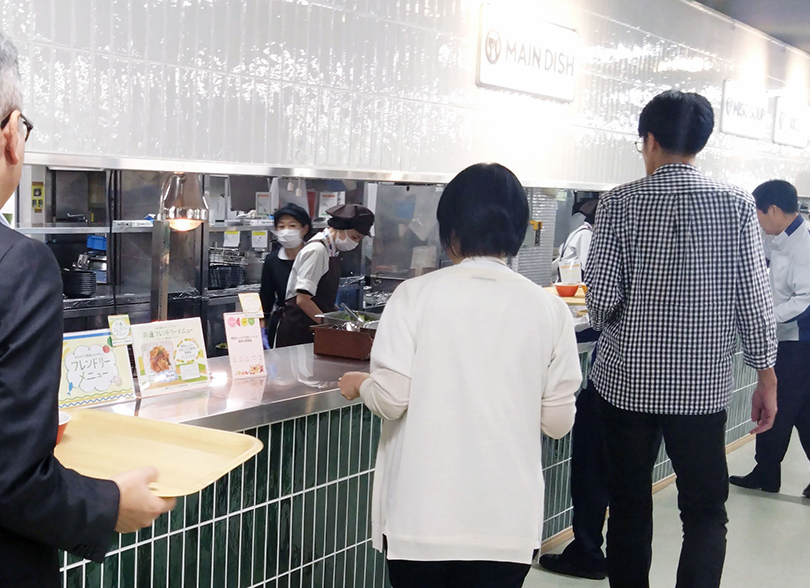
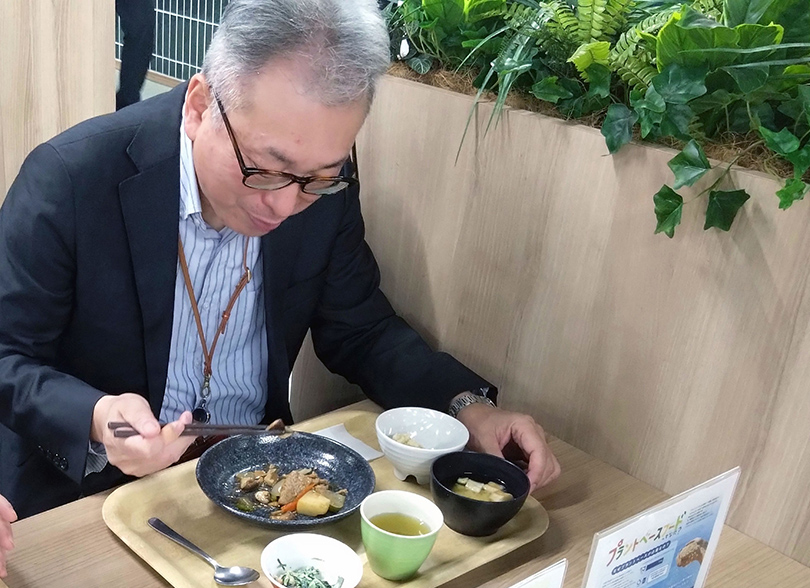
When you see a dish, you might naturally start to wonder, “Where do the ingredients for this dish come from, and where do they end up?” You might also begin choosing dishes while thinking about food waste. One of the aims of the “Friendly Menu” is to improve this kind of "food literacy." The “Friendly Menu” was implemented in 65 cafeterias in its first year, 2024, and has expanded to 71 locations in its second year.
Keyword 2: "The era of health and environment"
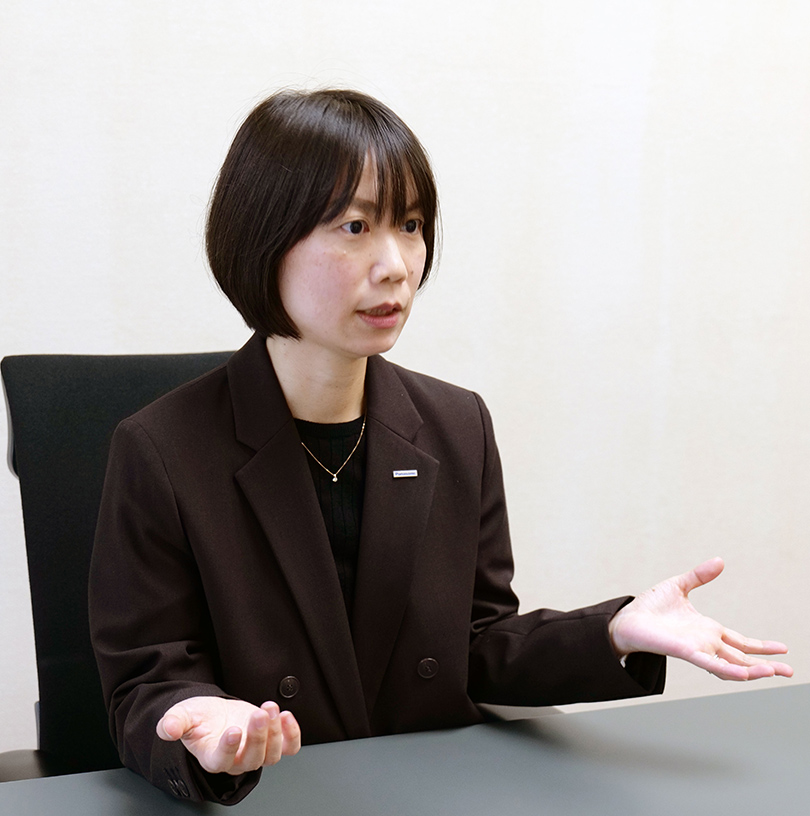
Registered Dietitian (RD) Yuki Okada, Panasonic Health Promotion Department of Panasonic Health Insurance Organization
The health event dishes have been offered as a group-wide activity since 2012, initially at around 40 locations. Each cafeteria serves a wide variety of nutritionally balanced menu items every day, and implementing the health event dishes requires collaboration with each contracted food service company. In that sense, we feel that this expansion to 71 locations is a positive move. Going forward, we would like to expand this initiative to the entire group.
In recent years, health management has become more widespread, and we have had more opportunities to give lectures, such as at seminars on improving eating habits. We strive to create an environment where employees who have attended seminars and are highly motivated can act immediately and to promote food education for employees and improve the cafeteria environment at the same time. I believe that the key to our activities is continuity. Healthy eating involves standard themes such as “eat plenty of vegetables” and “reduce salt,” and we will continue to promote it while also focusing on “environment”.
The innovation of soy meat
and the encounter with Sea Vegetable
Soy meat, used in three of the shared dishes on the “Friendly Menu,” is gaining attention as a meat substitute for its low-fat, high-protein content and its potential to help reduce environmental impact. According to a registered dietitian, “Soy meat is actually used in processed foods such as frozen gyoza, so I think many people eat it without even realizing it. However, since it is still an unfamiliar ingredient to many, if we clearly state that a product contains soy meat, they may be put off.” In addition, since Sea Vegetable’s seaweed is not commonly used in school lunch settings, it seemed that the ingredient posed a somewhat high barrier for contracted school lunch companies to introduce it.
These challenges were overcome through holding opinion exchange meetings (study sessions) on soy meat, as well as through collaboration with Fuji Oil Co., Ltd. And SEA VEGETABLE COMPANY. The soy meat has been carefully prepared to be more approachable, with cooking techniques that enhance its flavor and remake versions of popular dishes. Another factor that determines whether or not to implement the initiative is that the cooking process is not too complicated and the operation allows for smooth service. Samples were sent to each location along with recipes to encourage the respective contracted food service companies to consider adopting them.
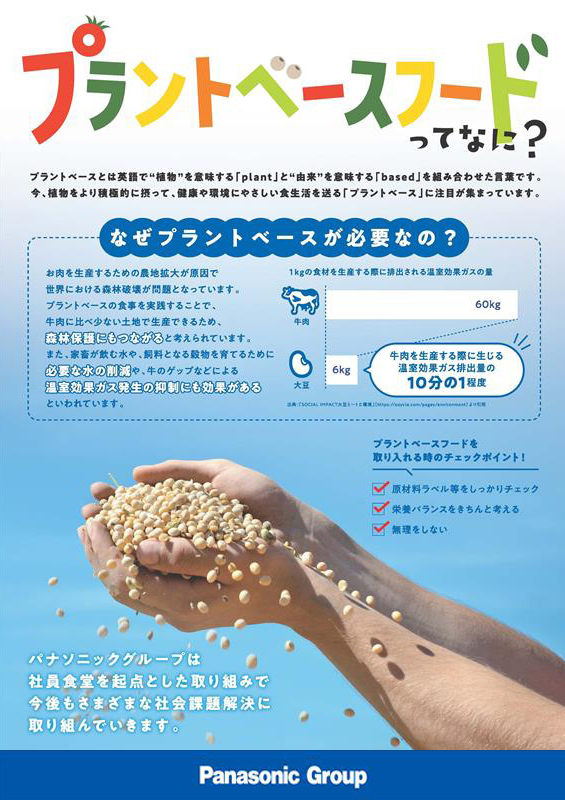
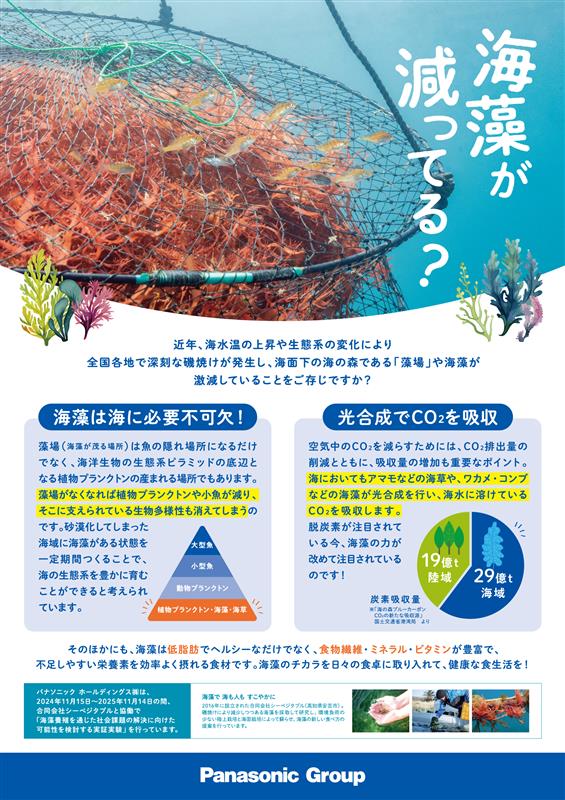
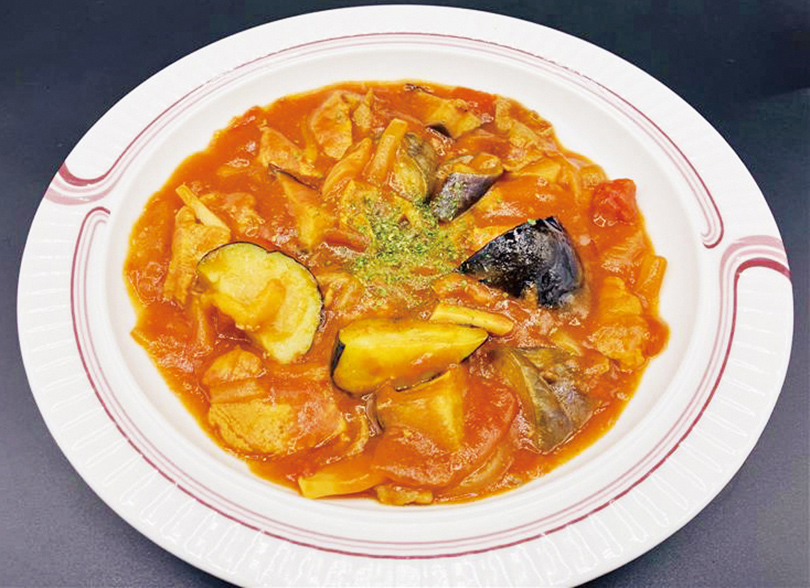
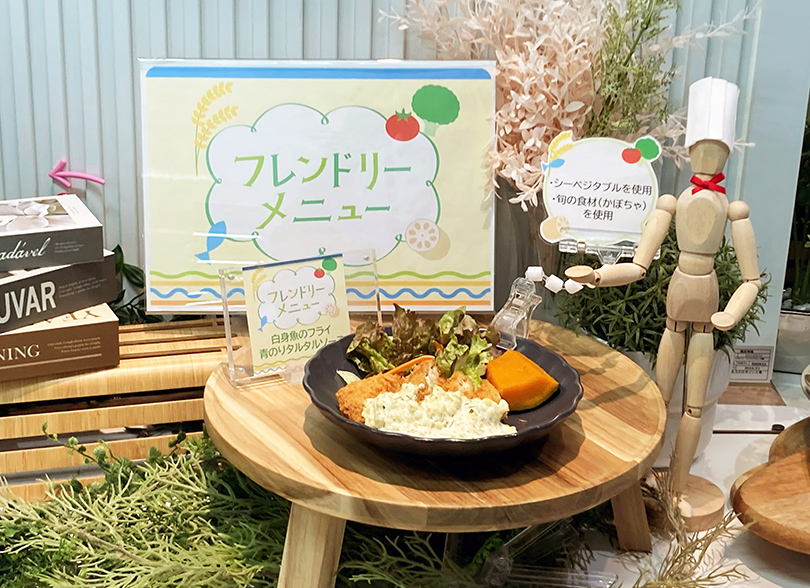
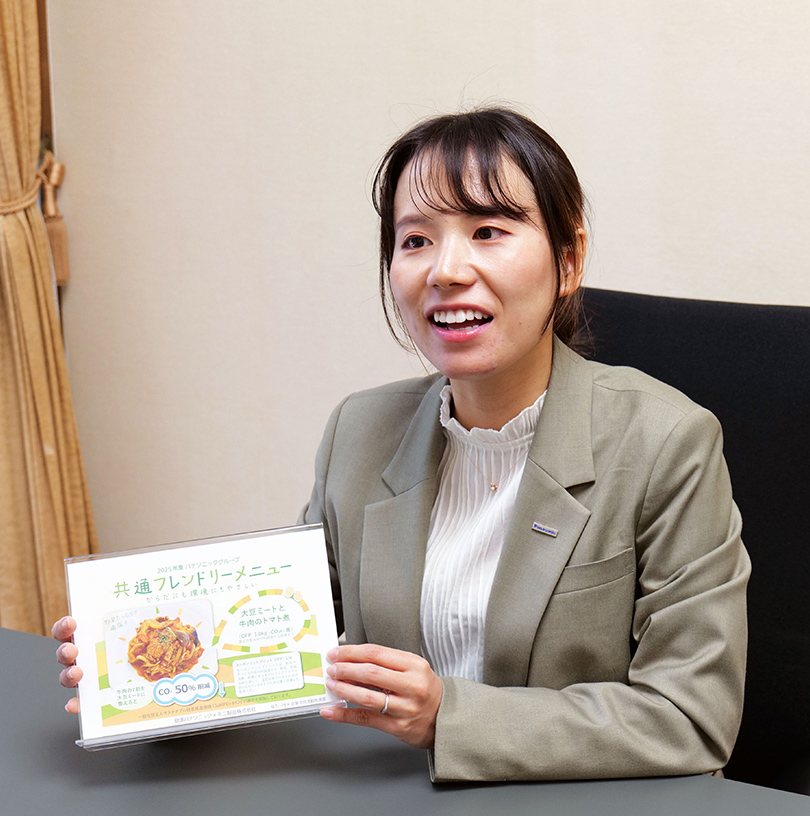
The four shared menu items are "Mapo eggplant with soy meat and minced pork," "Soy meat and beef stewed in tomato sauce," "Soy meat, pork, and plenty of vegetables in a sweet and sour sauce," and "Fried white fish with green laver tartar sauce (Sea Vegetable)." On the days when the “Friendly Menu” was offered, the cafeterias put up food display cards and banners, along with posters and other materials asking environmental questions, such as “What is plant-based food?” and “Are seaweeds decreasing?”
Keyword 3: "Techniques to bring out the best in ingredients"
Registered Dietitian (RD) Kanna Igarashi, Panasonic Health Promotion Department of Panasonic Health Insurance Organization
At the cafeteria where the project was carried out, the responses that left strong impression were as follows: "It gave me an opportunity to take an interest in soy meat," "I didn’t realize it was soy meat," and "It was so delicious that I couldn’t believe it was soy meat." You can have a meal that is healthy and helps reduce environmental impact in such a natural way. That is a unique feature of the “Friendly Menu.” Food service companies are taking various measures to reduce environmental impact, including making use of seasonal and locally produced ingredients, as well as imperfect produce such as crooked cucumbers. We would like to use display cards and other tools to raise awareness of these initiatives among our employees.
To promote the use of soy meat in employee cafeterias, we asked Fuji Oil Co., Ltd., the leading soy meat manufacturer, to provide lecturers for study sessions and to help develop shared menu ideas. We were amazed by their work on developing cooking techniques that make full use of soy meat to achieve flavors and textures comparable to animal-based meat through creative preparation and seasoning. Also, after receiving samples of Sea Vegetable, many cafeterias started using them, with feedback such as “They make the dishes more colorful than usual” and “They have a fragrant aroma and go well with a variety of dishes.” We will work on developing our next menu items that support health and help reduce environmental impact while analyzing the feedback we have received and collecting comments from the food service companies.
Panasonic's philosophy: Continuing to tackle social issues
Promoting the “Friendly Menu” is the first step in our CSR (Corporate Social Responsibility) activities. Each of us will focus on social issues, and this awareness will be reflected in the products and services we create through our business, contributing to the resolution of these issues.
Shigyo from PEX’s Corporate Citizenship Department says, "Corporate citizenship activities can help us become aware of various social issues, which in turn can contribute to CSV (Creating Shared Value: solving social issues while enhancing economic value). I believe this will put into practice the philosophy set forth by our founder, Konosuke Matsushita: 'devote ourselves to the progress and development of society and the well-being of people through our business activities.'"
The effects of the “Friendly Menu” do not end with a single project. Okada from the Panasonic Health Promotion Department of Panasonic Health Insurance Organization says, hoping for a ripple effect: “Even those locations that didn’t adopt the project this time may have learned about Sea Vegetable’s seaweed and developed an interest in it. Also, since the soy meat dishes were so well received, some people have shown interest in adding them to their regular menu items.”
Changing behavior: practicing healthy eating habits and increasing awareness of reducing environmental impact. The two-pronged approach of offering the “Friendly Menu” is expanding further.
(The content of the article is as of the time of publication.)
