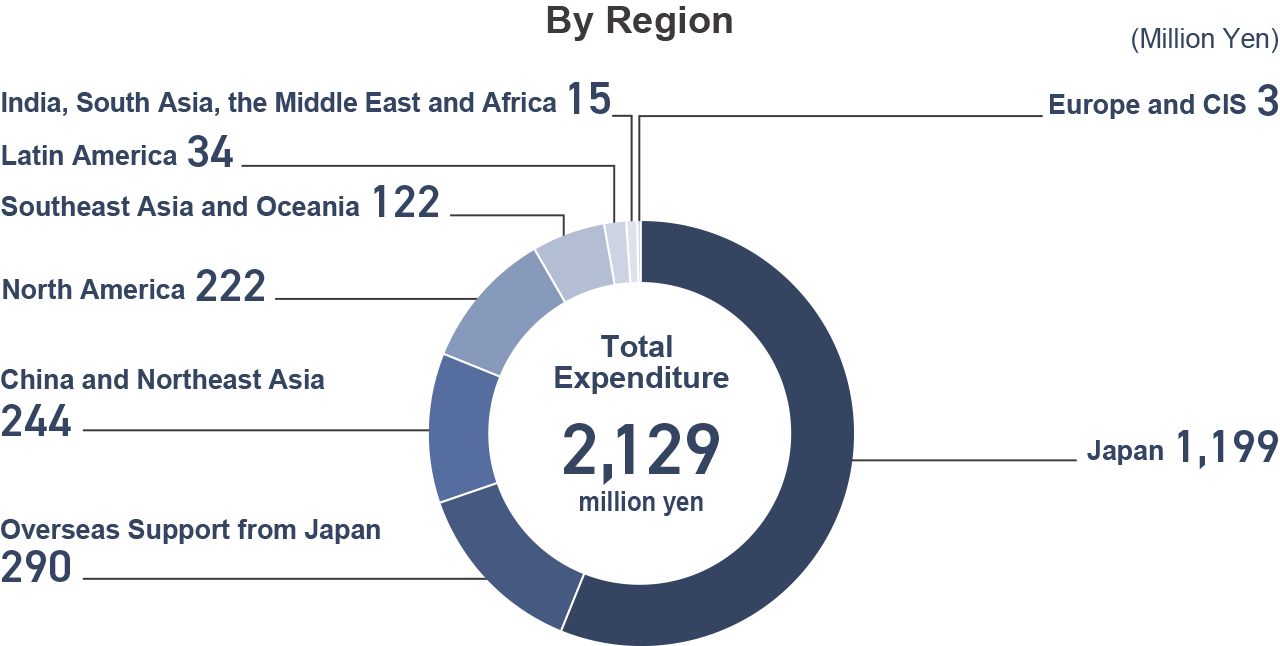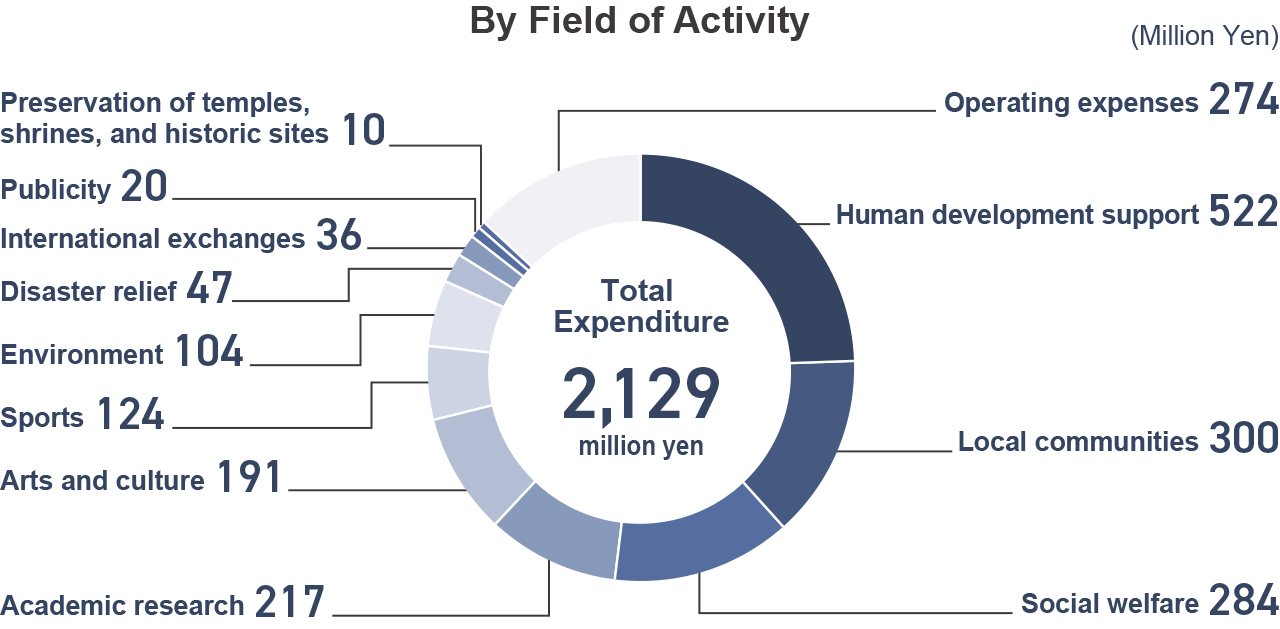



Based on the recognition that the Panasonic Group is a public entity of society and that society at large has entrusted us with all the resources we need to do business, we maintain dialogues with local communities as we undertake our business.
The Group contributes positively to local communities and seeks to minimize any potentially negative impacts of entering or leaving a market through dialogues with local governments and residents and impact assessments on the environment and other areas.
Alongside our business operations, we actively promote corporate citizenship activities as a member of the local community and strive to ensure that the company develops together with the communities where our sites are located.
Policy
Aiming to achieve an ideal society with affluence both in matter and mind, the Panasonic Holdings Corporation (“PHD”) is working to address social issues and create new social value. In advancing our corporate citizenship activities, we have established three key themes: “ending poverty,” Goal 1 of the SDGs and a priority since our founding; “environment (al issues),” a pressing global challenge; and “human resource development (learning support),” the foundation for addressing these challenges.
We encourage our employees to become active participants. Moreover, by leveraging our products, technologies, and the expertise and resources we have cultivated through manufacturing, we aim to help address social issues and achieve a sustainable, inclusive society in collaboration with our stakeholders.
Responsible Executive and Framework
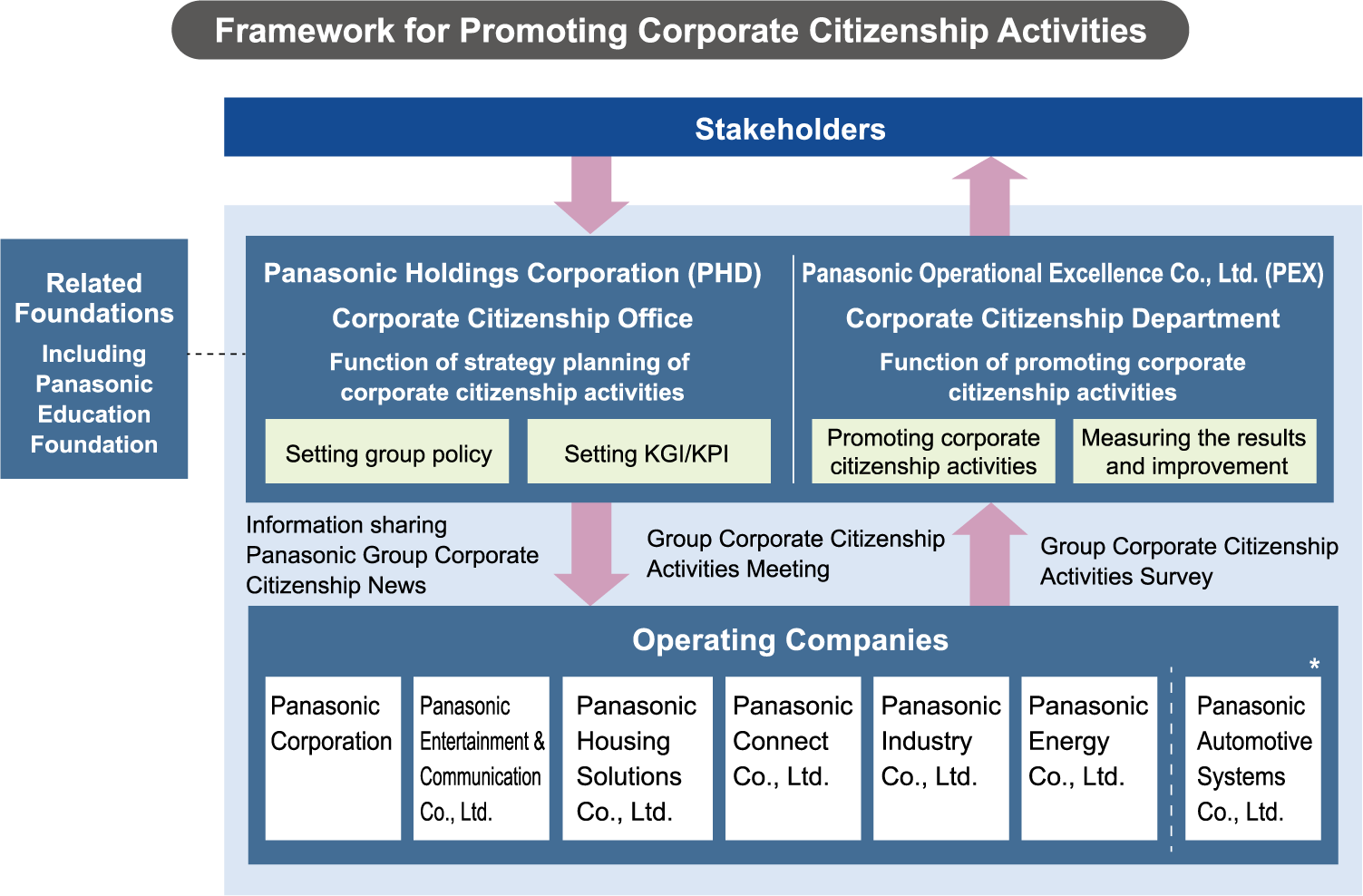
The Executive Officer in charge of corporate citizenship activities is responsible for Groupwide corporate citizenship activities (as of April 2026). The Corporate Citizenship Office at Panasonic Holdings Corporation ("PHD") is responsible for strategic planning across the entire Panasonic Group, and performs those duties in cooperation with the Group's operating companies. We have individuals in charge of corporate citizenship activities at each operating company, and they execute their activities based on the actual conditions within each company and its respective region. In addition, their activities are shared through Panasonic Group Corporate Citizenship News with the relevant directors and executives—from the Panasonic Group CEO on down—as well as with the staff in charge of corporate citizenship activities worldwide.
Employee Participation and Supporting Systems
In promoting business operations and corporate citizenship activities, it is essential for employees to deepen their awareness of social issues, strengthen their motivation to address them.
The Panasonic Group has been conducting surveys to understand employees’ awareness of, and their actual participation in, social contribution activities. In the fiscal 2026 survey, 44% of respondents reported that they were engaged in some form of social contribution activity. In particular, many employees participate in environmental initiatives such as recycling and cleanup activities, as well as making monetary and in-kind donations.
Based on these survey results, we also provide opportunities that enable employees to easily participate in activities that match their interests. Some of the most characteristic examples of these are shown below.
▪Activities Supporting Employees’ Social Involvement
LIGHT UP THE FUTURE “AKARI Action Project”
This donation drive delivers solar lanterns to areas without electricity, using funds collected through cafeteria points from the Employee Benefits Service and donations of used books, DVDs, and other secondhand items. In fiscal 2026, a total of 449 employees donated their cafeteria points, and we collected 32,366 secondhand items from the general public and our employees, donating 2,538 solar lanterns. This initiative began with a donation from the Company in 2009, and since then, approximately 130,000 lanterns have been delivered to 36 countries.
Panasonic ECO RELAY for Sustainable Earth
This is an environmental conservation activity that employees around the world have carried out for more than 30 years in collaboration with local communities, children, and families, with the aim of helping build a sustainable global environment and society. These Eco Relay activities are positioned as part of “+INFLUENCE” under Panasonic GREEN IMPACT, the Panasonic Group’s long-term environmental vision, and during fiscal 2026, a wide range of initiatives—including cleanup activities and tree planting—were carried out at 91 sites worldwide (cumulative). In addition, beginning in 2025, we launched “Act for BLUE CARBON,” an initiative aimed at conserving marine ecosystems and raising awareness, as these ecosystems are believed to absorb more CO2 than terrestrial ecosystems. Through activities such as seagrass bed restoration and mangrove planting around the world, we aim to contribute to CO2 reduction and biodiversity conservation.
Provision of Sustainable Seafood*1 at Company Cafeteria (Japan)
Panasonic was the first company in Japan to start offering sustainable seafood at its company cafeterias on an ongoing basis. The initiative, which began in March 2018 at two locations, has been in place at a total of 57 locations in Japan, serving a cumulative total of more than 163,000 meals as of March 31, 2026. Through the food served and consumed at cafeterias, we aim to raise awareness of the world’s fishery resources in crisis, encourage changes in consumption behavior, and expand our impact on our surroundings.
*1 Seafood certified for sustainable production (fishing and aquaculture) as well as management and traceability in processing, distribution, and marketing.
Fukushima Reconstruction Support Action (Japan)
This initiative aims to deepen employees’ understanding of the current situation in Fukushima and encourage them to support its reconstruction. Activities include offering menu items featuring agricultural, livestock, and marine products from Fukushima Prefecture in company cafeterias, holding “Fukushima Marche” events to sell products from the prefecture, and conducting awareness-raising activities including lectures for employees by guest speakers such as officials from the Fukushima Prefectural Government. The cafeteria menu initiative began in January 2022 and has expanded to a cumulative total of 25 sites as of March 31, 2026. The Fukushima Marche has been held 35 times across 14 sites (cumulative total). In addition, the initiative has been extended to a community open event at the Kusatsu site in Shiga Prefecture and to collaborative events with Kadoma City, Osaka Prefecture, thereby broadening its reach within local communities.
Disaster Volunteer Activities (Japan)
In response to the increasing frequency of natural disasters in recent years, the Group is working to develop human resources who can take voluntary action in times of disaster. One such initiative is the “Disaster Volunteer Training Course,” which provides learning opportunities on how to support disaster-affected areas, the mindset required in the field, and specific actions to take. To make the content accessible to the general public as well, we have published condensed videos summarizing the training content. Including video viewings, a cumulative total of approximately 9,000 people has participated in the program. Furthermore, in recovery and reconstruction support activities following the 2024 Noto Peninsula earthquake and heavy rains, 45 employees were engaged in relief efforts in Suzu City, Nanao City, and Wajima City in Ishikawa Prefecture, providing support tailored to local needs.
Introducing Regional Volunteer Activities and Providing Opportunities
Workplaces within the Group around the world take an active role in developing and rolling out a variety of volunteer activities that are tailored to the specific features of the regions and operating companies they are part of. In North America, for example, the Group has an employee volunteer program and annual Month of Service initiative through which we encourage employees to volunteer. In China, several times each year we have China Region Group Volunteer Activities in which employees at various workplaces across China undertake volunteer activities related to the same theme at the same time. In Japan, we provide employees with information on volunteer opportunities organized by NPOs and other organizations. Through these initiatives, employees have participated in activities including pro bono services and environmental conservation activities.
Providing Learning Opportunities (Japan)
We hosted the Social Good Meetup (SGM), a lecture series for employees featuring diverse guest speakers, to raise awareness of these issues and motivate employees to take action. In fiscal 2026, a total of 317 employees attended these lectures.
▪Human Resources System for Supporting the Promotion of Employee Participation
Examples of Major Group Companies in Japan
◇Flexible Work Styles for Participating in Volunteering
We have expanded the options of our diverse work styles to encourage employees to take on the challenge of volunteering. Specifically, we offer a scheduling system with reduced hours/reduced workdays that enables employees to balance volunteering and work and a leave of absence system that allows for long-term volunteering for up to one year (the required period for those joining the Japan Overseas Cooperation Volunteers). Additionally, we encourage employees to volunteer using various types of leave, such as the ten days of “Challenge Leave” granted to employees who reach a milestone age. We also have a policy of allowing employees to take five consecutive days out of their 25 days of annual paid leave for volunteering.
◇In-House Community Activities and Awards
Panasonic Group encourages employees who share common interests and sensitivity to issues, regardless of their company affiliation or position, to voluntarily form communities and engage in various projects through Employee Resource Groups (ERGs). The Cross UNLOCK Award is included in the Group CEO Award to support and raise awareness of these employees’ various spontaneous activities. In the past, the award was presented to efforts toward “creating a workplace comfortable for people who can and cannot hear” and “creating accessibility maps of business site premises” for their contributions to stimulating the organizational culture to enable every diverse individual to demonstrate their individuality. Furthermore, there is a Social Contribution Award to recognize employees’ active and ongoing participation in related activities.
Examples from North America
Several business units in Panasonic North America provide paid time off that allow employees to spend up to five full working days on volunteer activities to give back and contribute to their local communities. We also encourage and facilitate participation in volunteer activities on the part of our employees, including by coordinating volunteer activities at individual business sites.
Examples from Europe
To further encourage social involvement, some Group companies in Europe allow employees to take up to 16 hours of paid leave per year for volunteer work.
Performance Evaluation of Corporate Citizenship Activities
We measure the effectiveness of its main activities according to the specifics of each initiative.
▪LIGHT UP THE FUTURE
The LIGHT UP THE FUTURE project brings light to areas without electricity in collaboration with various partners, including NGOs/NPOs and international organizations. It aims to create opportunities for education, health, and increased income through local support programs, in addition to the solar lantern donations. To evaluate the effectiveness of these initiatives, we conducted an impact assessment. As an example, survey results from the Japan International Cooperation Agency (JICA) are as follows:
[Results of a survey conducted in Kenya by JICA (2025)]
- Women’s night-time activity hours rose by an average of three hours, allowing them to dedicate more time to learning how to read and write, spending time with their children, and doing home-based work such as beadwork.
- The availability of lighting also made nighttime home-based work and market activities possible, contributing to higher household income. In addition, the use of solar lanterns eliminated costs associated with mobile phone charging and kerosene, increasing the funds available for food and children’s expenses. This, in turn, contributed to improvements in children’s health. Furthermore, households were able to save more, leading to overall improvements in household finances.
- Improvements in the efficiency of women’s household work also generated secondary benefits, including reduced domestic conflict and lower risks of domestic violence (DV), as well as enhanced psychological security for women and improved overall household well-being.
▪Panasonic NPO/NGO Support Fund for SDGs
Under the Panasonic NPO/NGO Support Fund for SDGs, which supports the strengthening of the organizational foundations of NPOs and NGOs, follow-up surveys are conducted after a certain period following the completion of grant projects. These are followed by third-party evaluations using both quantitative and qualitative methods to assess the effectiveness of these initiatives.
In 2025, follow-up surveys were conducted for eight organizations (three overseas and five domestic) 1.5 years after grant completion, and for 12 organizations (five overseas and seven domestic) 3.5 years or more after grant completion. Among the eight organizations surveyed 1.5 years after the grant period, all expanded their financial scale compared with pre-grant levels, with an average increase in total income of 79%. Through efforts to strengthen their organizational foundations under this program, six organizations reported that 80% or more of their organizational challenges had been resolved. Meanwhile, among the 12 organizations surveyed more than 3.5 years after grant completion, the average increase in total income was a significant 161% compared with pre-grant levels. In addition, 11 organizations reported that 80% or more of their organizational challenges had been resolved. These results confirm that efforts to strengthen organizational foundations continue to deliver results even after grant completion, and that the extent to which organizational management challenges are resolved tends to increase over time.
▪External Recognition and Awards
Major recent awards and external recognition include:
■Asia Responsible Enterprise Awards 2026 (Social Empowerment category), organized by Enterprise Asia
Panasonic Holdings Corporation: “LIGHT UP THE FUTURE” initiative to deliver light to off-grid areas
■The Green Awards 2026, organized by India Green Awards
Panasonic Life Solutions India Pvt. Ltd.: “Panasonic Harit Umang Programme”
■TABLE FOR TWO Platinum Partner Certification (for the 13th consecutive year)
Panasonic Group: Activities to provide school meals to developing countries
■The 14th Career Education Award (Grand Prize), organized by the Ministry of Economy, Trade and Industry (METI)
Panasonic Holdings Corporation: Career education program “My Future Discovery”
■The 10th Corporate Volunteer Awards (Special Award), organized by the Tokyo Voluntary Action Center
Panasonic Group: Employees’ disaster relief volunteer activities