


Climate Change
Reducing CO2 Emissions at Our Sites

Reducing the Amount of Energy Used and CO2 Emissions in Business Activities
To achieve Panasonic GREEN IMPACT, Panasonic Group has been working on toward making net zero sites*1 by promoting our efforts internally and externally to realize net zero CO2 emissions at own sites in all our operating companies by 2030.*2
For this medium term, we established the GREEN IMPACT PLAN 2024+1. In our efforts for OWN IMPACT Scopes 1 and 2, we have increased the number of net zero sites to 60, reducing CO2 emissions by 960,000 tons as a result. In the Medium-Term Management Plan starting in fiscal 2027, our target for Own Impact Scopes 1 and 2 under Green Impact Plan 2028 is to increase the number of net zero sites to 86 and at the same time reduce CO2 at sites to 1.4 million tons through energy conservation and the use of renewable energy sources.
In the Net Zero Factory Promotion Taskforce we started up in September 2021. The taskforce aims to create and provide Group-wide measures to accelerate the creation of net zero sites. The Taskforce consists of the Energy Saving Working Group (WG) that promotes a range of energy-saving measures, the Renewable Energy Utilization WG that assess the usage expansion of renewable energy in each site, and the Renewable Energy Procurement WG that promotes the procurement of renewable energy. With the participation of related sectors, our manufacturing, procurement, and environment specialists work together to support the united efforts of all operating companies. During this fiscal year, we held seminars to introduce internal excellent examples and the latest information on energy saving and energy recycling to Group members. We also hold study session by region outside Japan.
We also participate in the Keidanren Carbon Neutrality Action Plan, a voluntary action plan to alleviate global warming promoted by the entire electric and electronics industry. The industry set a target of an "average 1% improvement in energy intensity in sites and large offices per year towards 2030" and we are now working steadily to save more energy in sites and offices.
*1 The Panasonic Group's net zero sites mean realization of net zero CO2 emissions from sites across the world. This will be attained by promoting our conventional energy saving activities (e.g. using LED lighting), advanced energy saving technologies, such as Factory Energy Management System (FEMS), productivity improvement, and innovative manufacturing. Other means include a combination of the following efforts: promoting renewable energy usage, such as by adopting photovoltaic power systems, energy storage modules, and hydrogen fuel cells; procuring 100% renewable energy-sourced electricity; and obtaining environmental values (energy certificates and carbon credits). The Panasonic Group publishes, both internally and externally, our accelerating efforts towards reaching our goal of net zero CO2 emissions in all the operating companies' sites by 2030.
*2 Panasonic's direction: To become a top runner in the fields of "environment" and "high usability in business."
Increasing the number of net zero sites
After realizing the group's first net zero factory in fiscal 2019, Panasonic Group has realized 9 net zero sites in 5 regions*3 by fiscal 2022.
Subsequently, we entered the phase to increase the number of net zero sites: to 31 sites in fiscal 2023, 44 sites in fiscal 2024 and 45 sites in fiscal 2025; then in fiscal 2026, a total of 60 sites*4 - 21 sites in Japan (+2 over the previous year), 15 sites in the China and Northeast Asia regions (+1), 13 sites in the Southeast Asia, Pacific, India, South Asia, Middle East, and Africa regions (+8), 6 sites in the North America and Latin America regions (+0), and 5 site in Europe and CIS (+4). This has exceeded the GIP2024+1 target to reach a total of 49 sites with net zero CO2 emissions.
(The number of new net zero sites in each fiscal year excludes the 12 sites that reached net zero in fiscal 2024 for Panasonic Automotive Systems Company, which became unconsolidated in December 2024, and Panasonic Solar Amorton Co. Ltd., which was transferred in fiscal 2026.)
Global map of net zero sites
Global map of net zero sites
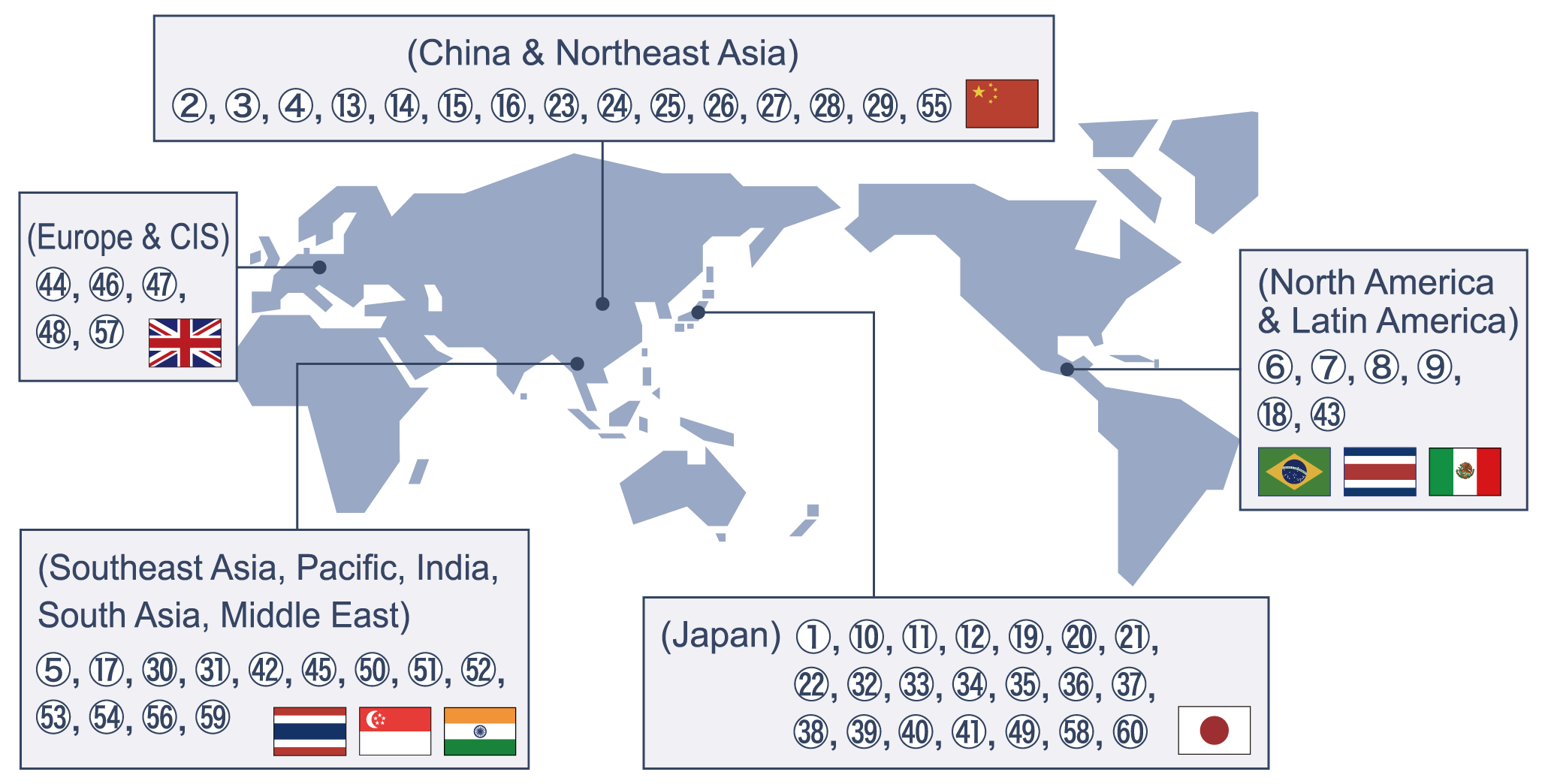
*3 Five regions are: Japan; China & Northeast Asia; Southeast Asia, Pan Pacific, India, South Asia, Middle East; North & Latin America; Europe & CIS.
*4 Net zero sites are shown below. The sites in China that are underlined have been assessed under criteria prior to the revision of the Green Electricity Certificates rules in China in accordance with enforcement of the Implementation Rules for the Management of Renewable Energy Green Electricity Certificates (Trial) in November 2025.
Up to fiscal 2022: ① Panasonic Eco Technology Center Co., Ltd., ② Panasonic Energy (Wuxi) Co., Ltd., ③ Panasonic Energy (Suzhou) Co., Ltd., ④ Panasonic Manufacturing (Beijing) Co., Ltd., ⑤ Panasonic Energy (Thailand) Co., Ltd., ⑥⑦⑧ Panasonic Do Brazil (Includes 3 Factories (San Jose, Manaus, Extrema)), ⑨ Panasonic Centroamericana S.A.
Fiscal 2023: ⑩ Panasonic Energy Co., Ltd. (Sumoto Factory), ⑪ Panasonic Energy Higashiura Co., Ltd., ⑫ Panasonic Energy Nandan Co., Ltd., ⑬ Panasonic Electronic Devices (Jiangmen) Co., Ltd., ⑭ Panasonic Industrial Devices (Tianjin) Co., Ltd., ⑮ Panasonic Industrial Devices Materials (Guangzhou) Co., Ltd., ⑯ Panasonic Industrial Devices SUNX Suzhou Co., Ltd., ⑰ Panasonic Energy India Co., Ltd., ⑱ Panasonic Energy Mexico S.A. de C.V.,
Fiscal 2024: ⑲ Panasonic Industry Co., Ltd. (Motomiya), ⑳ Panasonic Energy Co., Ltd. (Suminoe Factory), ㉑ Panasonic Energy Co., Ltd. (Tokushima Factory), ㉒ Panasonic Energy Co., Ltd. (Nishikinohama Factory), ㉓ Panasonic Motor (Zhuhai) Co., Ltd., ㉔ Panasonic Motor (Hangzhou) Co., Ltd., ㉕ Panasonic Industrial Devices Taiko (Shenzhen) Co., Ltd., ㉖ Panasonic Industrial Devices (Qingdao) Co., Ltd., ㉗ Panasonic Manufacturing (Xiamen) Co., Ltd., ㉘ Panasonic Industrial Devices Materials (Suzhou) Co., Ltd., ㉙ Panasonic Industrial Devices Materials (Shanghai) Co., Ltd., ㉚ Panasonic Industrial Devices Singapore Pte. Ltd., ㉛ Panasonic Carbon India Co., Ltd.
Fiscal 2025: ㉜ Panasonic Electric Works Co., Ltd. Niigata Factory, ㉝ Panasonic Electric Works Co., Ltd. Tsu Factory, ㉞Panasonic Electric Works Electrical Construction Materials Mie Co., Ltd. Headquarter Factory, ㉟Panasonic Electric Works Electrical Construction Materials Mie Co., Ltd. Anotsudai Factory, ㊱ Panasonic Lighting Devices Kumihama Co., Ltd., ㊲ Panasonic Switchgear Systems Co., Ltd., ㊳ Panasonic Energy Co., Ltd. (Wakayama Factory), ㊴ Panasonic Energy Co., Ltd. (Moriguchi Factory), ㊵ Panasonic Energy Kaizuka Co., Ltd., ㊶ Panasonic XC KADOMA, ㊷ Panasonic Manufacturing (Thailand) Co., Ltd., ㊸ Panasonic Industrial Devices Mexicana S.A. de C.V., ㊹ Panasonic Manufacturing UK Ltd.,
Fiscal 2026: ㊺ Panasonic Industrial Devices Vietnam Co., Ltd., ㊻ Panasonic Industrial Devices Slovakia s.r.o., ㊼ Panasonic Industrial Devices Europe GmbH Pfaffenhofen, ㊽ Panasonic Industry Europe GmbH, ㊾ Panasonic Switching Technologies Co., Ltd. Ishioka Factory, ㊿ Panasonic Appliances Vietnam Co., Ltd.-RF,  Panasonic Appliances Vietnam Co., Ltd.-LV,
  Panasonic Manufacturing (Thailand) Co., Ltd.-AP,
  Panasonic Appliances India Co., Ltd.,
  Panasonic Manufacturing Philippines Corporation-HQ,
  Panasonic Ecology Systems Guangdong Co., Ltd.,
  Panasonic Appliances Air-Conditioning Malaysia Sdn. Bhd.,
  Panasonic Heating & Ventilation Air-Conditioning Czech, s.r.o.,
  Panasonic Industry Co., Ltd. Headquarters Tokyo,
  PT. Panasonic Gobel Energy Indonesia DBD,
  Panasonic Energy Co., Ltd. (Nishikadoma)
Activities for Increasing the Amount of Renewable Energy Use
To increase the amount of renewable energy in our business use, Panasonic Group has been actively promoting installation/application of renewable energy facilities in our own sites and renewable energy procurement from external suppliers.
The amount of renewable energy adopted at our sites*5 in fiscal 2026 marked 0.14 TWh.
Installation of renewable energy facilities has been actively encouraged in our own sites across the world in a way to suite to the regional characteristics. Particularly, photovoltaic power generation systems are recommended for installation wherever possible.
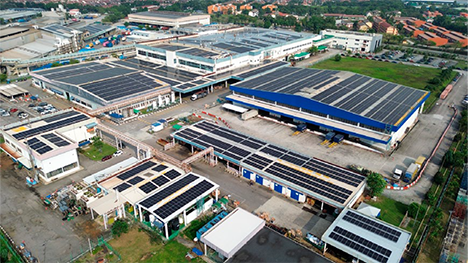
Panasonic HVAC & CC Systems Co., Ltd. installed a photovoltaic power generation system with a generation capacity of 5.2 MW in fiscal 2025 at the Hot-Water and Heating Systems with Heat Pump (A2W) plant building of Panasonic Appliances Air-Conditioning Malaysia Sdn. Bhd. (PAPAMY). In fiscal 2026, an additional photovoltaic power generation system with a capacity of approximately 4.0 MW has been installed in the air conditioner compressor production plant building, resulting in startup of photovoltaic power generation totaling 9.2 MW for the PAPAMY site as a whole. The photovoltaic power generation capacity is the largest of its kind in the Panasonic Group. Annual power output reaches approx. 10,338 MWh (estimate), with CO2 emission reductions totaling approx. 6,703 t (estimate) per year. Photovoltaic power generation is expected to supply roughly 18% of the total power consumption of the entire site.*6
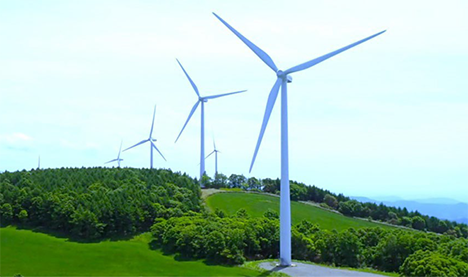
Procurement of renewable energy from external sources has been also promoted across the globe. In Japan, at our own site, we are an electricity user, and at the same time, an electricity retailer (registration number: A0136). Since 2005, we have been supplying power to our own sites, factories, and offices. Utilizing our knowhows and experience of electricity procurement and trading that we have accumulated to date, we procure 100% renewable electricity generated from wind, etc., as well as electricity with environmental value such as those with non-fossil fuel energy certificates and credits to offset CO2 emissions from fossil fuel. This effort contributed to converting factories in Japan, China, and Southeast Asia to net zero factories. Furthermore, the photovoltaic power station with approx. 18,000 kW capacity for use at our own sites that we determined to develop in fiscal 2022 started its operations for Panasonic Energy Co., Ltd., in February 2023. In fiscal 2024, operation of power stations with a capacity of approx. 11,500 kW started for Panasonic Automotive Systems Co., Ltd. and Panasonic Industry Co., Ltd. In fiscal 2025, an additional power generation plant with a capacity of roughly 18,000 kW came into operation as a startup power supply for Panasonic Living Appliance and Solutions Company. In the same fiscal year, full scale supplies of power from an onshore wind power generation plant started for Panasonic Energy Company and Panasonic Industry Co., Ltd. As described above, we continue to contribute to expanding use of electricity from new renewable energy sources. We also started selling to Panasonic Group employees in Japan, electricity derived from practically 100% renewable energy in fiscal 2021.
In August 2019, Panasonic Group joined "RE100"*7, an international initiative that brings together companies committed to sourcing 100% renewable electricity for their global business operations. We aim to switch all the electricity used in our sites across the world to that sourced from 100% renewable energy by 2050. Progress in fiscal 2026 was 37.2%.
*5 The amount from photovoltaic energy is included. The amount from heat pumps is excluded.
*6 Press release on February 12, 2026 (In Japanese)
https://news.panasonic.com/jp/press/jn241206-1
*7 Press release on August 30, 2019.
Panasonic Joins RE100 Aiming for Business Operations with 100% Renewable Energy
https://news.panasonic.com/global/press/data/2019/08/en190830-2/en190830-2.html
Activities for reducing energy use and CO2 emissions
To ensure implementation of reduction of the amount of energy used and CO2 emissions, it is important to visualize trend of the energy consumption of each facility in the site and the effects of the measures for specific emissions reduction. To date, we are working on CO2 reduction by adopting more than 40,000 measurement equipment systems and Factory Energy Management System (FEMS) at all of our global manufacturing sites, promoting METAGEJI (Meter and Gauge)*8, which visualizes and analyzes energy consumption. An example of factory energysaving support service is on the following website.
In fiscal 2026, we expanded the scale of energy saving activities at our non-manufacturing sites. Although non-manufacturing sites tend to be of secondary in importance over manufacturing sites, these sites have numerous energy consumption sources, including lighting fixtures, air conditioning systems, IT devices and transport facilities and current important but complicated concerns for promoting energy conservation.
Because of the irregular operating hours and energy use load at non-manufacturing sites in comparison to manufacturing sites, there is much to be done in the area of energy saving through operational improvements and facility updates. In recognition of the issues, energy saving diagnosis of our non-manufacturing sites was conducted by outside experts, focusing in particular on the development division, logistics warehouses and building/facility management division, considering the commonality of issues and the projected ripple effects.
The knowledge obtained in the diagnosis has been applied to non-manufacturing sites in the most useful form. At the same time, the knowledge, along with commentary by in-house specialists, has been systematized in an easy-to-understand style and released internally as manuals and effect estimation tools, to enable work sites to identify improvement themes and estimate effect in their energy saving studies. At present, the knowledge and tools are being utilized by non-manufacturing sites in starting up energy-saving activities and broadening their application. We expect to accelerate these activities at non-manufacturing sites in this manner, sharing and expanding application to the Group as a whole, both manufacturing and non-manufacturing, and making solid advances in cutting down energy consumption and CO2 emissions in our business activities.
*8 METAGEJI is a coined word created by the Panasonic Group which refers to visualizing energy consumption and implementing measurable reduction measures by adopting measurement instruments, such as meters and gauges.
Activities to provide supports for energy-saving in the China region
The long-term state policy announced by the Chinese government includes carbon peak out and carbon neutrality, focusing on further reductions to CO2 emissions. With its many business sites in China, the Panasonic Group introduced a three-year energy-saving support initiative in the country in fiscal 2023 designed to achieve efficient energy-savings across the entire region in line with China's long-term state policy.
From fiscal 2023 to fiscal 2025, we developed a regional energy saving platform and engaged in energy-saving diagnosis, development of an energy-saving infrastructure and of human resources through joint efforts with the head office and outside experts. At the same time, we improved the diagnostic and recommendation skills of regional members through specialized training, energy saving diagnosis tours and inspection tours of outside companies that are advanced in the area.
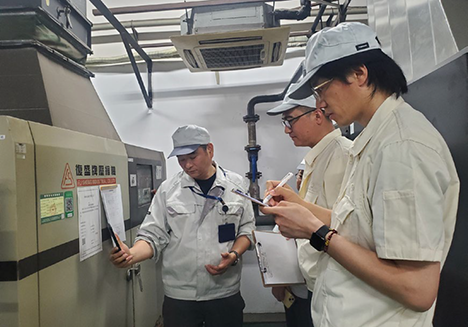
In fiscal 2026, we introduced an energy saving diagnosis service provided chiefly by regional members, achieving non-dependent energy saving support in the region. Diagnosis was conducted at two plants and is estimated to generate energy-saving effects of 1,173 MWh per year. Additionally, we provided 12 energy saving tools, including compressor measurement and analysis kits, to help identify energy saving problems and boost visibility of the effects.
In working to establish net zero factories, we continue with our rapid and low cost energy-saving measures to improve the level of energy saving in China's regions.

Fiscal 2026 Results
These efforts in fiscal 2026 produced 4.5 TWh*9 of the energy used in our business activities, and the amount of CO2 emissions under Scope 1 and Scope 2 was 1.142 million tons including deduction of the amount of carbon credits.
Data on other energy consumption volumes, etc., can be found in the Environmental Database.
The fiscal 2026 investment to reduce the amount of energy used and CO2 emissions by the efforts was 4.7 billion yen.*10
*9 In fiscal 2021, the unit used to measure the energy consumed in business activities was changed from TJ to TWh. The consumed power is measured in kWh and the consumed fuel is measured using its calorific value and then converted to electrical power units at 3.6MJ/kWh. These two values are then totaled.
*10 The total amount includes all investments concerning reduction of the amount of the energy used and CO2 emissions. Note that differences or proportions of the investment are not calculated.