


Environmental Sustainability Management Across the World

Promoting Regional Environmental Sustainability Management
In the Panasonic Group, each Regional Headquarters, sales company, manufacturing company, or other Panasonic entity plans and implements its own environmental sustainability activities in line with its own local environment issues and business characteristics, based on the annual environmental management policy set by the Group. The scope of the plan is not limited to reducing environmental impact, complying with environmental legislation, or preventing environmental risks. In fact, the plan covers a variety of matters including resolving environmental issues through business activities in collaboration with local business partners and promoting social contribution activities in coordination with local communities. We are working globally to build a more sustainable society.
South East Asia & Pacific
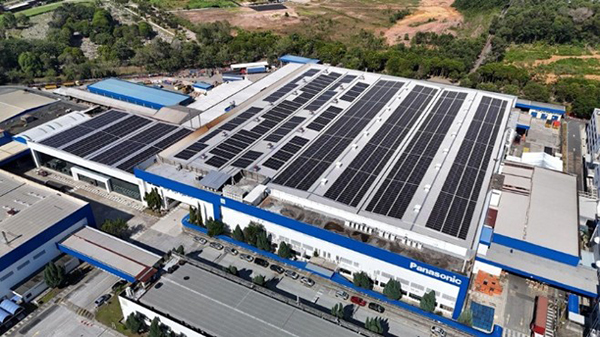
Panasonic Group Installs Largest Solar Power Generation System in Malaysia
Panasonic HVAC&CC Co.,Ltd has successfully implemented its largest solar power generation system to date, with a combined capacity of 9.2 MW at Panasonic Appliances Air-Conditioning Malaysia Sdn. Bhd. (PAPAMY) in Shah Alam, Malaysia.
Following the 5.2 MW solar power generation system at the Air-Conditioning Factory in November 2024, PAPAMY has proceeded with additional installations at the Compressor Factory since June 2025. The installations, comprising 15,913 solar panels, are expected to generate 10,338 MWh annually. This renewable energy supply will meet approximately 18% of the factories' electricity needs and reduce around 6,703 tons of CO2 emissions each year.
This achievement underscores the Group's commitment to operational decarbonization and supports the long-term vision outlined in Panasonic GREEN IMPACT. By integrating renewable energy solutions into its production facilities, the Group continues to progress toward its target of achieving net zero CO2 emissions from its own operations by 2030, while contributing to global sustainability goals.
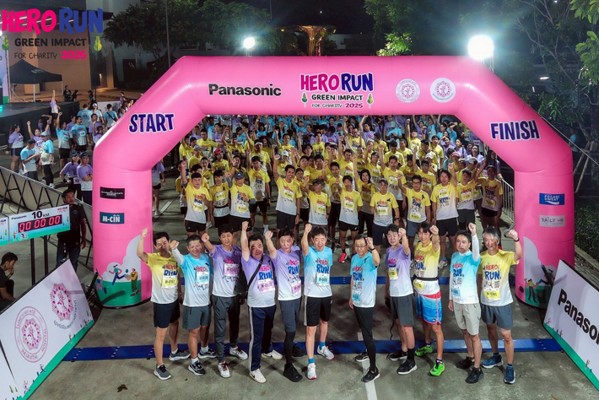
Panasonic Group in Thailand hosted "Panasonic Hero Run GREEN IMPACT" for Charity 2025
On November 1, 2025, Panasonic Group in Thailand organized the "Panasonic Hero Run GREEN IMPACT For Charity 2025" at Siam Premium Outlets in Bangkok. The event attracted more than 1,400 participants, including employees, families, and business partners. This event is part of the "Panasonic Cares" initiatives which adopted the "Run for Trees" concept since 2024, where every 10 kilometers run completed equates to one tree planted.
This year, participants ran a total of 10,917 kilometers, resulting in the planting of 1,092 trees in the mangrove forests of Chonburi Province. In addition, donations of 174,184 baht (approx. USD 5,300) were raised to support the construction of a new Emergency and Accident Building and to enhance medical equipment at Rajavithi Hospital, a key public institution that also plays a vital role in cross-border disaster response, such as during the Myanmar earthquake.
Panasonic Thailand's GREEN IMPACT charity run links environmental restoration with healthcare support, showcasing corporate citizenship that advances sustainability and resilience.
Panasonic Vietnam Group Launched "Panasonic GREEN IMPACT (PGI) in Action" Campaign
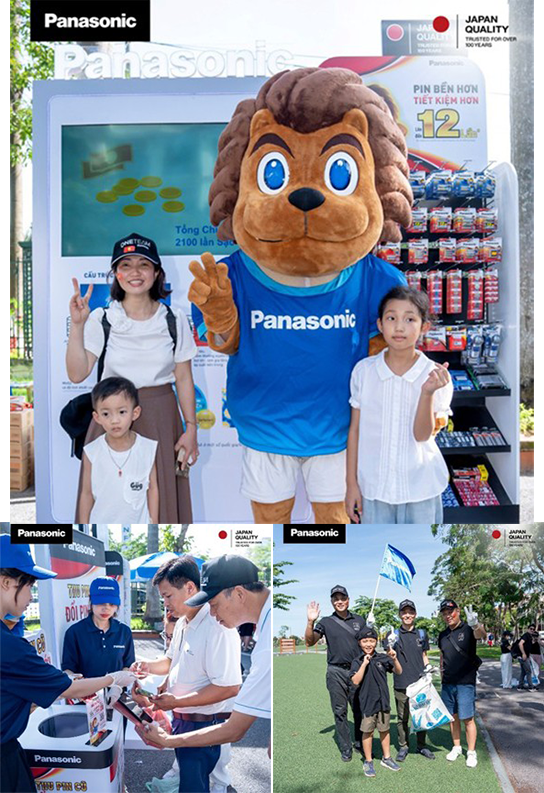
In June 2025, Panasonic Vietnam Group (PVG) initiated the "PGI in Action" campaign across seven factories and offices, involving approximately 2,500 employees. Activities included Green Contribution Day, where employees brought used batteries and recyclable waste from home and exchanged them for eco-friendly products. This hands-on experience reinforced the 3Rs principle—Reduce, Reuse, Recycle. PGI e-learning programs were launched to further deepen understanding of Panasonic's environmental vision. The campaign also introduced the Circular Innovation Competition, encouraging employees to submit ideas that promote circular economy practices.
Beyond internal engagement, Panasonic Appliances Vietnam (PAPVN) partnered with the Hung Yen Department of Agriculture and Environment to organize a large-scale environmental event in early July. Thousands of local residents participated in tree planting, used batteries and waste collection, strengthening environmental awareness through engagement with the local community.

China
Development of Environmental Solutions Business in China
As urbanization progresses in China, various industries are developing and increasing energy consumption and environmental pollution, which has become a serious social issue. In response, the Chinese government has promoted the "3060 Policy" *1 nationwide, obligating certain businesses to reduce CO2 emissions. Consequently, many companies are adopting sustainable solutions to reduce operating costs, improve energy efficiency, and minimize environmental impact. Adopting environmentally conscious management practices is key to strengthening competitiveness.
*1: The Chinese government's national goal to combat climate change, which consists of the following two pillars:
- Carbon peak out by 2030 (reducing CO2 emissions after reaching a maximum)
- Carbon neutrality by 2060 (net-zero CO2 emissions)
In these cases, Panasonic China Co., Ltd. provides environmental solutions that combine services and systems for companies like Lawson and AEON MALL. Members with specialized skills, such as in sales, proposals, software engineering, customer service, and on-site engineering, perform the following tasks directly.
- Facility management *2, including refurbishment and EMS *3 (services).
- Sales of equipment such as commercial refrigerators, air conditioners, and microwave ovens (hardware).
- Provision of energy-saving solutions for large-scale facilities (SI, Software).
*2: Management activities that comprehensively plan, manage, and utilize the facilities and environment owned and used by a company or organization from the perspective of management strategy
*3: Energy Management System
China has approximately 3,000 shopping malls. Aeon Mall currently operates 23 malls in four areas: North China (Tianjin City, Hebei Province, and Shandong Province); East China (Jiangsu Province and Zhejiang Province); Huazhong (Hubei Province and Hunan Province); and South China (Guangdong Province). The East China and Huazhong regions, with their high growth potential, are the priority areas for store openings and concentrated investments.
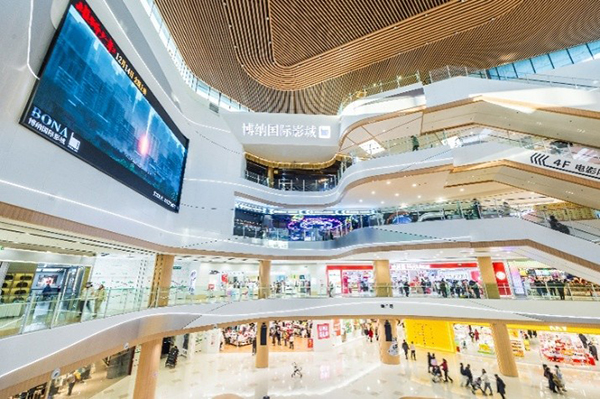
However, due to the mall's large size, electricity charges can significantly impact operations. In 2022, Panasonic began working with AEON MALL China to address these issues. The company promotes energy-saving activities with the goal of creating "zero-emission malls." Panasonic is introducing the system in stages to reduce CO2 emissions.
- Energy conservation
(1) Visualization of energy consumption and facility operation status
(2) Energy conservation analysis and operational improvements based on visualization data
(3) Modifying energy-saving facilities and optimizing control - Utilization of solar and other clean energy sources
- Use of carbon credit trading to reduce CO2 emissions to net zero
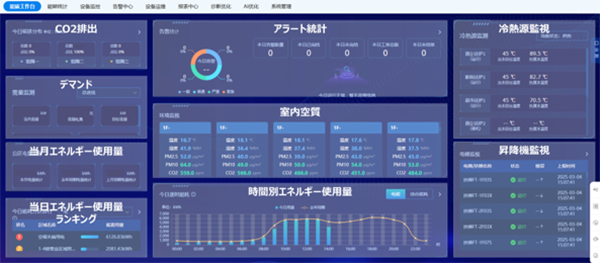
However, introducing an energy conservation platform and visualizing electricity usage alone cannot produce sufficient results. To solve this problem, Panasonic takes a multi-perspective approach to visualizing energy consumption, building temperature and humidity, and the operating status of facilities. Then, Panasonic proposes monthly operational improvements in close cooperation with on-site operators. The PDCA cycle, in which measures are repeatedly implemented and verified, leads to the next improvement item and continues. As a result, energy conservation effects are achieved by optimizing daily operations of air conditioning, lighting, elevators, and other equipment.
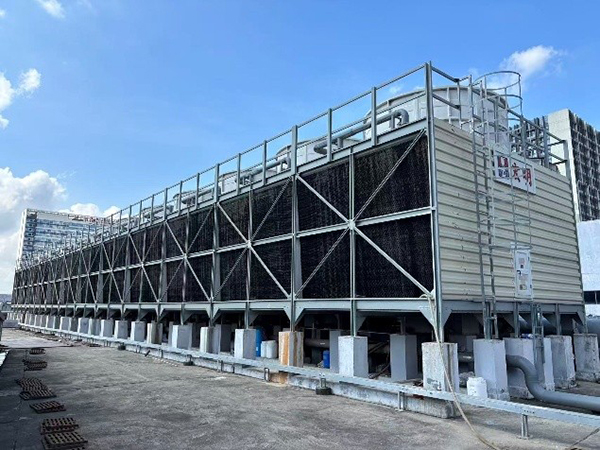
In addition to visualization, Panasonic conducts energy-saving controls for air conditioning equipment. These controls improve energy efficiency by managing heat source equipment, such as chillers, pumps, cooling towers, and valves, based on supply and demand. In malls where these systems have been installed, energy conservation effects of up to 15% have been confirmed. Panasonic is considering making them standard specifications in malls nationwide.
These efforts have reduced electricity charges by approximately 20 million yen per mall per year. AEON MALL has praised Panasonic for its earnest approach to daily electricity usage data and continuous improvement proposals.
Environmentally friendly measures are not just a passing trend. They are an ongoing effort to address social issues on a global scale and an essential responsibility for companies. Panasonic Group's long-term environmental vision, Panasonic GREEN IMPACT, recognizes the business potential of global environmental issues. Based on the belief that "an environmental business is one in which fair prices can be obtained by addressing social issues," we will continue to accelerate the development of environmental solutions.
Europe
Panasonic Europe - June Environment Month
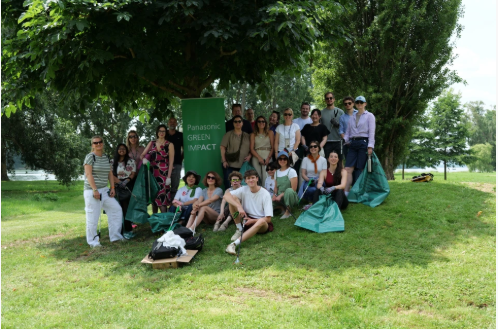
As part of June Environment Month 2025, clean-up activities have been organized at several Panasonic locations in Europe. The events brought together employees to tackle plastic waste and reconnect with nature and to contribute to a global movement.
Further to that, several internal webinars were held to raise awareness on sustainability topics and Panasonic products and solutions that contribute to decarbonisation of society.
PIDEU Lüneburg – heat pump installation
Panasonic Industrial Devices (PIDEU) in Lüneburg, Germany installed Panasonic heat pumps on its premises to reduce carbon emissions. Due to the heat pumps, 90% of natural gas can be reduced (approx. 900.000kWh). Through these heat pumps and electricity from renewable sources, PIDEU can reduce approx. 200t CO2 emissions annually. Therefore, the installation of heat pumps is a decisive part of PIDEU's decarbonisation pathway.
PIDEU Lüneburg Environmental Awareness Day and Clean-Up
Panasonic Industrial Devices (PIDEU) in Lüneburg, Germany, celebrated an annual internal Sustainability Day on March 17th 2026. During this event, several activities such as quizzes, workshops and presentations were offered to raise awareness on sustainability topics among employees, educate and to share enthusiasm. On March 20th, a collective clean up activity took place for picking up litter/garbage in Lüneburg to make a contribution to local community and raising awareness for the environment.
Re-opening PHVACCZ Factory in Czech Republic
August 29, 2025: Panasonic HVAC&CC Co., Ltd. has re-opened its facility in Pilsen Czech Republic, where it invested EUR 320 million into the expansion and refurbishment to produce heat pumps, which is increasing the factory's production capacity by 250% and to a total of 140,000m2. The factory is powered by a 1 MW photovoltaic roof system in addition to the procurement of green electricity and various energy efficiency measures. Furthermore, a base-water reservoir captures the rainwater to use it for watering the greenery and green part of the roof, and starting in 2026, the facility's vehicle fleet will move to Electric Vehicles (EVs). With these measures, Panasonic HVACCZ Factory contributes to reduce emissions and is a Panasonic net zero factory.
North America
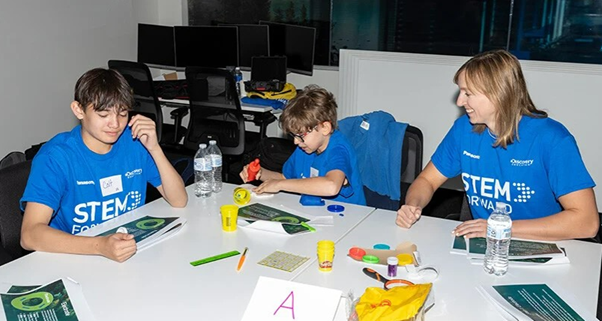
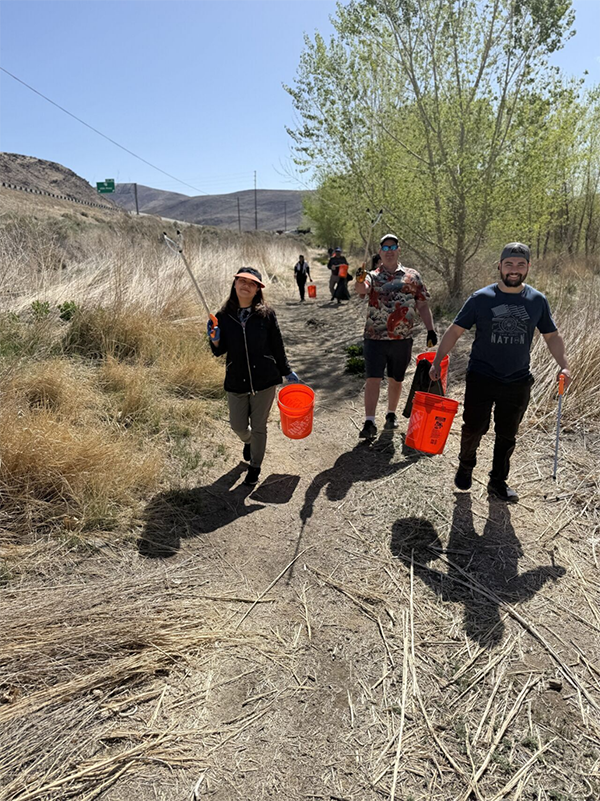
On Earth Day in 2025, Panasonic Energy Nevada employees partnered with Keep Truckee Meadows Beautiful (KTMB) to make a visible, meaningful difference right here in our local community. As a long-standing nonprofit dedicated to environmental stewardship, KTMB's mission centers on creating a cleaner, more sustainable region through community engagement, education, and volunteerism. Their work goes far beyond litter removal. They inspire residents and organizations alike to take pride in the places we live, work, and play by fostering shared responsibility for the health of our environment.
Through this partnership, the Panasonic team joined KTMB's broader vision of preserving the natural beauty of the Truckee Meadows for generations to come. Together, we rolled up our sleeves to pick up litter, restore public spaces, and help protect local waterways, wildlife habitats, and open spaces. Efforts like these are a critical part of KTMB's mission to reduce waste, prevent pollution, and promote environmental awareness across Northern Nevada.
Participating in this event was not just about cleaning up. It was about strengthening our connection to the community and reinforcing our commitment to sustainability. We are grateful to stand alongside organizations like KTMB that empower individuals and businesses to be part of the solution. Their programs remind us that even small, collective actions can have a lasting impact on the health and beauty of our environment.
The Panasonic team teamed up for their enthusiasm, teamwork, and dedication to making a positive impact. We continue working together with partners like Keep Truckee Meadows Beautiful to protect our environment, inspire stewardship, and build a more sustainable future for all.
Latin America
WEEE Recycling via ABREE - Update
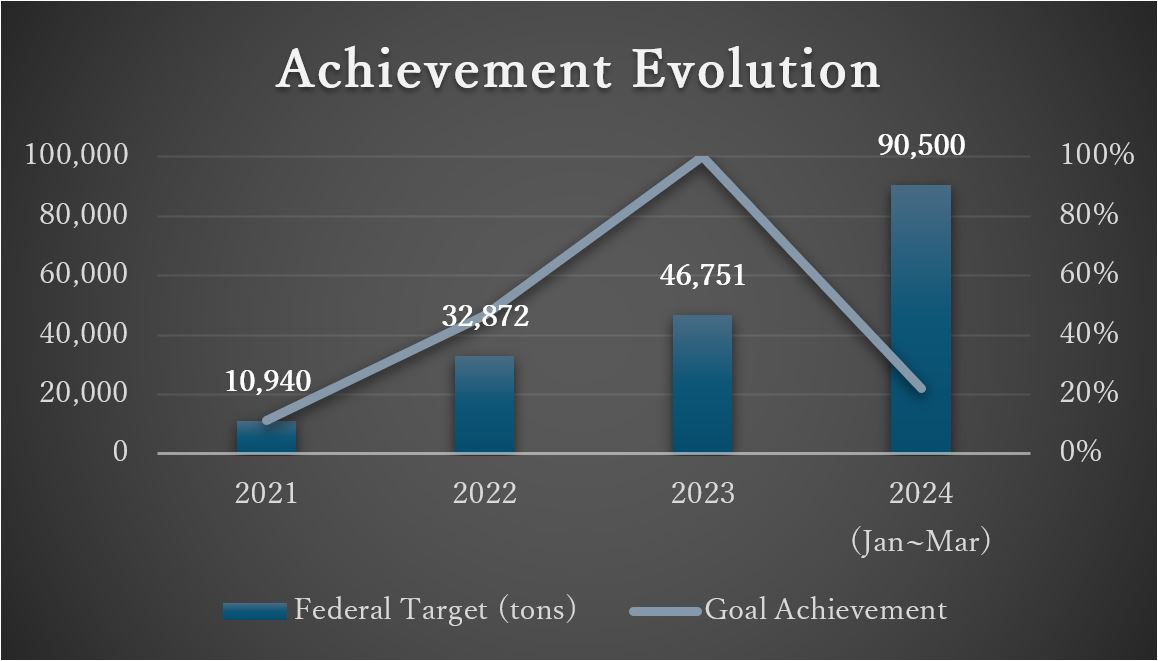
The Brazilian Association for Recycling of Electronics and Household Appliances (ABREE) presented its fourth Annual Performance Report for the Reverse Logistics System (RLS), covering the period from January 1 to December 31, 2025. The report reinforces ABREE's commitment to transparency, accountability, and regulatory compliance before the Ministry of the Environment and Climate Change, to which the association annually submits the results of its collective recycling system, in accordance with Federal Decree No. 10,240/2020, which governs reverse logistics for household electronic products, home appliances, and their components in Brazil.
The report highlights the performance achieved against both structural and quantitative targets. Structural targets refer to the number and geographic coverage of collection points established throughout Brazil, while quantitative targets measure the total volume, in tons, of products, components, and packaging collected and properly treated through environmentally sound processes. In addition, the document outlines the communication and environmental education initiatives implemented to raise public awareness and promote responsible disposal practices.
In 2023, ABREE collected and properly treated a total of 46,800 tons, fully achieving its annual tonnage target. In 2024, the target increased to 90,500 tons and was once again fully accomplished, demonstrating the continued effectiveness and maturity of the system.
For 2025, the target was set at 17%, representing an increase of five percentage points over the previous year and was fully accomplished as well. As of April 2026, 16,900 tons had already been collected and treated, corresponding to 27% of the target achieved to date. Panasonic continues to play a relevant leadership role within the association, making a strong contribution to the advancement of this important environmental agenda.
WEEE Recycling via GREEN ELETRON
Green Eletron is the managing entity for reversing logistics of batteries, with more than 11,392 battery collection points spread across the country. The battery factory in São José dos Campos sent, in 2025 alone, another 50 tons of negative production batteries for environmentally correct disposal. Zinc, one of its main raw materials, is recycled and used again in the battery manufacturing process.
For batteries, CONAMA 401 is the legislation that must be complied with in compliance with the national solid waste policy. There is no national target established for battery collection, however in 2025, 176 tons of batteries were collected over the country.
Project: "Casa do Leo", * Leo's House - Update
Casa do Leo is an initiative dedicated to environmental and social education. Officially launched in September 2023 with the participation of the Mayor of Sao Jose dos Campos and other local authorities, the project provides the community with an opportunity to experience Panasonic's culture, history, manufacturing operations, and interactive educational activities. Through partnerships with schools visiting Casa do Leo, the initiative also promotes awareness of proper battery disposal and responsible environmental practices.
In 2025, "Casa do Leo" received 262 visitors. During this period, each participant was provided with a mini collection container to encourage the proper disposal of used batteries and reinforce the project's educational purpose.
*Leo is the mascot of Panasonic's battery team.
Please find other sustainable activities on links below.
PLAT Web (Green Impact and sustainable activities) FY2025
https://www.panasonic.com/pa/corporate/pgi.html
https://www.panasonic.com/pa/corporate/news/articles/panama-employees-engage-in-tree-planting.html
India, South Asia, Middle East & Africa
The Panasonic Harit Umang initiative has successfully evolved into a comprehensive, holistic learning model that seamlessly integrates theoretical environmental education with impactful, real-world action. What began as a contest has transformed into a movement, bridging the gap between classroom concepts and industrial reality.
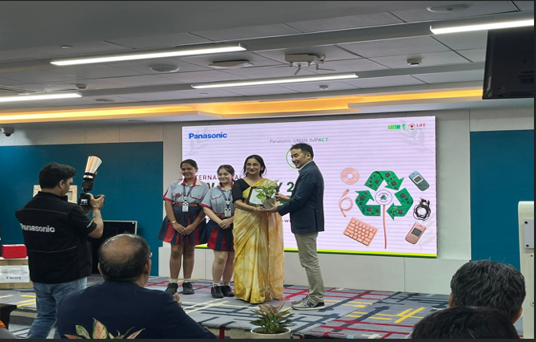
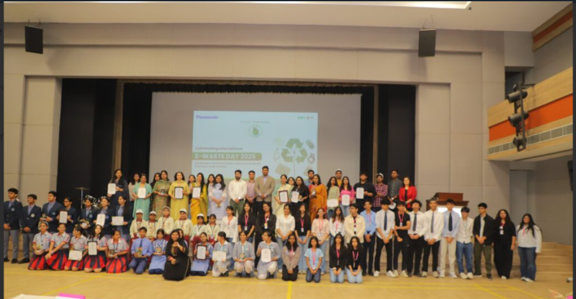
Through the journey—starting from the Strategic Launch and the intensive Awareness Campaigns to the massive Collection Drives—students have transitioned from being passive learners to becoming active environmental stewards. The program reached its emotional and professional peak during the International E-Waste Day celebration at the Panasonic Head Office and the Grand Culmination at Heritage School, where the collective efforts of 11 educational institutions were recognized and honored.
The final phase, "Mission Recycle," provided the essential "Second Step" by taking students to the heart of the recycling process. By witnessing the scientific dismantling and recovery of materials at the recycling plant, students gained a firsthand understanding of the Circular Economy in action.
In addition, the Dry Cell Collection Contest enabled students to take direct action by responsibly collecting and channelizing hazardous waste. With participation from multiple schools, students contributed to the safe collection of over 5000+ dry cell batteries, demonstrating strong ownership and environmental responsibility.
Creative and participatory activities such as the Energy Conservation Poster Making Competition provided students with a platform to express their ideas and understanding through innovative visual representations, reinforcing key sustainability messages in an engaging manner.
Final Impact & Legacy:
- Skill Acquisition: Students have gained specialized tools, scientific knowledge, and the practical motivation necessary to manage electronic waste responsibly.
- Mindset Transformation: The initiative has successfully instilled a permanent sense of responsibility toward "Safe Disposal" and resource conservation.
- Commitment to Change: Through impactful activities such as e-waste and dry cell collection, the program has made a tangible contribution to environmental protection and the Panasonic GREEN IMPACT mission.
In conclusion, Panasonic HaritUmang has not only educated the youth but has also empowered them to lead the charge toward a cleaner, greener, and more sustainable global ecosystem. This journey ensures that the "Joy of Green" remains a lifelong commitment for every participant.
In addition, Panasonic drives awareness through targeted campaigns such as International E-Waste Day. A recent flagship initiative at the Gurugram head office resulted in the collection of approximately 900 kg of e-waste, demonstrating the effectiveness of consumer engagement programs in diverting waste from landfills.
Through these integrated initiatives, Panasonic India continues to advance circular economy principles, enhance resource efficiency, and reduce environmental impact. These efforts are aligned with Panasonic's global Green Impact vision, reinforcing its commitment to sustainability, decarbonization, and responsible manufacturing.