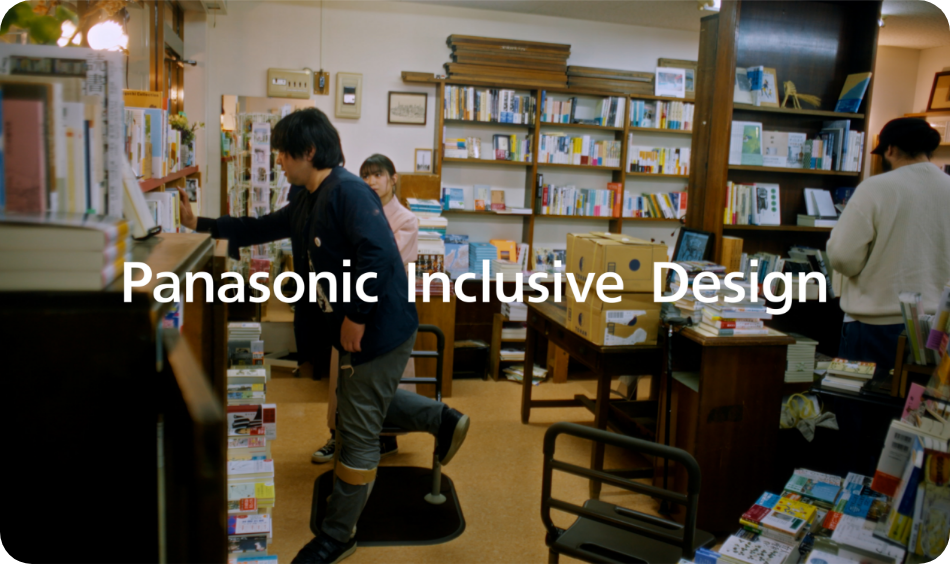


Our DNA is “empathy-driven anufacturing”With this as our foundation, and in order to evolve our initiatives while embracing societal diversity and looking toward the future, we revised our internal “Operational Rules for Universal Design” originally established in 2003 into the “Operational Rules for Inclusive Design and Universal Design” in February 2025.
These regulations define the mission, vision, five action guidelines, and achievement criteria for inclusive design, driving company-wide implementation. Here, we introduce the worldview we aspire to realize, in alignment with the values and direction outlined in the regulation.

Panasonic’s Goal for Inclusive Design

Expanding Empathy
Our mission since it was founded in 1918 has been to use intelligence, mindfulness, empathy, and comfort to create products that bring joy to users.
We have empathy-driven manufacturing built into our DNA.

Pursuing an Inclusive and Respectful Society
As society evolves, so must our approach.
We aim to find and address overlooked social challenges through collaboration to deliver inclusive solutions that extend beyond certain user groups.
Our goal is to create happiness and joy for everyone through our products, services, and operations.

Panasonic’s Goal for Inclusive Design
Expanding Empathy
Our mission since it was founded in 1918 has been to use intelligence, mindfulness, empathy, and comfort to create products that bring joy to users.
We have empathy-driven manufacturing built into our DNA.
Pursuing an Inclusive and Respectful Society
As society evolves, so must our approach.
We aim to find and address overlooked social challenges through collaboration to deliver inclusive solutions that extend beyond certain user groups.
Our goal is to create happiness and joy for everyone through our products, services, and operations.
The Five Principles for Expanding Empathy
To achieve the inclusive design we aspire to, we make each of the four design processes—"Insight, Strategy, Create, and Storytelling"—inclusive, while also adding the most crucial element: "Overarching."

Overarching

Shifting from designing solutions for one person to scaling ideas for a world where everyone can live with greater ease.
By solving a problem for one individual, we can potentially solve the same problem for others who face similar challenges. Our goal is to expand the solution to reach those who have not been reached before and to raise awareness of the issue among the people around them.
Key approaches
By engaging with individuals who share their challenges, we can explore the factors for the lack of inclusivity and find ways to develop.
Examine the issues, keep ourselves up-to-date, and continually strive to improve.
Value provided to customers
Obtaining products and services can be more affordable since they may not be specific to a limited group.
Products can continue to be available and used because they are applicable to many people.
Management perspective
New values can be created from the needs and issues of a narrow group of people and lead to the development of products and services.
New markets on a global scale can be developed and market share in existing markets can expand.
Insight

Recognize issues that can be overlooked and address unheard voices by always staying aware.
The first step for developing new products is to pay attention to diverse groups of people and their immediate circle.
We will expand the scope of our assumed users and consistently be aware that there are problems that we have overlooked and voices that we have not heard.
Key approaches
Rather than grouping together disabilities or characteristics, understand that each person has a different way of feeling and living, which can change from time to time.
Focus not only on the person concerned but also the people around them, and consider not only objects but also the situations and spaces in which they exist.
Make sure that while prioritizing inclusivity for one, we are not overlooking another person or situation.
Value provided to customers
The individuals directly in need, as well as those around them, can live their own lives without being left behind.
Management perspective
Discover new values and markets by identifying problems obscured because of user characteristics that were not considered.
Pioneer efforts to address related legislation and standards (such as the revision of the Law for the Elimination of Discrimination against Persons with Disabilities) as well as global trends, and become the subject of corporate social responsibility activities.
Strategy

Collaborate with end users and their communities to unlock rich opportunity spaces.
We will learn not only from those involved in the development of the product but also from people with diverse characteristics and those around them. By working collaboratively, we can create better products and experiences.
Key approaches
Design not for the user but with the user.
Use empathy to understand the issues and needs, as if they were personally yours.
Do not exclude various circumstances, and even in difficult cases, prioritize the mental and physical well-being of each individual as the primary concern.
Value provided to customers
Unserved people get what they really wanted and what was previously unavailable, which fulfills both their practical and emotional needs.
Management perspective
Provide not only objects but also a multi-faceted value that includes daily situations and living spaces.
Creation

Realize diverse user experiences that are intended for everyone through various technologies and flexible approaches.
We will be flexible in our approach to product design and problem-solving measures. We will achieve detailed customization by utilizing diverse technologies and data, and when a single product is insufficient, we will solve problems through attachments or by collaborating with other companies. Additionally, we will continually evaluate, redesign, and improve the product after its release.
Key approaches
Create products and services that cater to diverse needs and experiences, rather than a one-size-fits-all approach.
Be flexible when choosing means, and emphasize the psychological aspects that make users feel the products or services are for them.
Provide solutions that lead to growth and satisfaction without denying users of their capabilities.
Value provided to customers
A range of options allows individuals to select the one that best suits their lifestyle, situation, and preferences.
Management perspective
Rather than necessarily requiring a large investment, solutions can be flexibly considered and processes improved, therefore allowing a steady flow of results.
Storytelling

Ensure communication reaches the people in need by using the most effective words and methods.
We want to work collaboratively with diverse people and carefully communicate values.
Our goal is to make sure that the values are communicated to those who require it, as well as to those who may not realize they need it. We aim to do so in a manner that allows not only individuals who are experiencing difficulties but also those around them to feel at ease expressing their concerns.
Key approaches
Learn the perceptions and feelings of the people in need, the people around them, and the people involved, and together create expressions and means to provide a better experience.
Consider the accessibility of information so that it can be effectively communicated to people with diverse characteristics and in different situations.
Continue to connect with the people in need and those around them, even after the communication.
Value provided to customers
Necessary information is available without requiring an effort to find it.
Information is accessible to those around them who can support them and reassure them, making it easier for the people in need to use the service.
Management perspective
Lost opportunities can be prevented by proactively communicating information directly with the people in need and other stakeholders.
Concept Movies
In order to create a safe and comfortable environment for all people, it is necessary not only to utilize technology, but also to look at the differences that exist today, discover them and turn them into new ideas.Panasonic Inclusive Design takes a fresh look at the concept of Inclusive Design through four different groups of 'ordinary everyday life'.
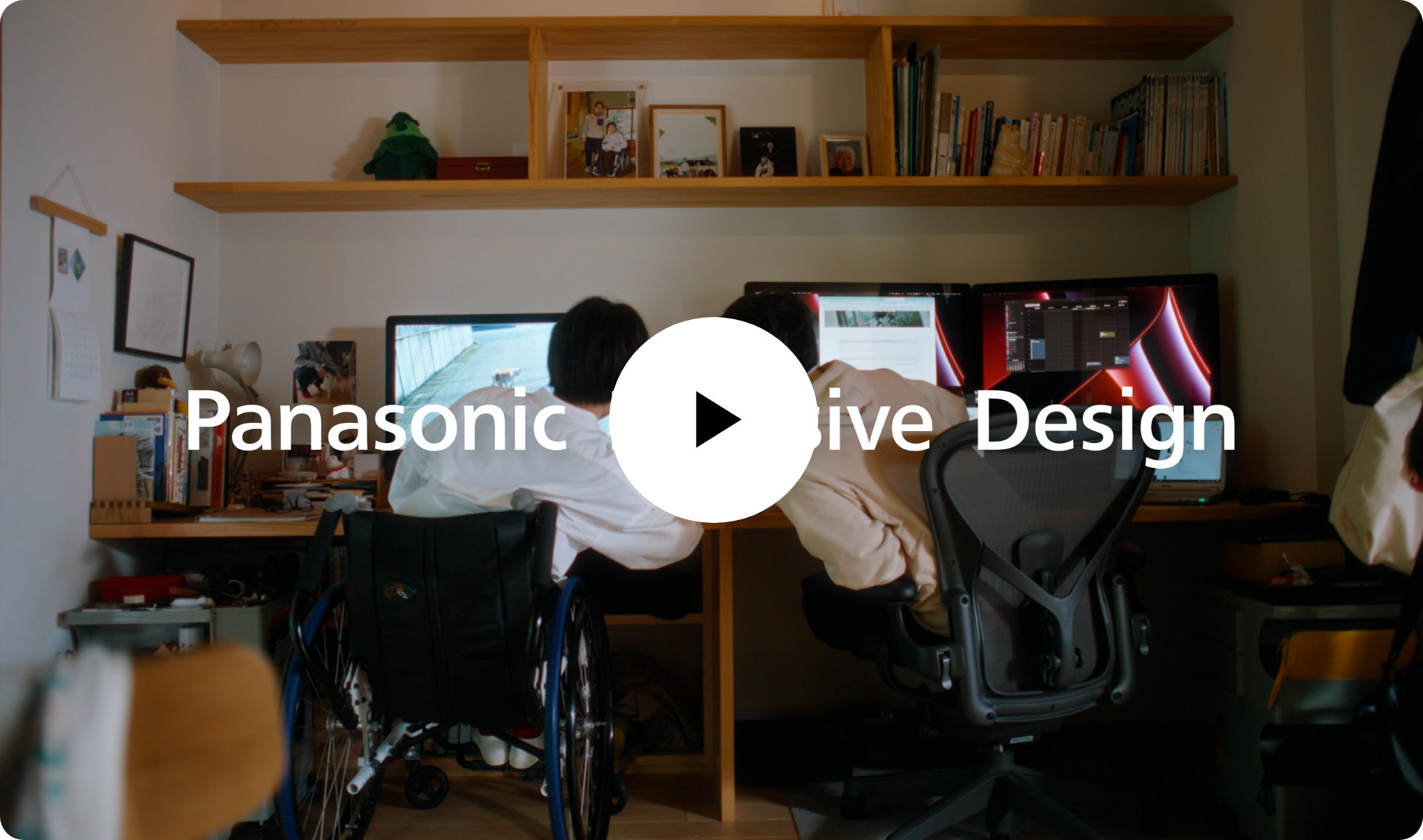
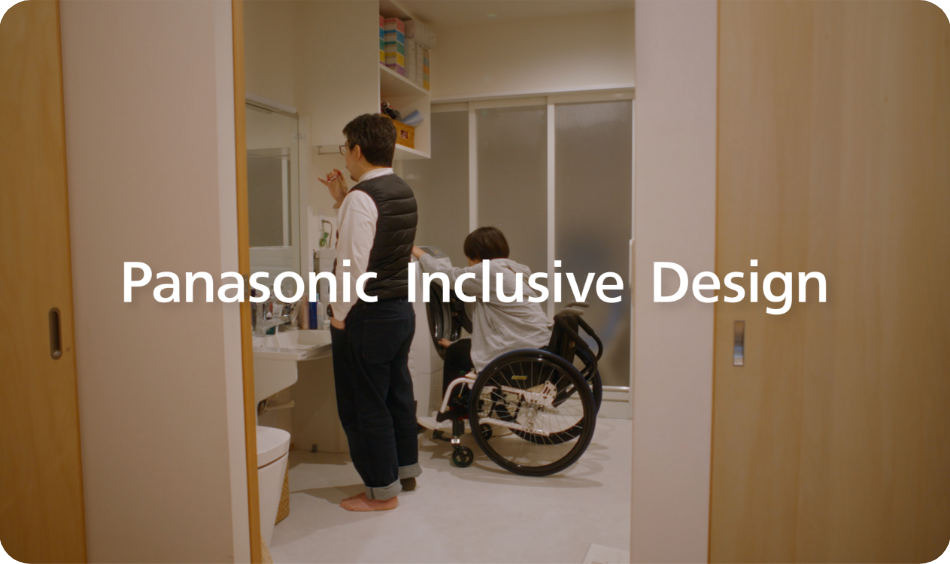
A wheelchair user Shiho Tsutsumi and Tomohiro Tsutsumi

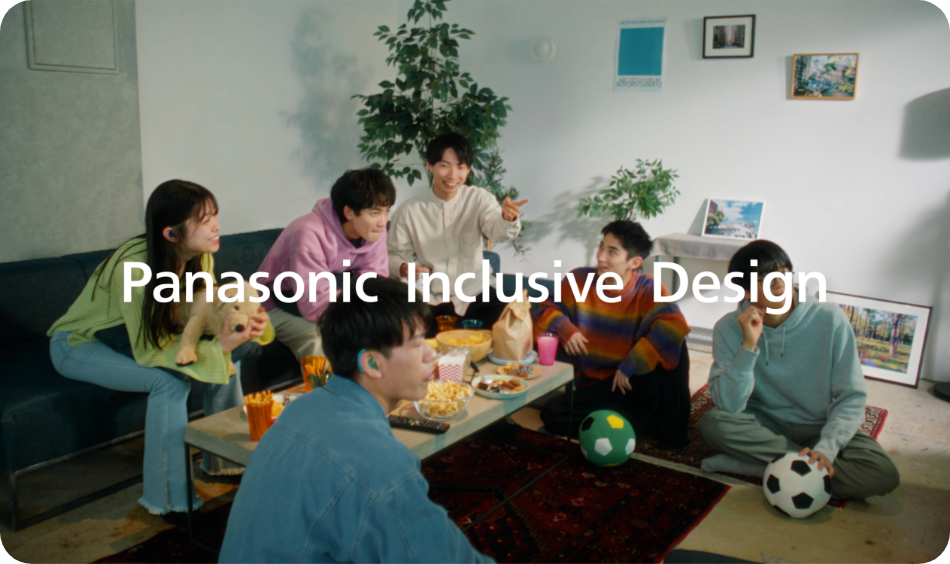
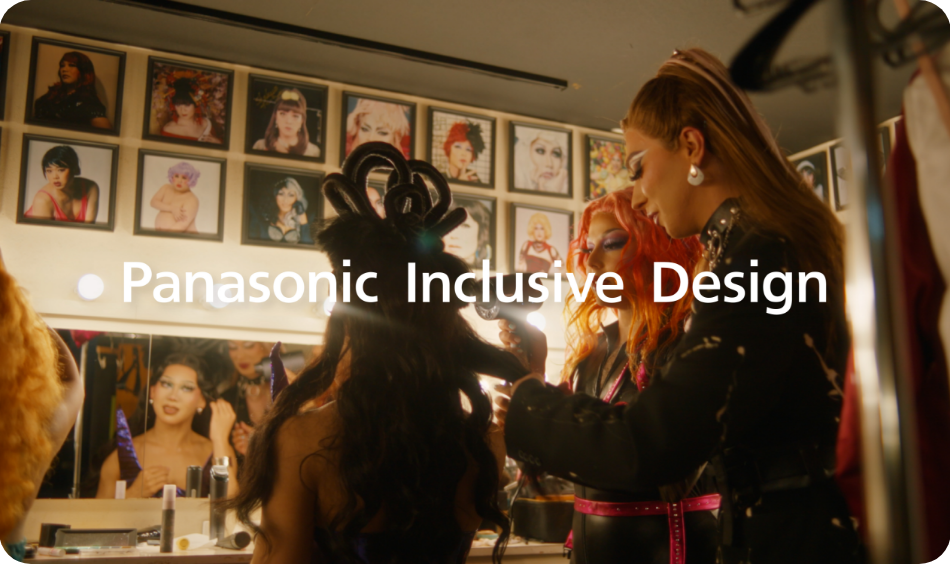
A drag queen, Labianna Joroe
*The product shown in the Face Shaver movie is the one available at the time of filming.