


Conditions for Achieving Inclusive Design
We have set achievement conditions for each process in order to clarify the definition of inclusive design.
Only those that meet these standards will be considered as achieving Our Inclusive Design.


1.Gaining insights
Through dialogue with a diverse range of lead users, we have gained insights into issues that need solving at the product or service concept stage.
2.Generating Solutions
Through repeated dialogue with lead users, we have polished our methods for solving issues.
3.Verifying
Verification is done with lead users to see if the problem has been solved or not.
1.Gaining insights
Through dialogue with a diverse range of lead users, we have gained insights into issues that need solving at the product or service concept stage.
2.Generating Solutions
Through repeated dialogue with lead users, we have polished our methods for solving issues.
3.Verifying
Verification is done with lead users to see if the problem has been solved or not.
Examples of initiatives that have met the achievement requirements
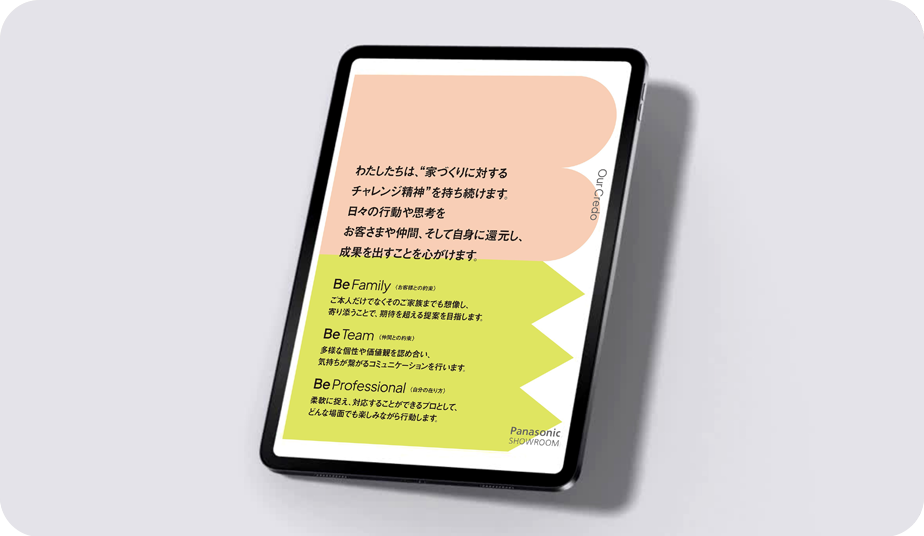
Panasonic Showroom Credo Renewal
The Credo was renewed to address the challenge that it was not fully integrated into daily operations, and refined through dialogue with frontline staff into guiding principles that can be naturally practiced in everyday work.

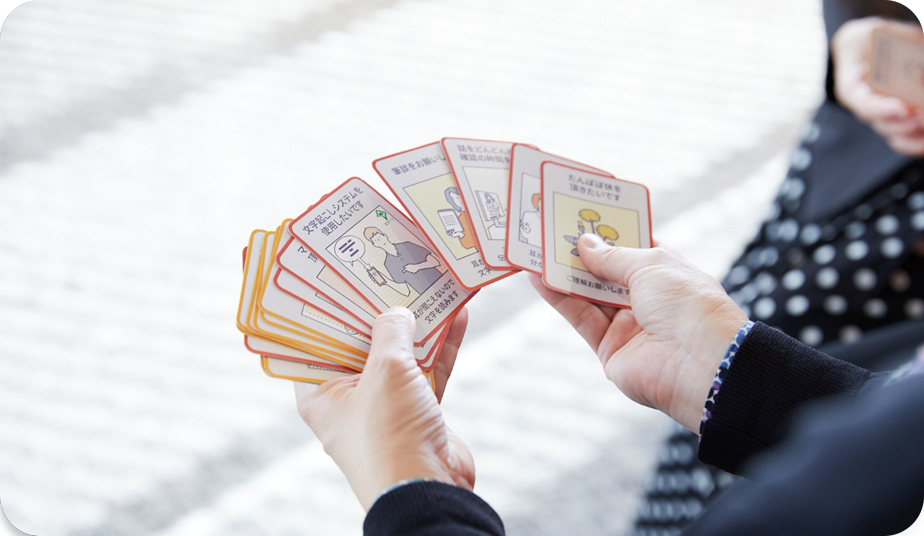
Communication Support Cards
Communication Support Cards are a tool that makes workplace concerns and requests for support visible—things that are often difficult to voice directly—in the form of cards, creating opportunities for dialogue.
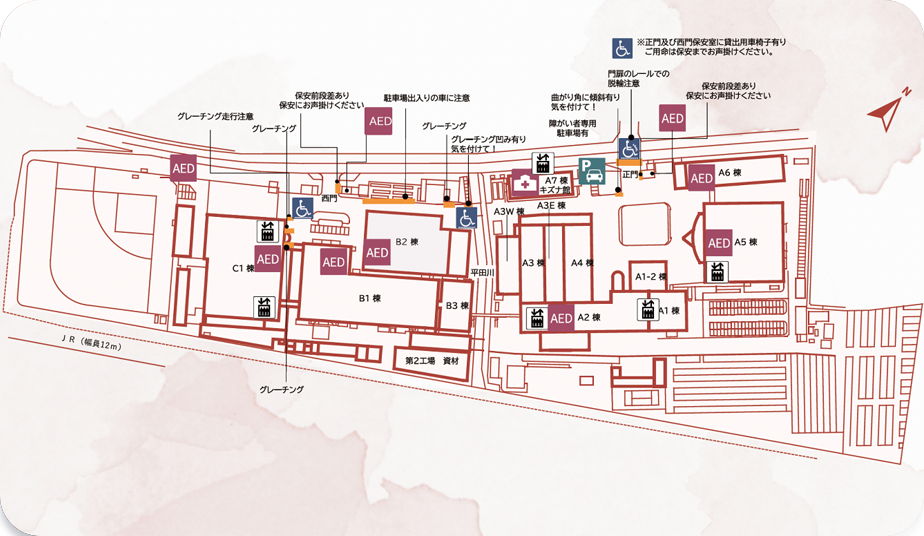
Accessibility Maps
Accessibility maps are tools that provide the information necessary for all employees and visitors, regardless of disability, to efficiently reach their destination.

KODEKAKE: A Mobility Support Device for People with Hearing Impairments
Kodekake is a prototype device developed to support people with hearing impairment who find it difficult to notice when someone approaches from behind and to provide an experience where they can go out with peace of mind in the city.
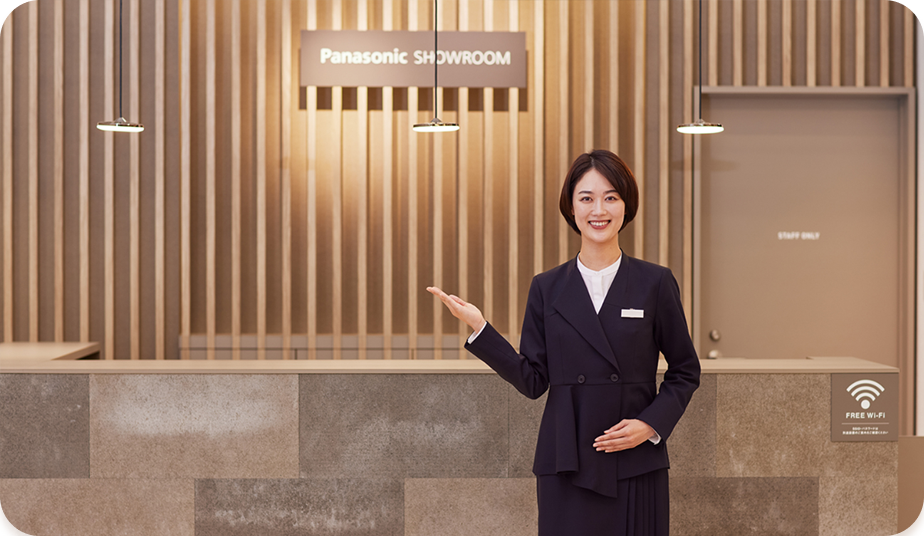
Panasonic Showroom Uniform Renewal
At the Panasonic Showroom, we approached the uniform renewal not merely as a clothing update, but as an inclusive co-creation process to visualize “our distinctive way of working and customer service.”

Attachment Chips for Home Appliances
Responding to feedback that touch controls—designed for ease of cleaning—can be difficult to use without visual cues.

Added accessibility for washing machine operation app
In response to wishes from people with no or limited vision, we have designed the washing machine operation app to increase accessibility (reading aloud).
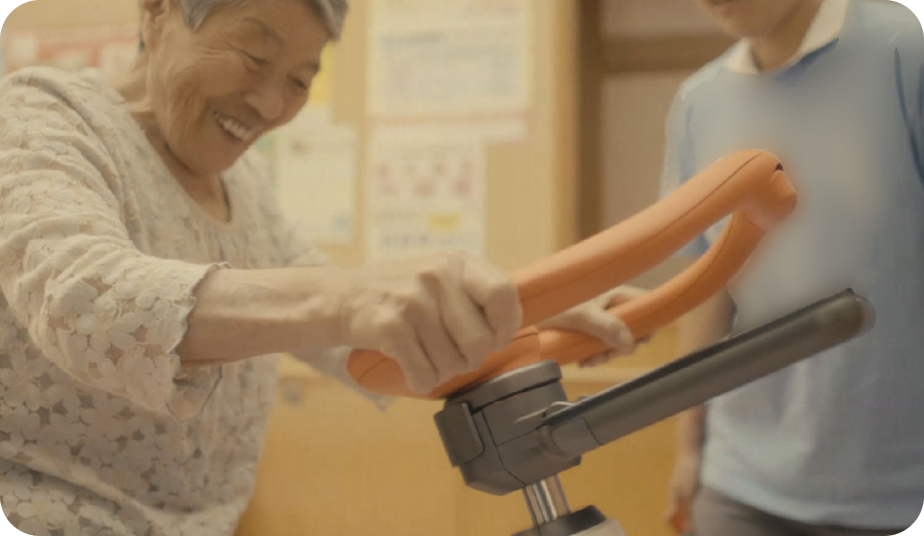
Walk Training Robot
We have designed a walk training robot that combines a design that encourages the elderly to want to train on their own, and efficient training functions that suit each person.
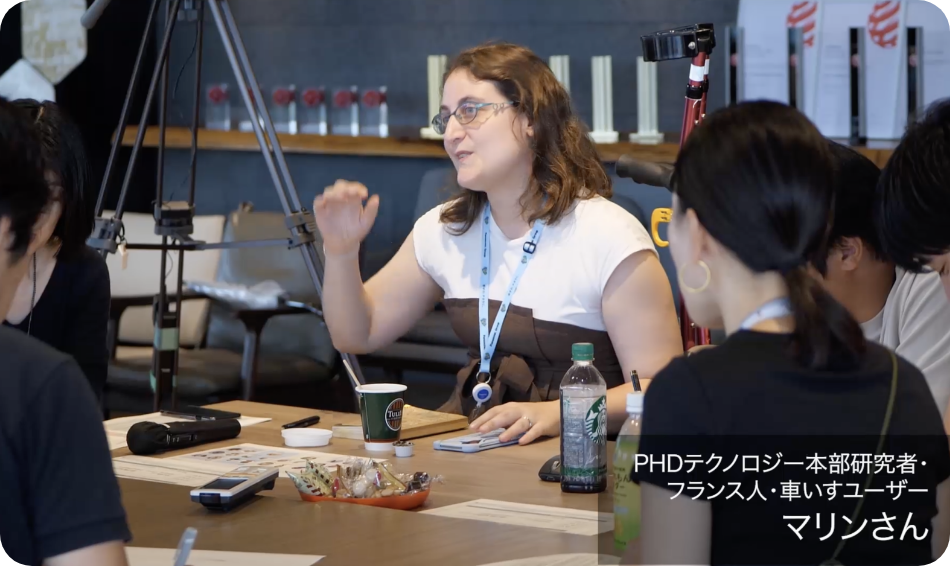
Workshops to co-create ideas for inclusive design
We held workshops to learn about the necessary perspectives for expanding empathy.