


Outline
The Walk Training Robot is designed to work closely with each individual in anticipation of their future independence. In fact, at the initial stage of development, it was a different shape to what it is now. As we were getting numerous elderly people to carry out verification testing and listening to their opinions, we came up with a design that makes the elderly want to use it, that could offer a way to visualize training results, and, with the addition of efficient training functions tailored to each individual, created a product that will satisfy both the elderly and their facility staff.


Gain insights from dialogue at conceptualization stage
Exercise is vital to ensure the elderly are able to live healthy lives. But at the same time, the risk of falls increases with age. This is why at facilities without specialist staff, training is not actively done for fear for falls. We have realized that this is a problem. This is why we came up with a robot that could be used for walk training with peace of mind.
We created a prototype and went ahead with testing at hospitals and care facilities, clearing a range of technical issues. However, an elderly man told us that the robot looked uncool, so he wouldn’t want to use it.
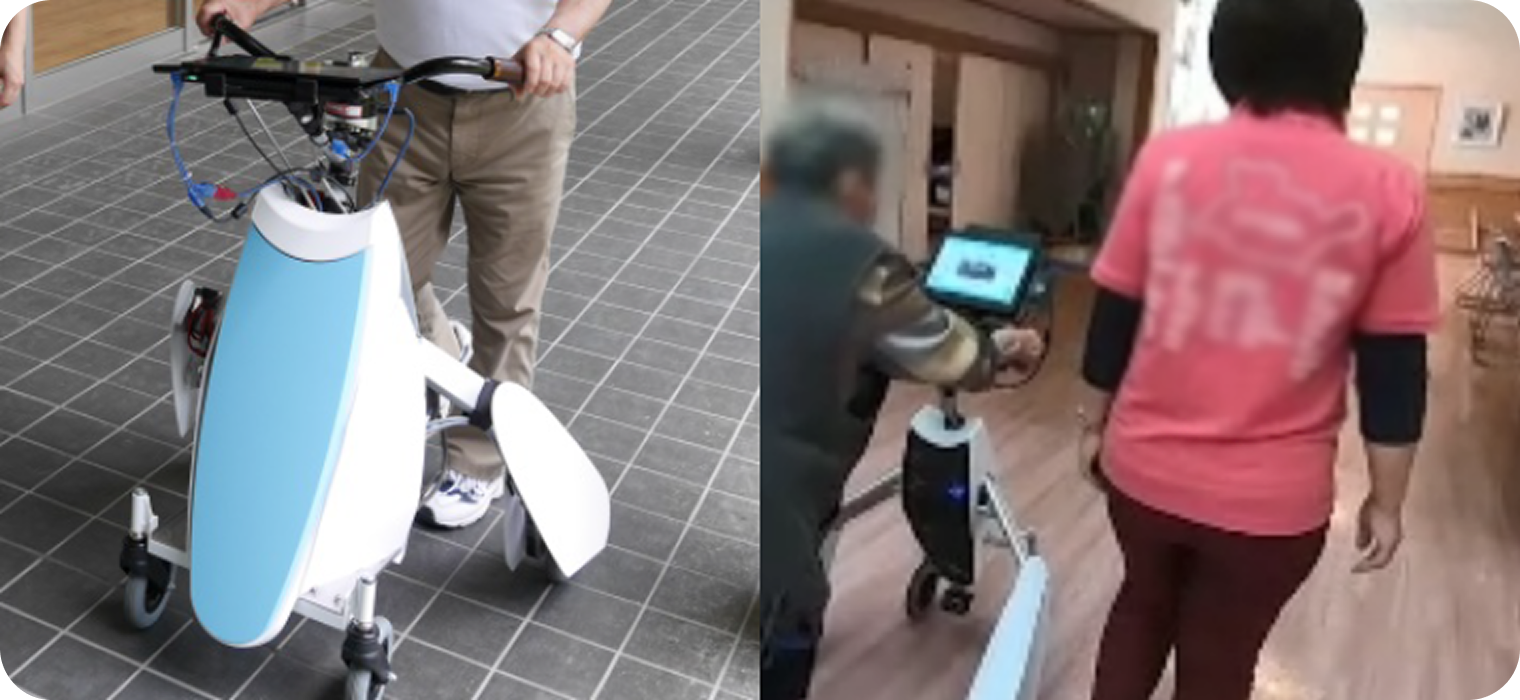

Refining the solution method through repeated dialogue
To deal with the issue of getting our users, the elderly, motivated to walk, we made a number of improvements through dialogue with the elderly, such as a shape and coloring that would make them want to use it, handles that could be gripped in different ways depending on height or physical condition, easy to see, easy to use monitors, and so on. In addition, facility staff told us that while they can carry out training even without specialist staff, they are not confident about being to determine if the training is showing results, or that the operation is complex and hard to master, and even when you do remember it, there are a lot of steps and so it would be hard to incorporate into normal work.
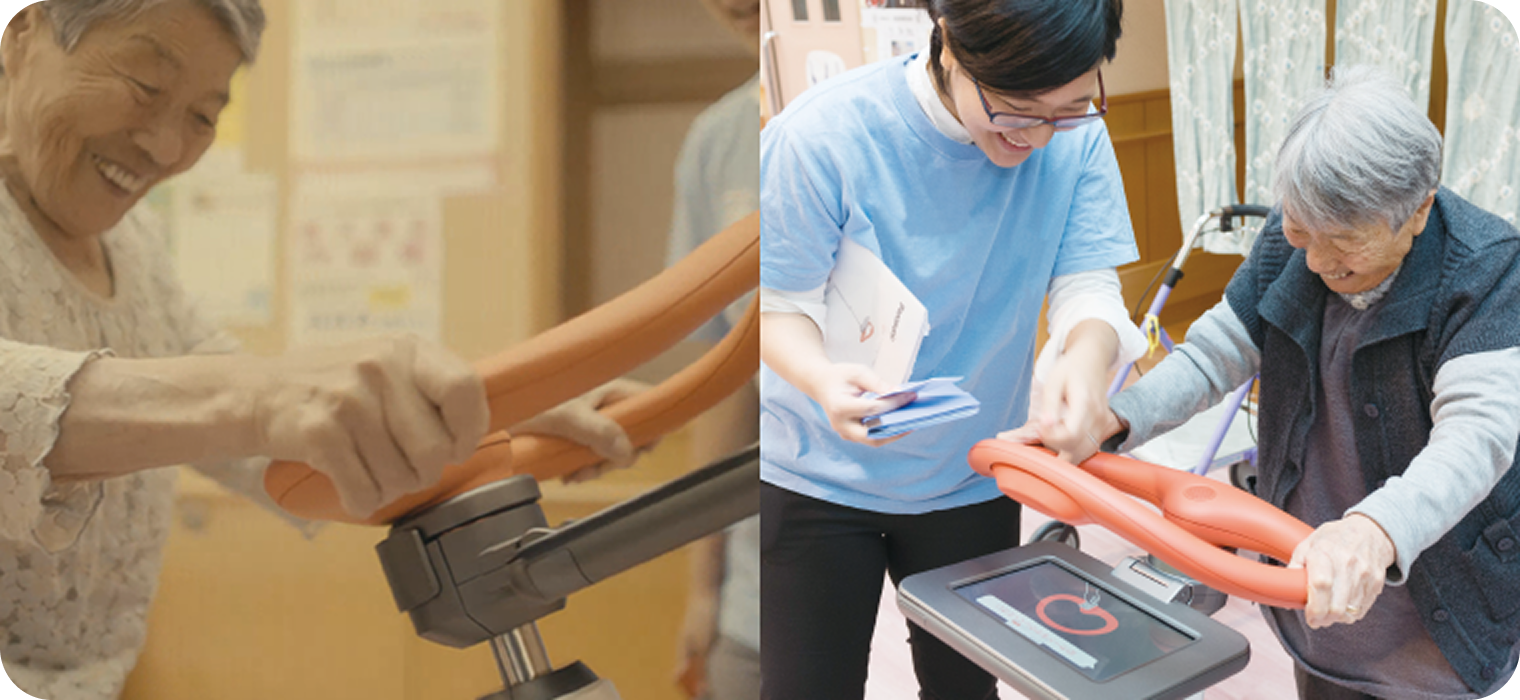


Verification to see if the problem has been solved
We included a function that allowed users to incorporate exercise loading into walking movements during training, gradually building up from an easy start. As we were able to achieve a design that elderly people would actively want to use, they are able to use it with smiles. In addition, facility staff laud the fact that they are now able to judge training results at a glance from the numbers, and can log in simply by choosing a nickname, they are able to provide optimal training for users’ physical functions.
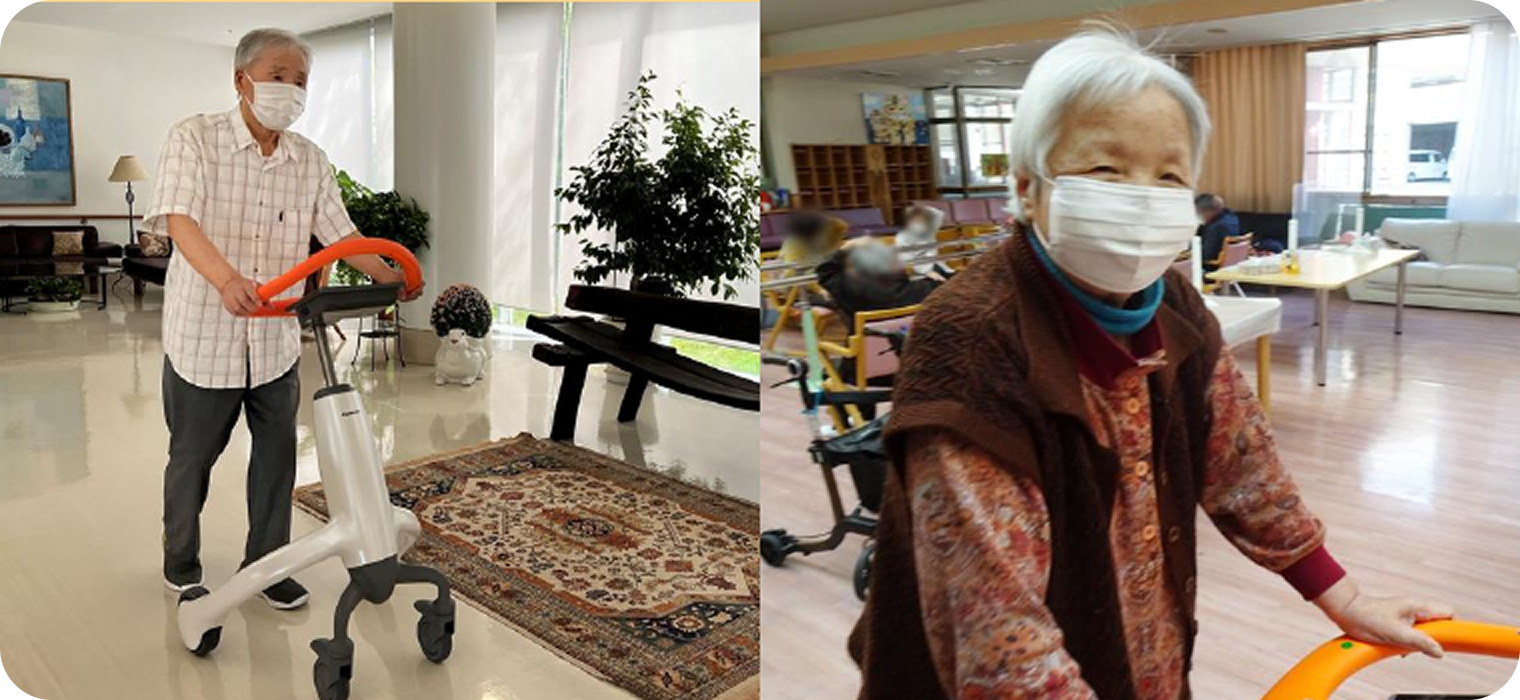
Gain insights from dialogue at conceptualization stage
Exercise is vital to ensure the elderly are able to live healthy lives. But at the same time, the risk of falls increases with age. This is why at facilities without specialist staff, training is not actively done for fear for falls. We have realized that this is a problem. This is why we came up with a robot that could be used for walk training with peace of mind.
We created a prototype and went ahead with testing at hospitals and care facilities, clearing a range of technical issues. However, an elderly man told us that the robot looked uncool, so he wouldn’t want to use it.
Refining the solution method through repeated dialogue
To deal with the issue of getting our users, the elderly, motivated to walk, we made a number of improvements through dialogue with the elderly, such as a shape and coloring that would make them want to use it, handles that could be gripped in different ways depending on height or physical condition, easy to see, easy to use monitors, and so on. In addition, facility staff told us that while they can carry out training even without specialist staff, they are not confident about being to determine if the training is showing results, or that the operation is complex and hard to master, and even when you do remember it, there are a lot of steps and so it would be hard to incorporate into normal work.
Verification to see if the problem has been solved
We included a function that allowed users to incorporate exercise loading into walking movements during training, gradually building up from an easy start. As we were able to achieve a design that elderly people would actively want to use, they are able to use it with smiles. In addition, facility staff laud the fact that they are now able to judge training results at a glance from the numbers, and can log in simply by choosing a nickname, they are able to provide optimal training for users’ physical functions.
