


Outline
Panasonic Showroom Uniform Renewal At the Panasonic Showroom, we approached the uniform renewal not merely as a clothing update, but as an inclusive co-creation process to visualize “our distinctive way of working and customer service.”
From the conceptual stage, we engaged employees nationwide, articulating through dialogue an ideal vision that holistically considered diversity, comfort, and brand identity from the perspectives of society, the organization, and customers. Furthermore, we meticulously examined daily tasks and physical movements to explore how uniforms could enable everyone to work comfortably and in ways that suit their individual identities and needs.
The result is a new uniform combining elements like “choice,” “ease of movement,” and “adaptive reliability”—trust that keeps pace with changing values while consistently meeting expectations.
This project embodies the philosophy that employee happiness leads to customer happiness, expressed through the everyday touchpoint of clothing.

* This page is currently available only in Japanese.


Gain insights from dialogue at conceptualization stage
This project began not as a routine update, but as a symbolic opportunity to embody the future vision of the showroom.
During the concept phase, we used a company-wide employee survey (601 responses) and workshops to organize, from social, organizational, and customer perspectives, the roles expected of uniforms. We focused on workplace realities that had not been adequately addressed to date—for example, diverse work patterns at domestic and international exhibition venues shaped by differences in climate, culture, and facilities, as well as life-stage needs such as post-meal, postpartum, and age-related physical changes. This project set out to strengthen and improve measures in these areas.
A strong message also emerged: “To serve diverse customers, we first need to work comfortably ourselves.” This principle—that employees’ well-being drives customer well-being—became the foundation of the concept.

Refining the solution method through repeated dialogue
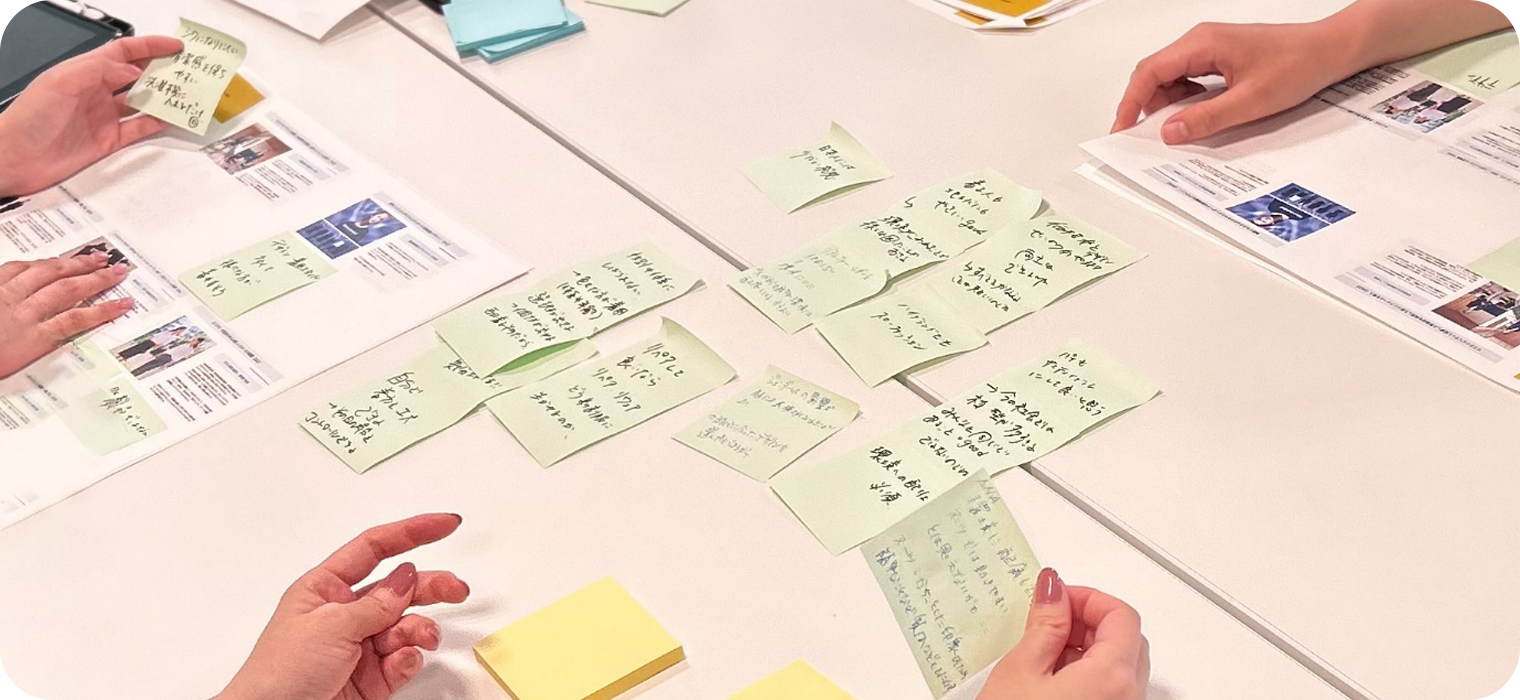
During the subsequent concept development phase, we held workshops involving iterative discussions with on-site members. Through this process, we clarified organizational ideals such as “stress-free work in any situation” and customer-centric needs like “balancing trust and approachability,” leading to a direction that would make customers feel, “This is truly Panasonic.”
This process yielded ideas aiming for a balance between functionality and symbolism in uniforms, such as choice-based uniforms, ease of maintenance, adaptability to physical changes, expression of Panasonic identity, and consideration for climate differences. The consistent core principle was to respect the very concept of “choice” based on the situation (TPO) and individual state, rather than relying on traditional, fixed uniforms.
We also meticulously dissected the tasks performed while wearing the uniform (morning briefings, cleaning, customer service, proposals, off-site visits, etc.). Considering body movements, tools used, and the daily workflow, we aimed for a design that enables confident performance in any situation.


Verification to see if the problem has been solved
For the final selection of the uniform design, we conducted nationwide wear trials and surveys. We evaluated comfort, ease of movement, and adaptability to different job roles and body types. Based on these criteria, we adopted Unico Co.’s proposal as the best fit for real workplace needs.
During the validation process, we reaffirmed that questioning what had long been treated as “standard”—for example, offering maternity options, pants options, non-heeled footwear, and choices that do not require stockings—is key to truly supporting the diverse lives and values of all people.
Looking ahead, the renewed uniforms will serve as a starting point for updating showroom communication guidelines and refreshing inclusive customer-service training. Building on the spirit of dialogue cultivated through this project, we will continue to create greater value.
Gain insights from dialogue at conceptualization stage
This project began not as a routine update, but as a symbolic opportunity to embody the future vision of the showroom.
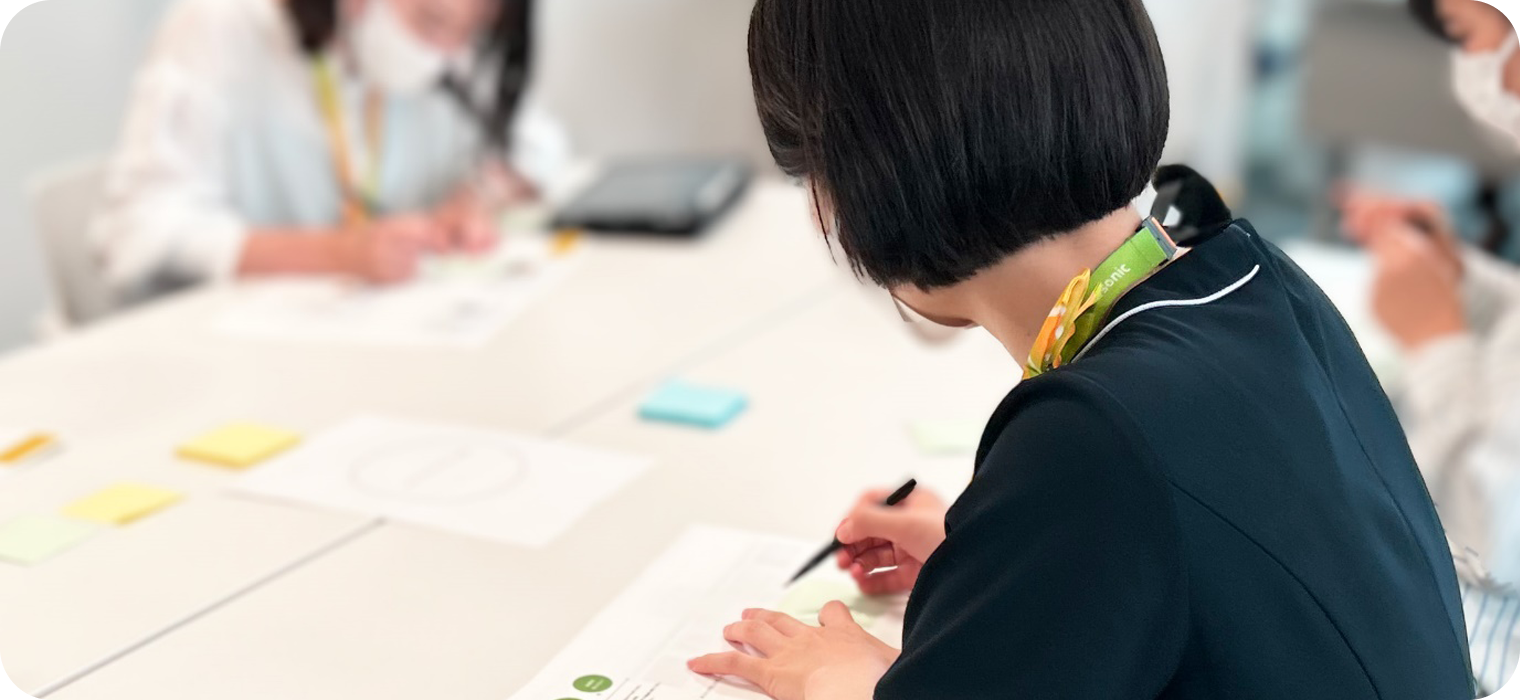
During the concept phase, we used a company-wide employee survey (601 responses) and workshops to organize, from social, organizational, and customer perspectives, the roles expected of uniforms. We focused on workplace realities that had not been adequately addressed to date—for example, diverse work patterns at domestic and international exhibition venues shaped by differences in climate, culture, and facilities, as well as life-stage needs such as post-meal, postpartum, and age-related physical changes. This project set out to strengthen and improve measures in these areas.
A strong message also emerged: “To serve diverse customers, we first need to work comfortably ourselves.” This principle—that employees’ well-being drives customer well-being—became the foundation of the concept.
Refining the solution method through repeated dialogue
During the subsequent concept development phase, we held workshops involving iterative discussions with on-site members. Through this process, we clarified organizational ideals such as “stress-free work in any situation” and customer-centric needs like “balancing trust and approachability,” leading to a direction that would make customers feel, “This is truly Panasonic.”
This process yielded ideas aiming for a balance between functionality and symbolism in uniforms, such as choice-based uniforms, ease of maintenance, adaptability to physical changes, expression of Panasonic identity, and consideration for climate differences. The consistent core principle was to respect the very concept of “choice” based on the situation (TPO) and individual state, rather than relying on traditional, fixed uniforms.
We also meticulously dissected the tasks performed while wearing the uniform (morning briefings, cleaning, customer service, proposals, off-site visits, etc.). Considering body movements, tools used, and the daily workflow, we aimed for a design that enables confident performance in any situation.
Verification to see if the problem has been solved
For the final selection of the uniform design, we conducted nationwide wear trials and surveys. We evaluated comfort, ease of movement, and adaptability to different job roles and body types. Based on these criteria, we adopted Unico Co.’s proposal as the best fit for real workplace needs.
During the validation process, we reaffirmed that questioning what had long been treated as “standard”—for example, offering maternity options, pants options, non-heeled footwear, and choices that do not require stockings—is key to truly supporting the diverse lives and values of all people.
Looking ahead, the renewed uniforms will serve as a starting point for updating showroom communication guidelines and refreshing inclusive customer-service training. Building on the spirit of dialogue cultivated through this project, we will continue to create greater value.
