


Outline
Kodekake is a prototype device developed to support people with hearing impairment who find it difficult to notice when someone approaches from behind and to provide an experience where they can go out with peace of mind in the city.
The device promotes “walking confidently while facing forward” through a wearable device that detects approaches from behind using radar and alerts users to danger via vibration,. It works together with a smartphone app that suggests safe routes considering sidewalk width and traffic volume.
By advancing each phase from conception to verification through dialogue with people who experience these challenges, we aimed to redesign sensations like awareness, safety, and ease.
*This project is currently in the prototype and verification stage and is not yet a commercial product. Content may change as development progress.


Gain insights from dialogue at conceptualization stage
The project's starting point was feedback from conversations with people who are hard of hearing or deaf: “I feel anxious when going out because I can't notice bicycles or cars approaching from behind.”
Through repeated conversations, it became clear that even with hearing aids or cochlear implants, sounds approaching from behind are often difficult to detect, frequently leading to accidents and heightened tension. Additionally, venturing into unfamiliar places requires the effort of researching safe routes beforehand, often make outings feel burdensome and limiting their range of activities.
Furthermore, hearing-impaired people with children face additional challenges: they must focus not only on their own safety but also on their children's, leading to mental fatigue and difficulties in communication.
Participants also shared that when navigating unfamiliar areas, increased reliance on smartphone screens creates secondary stress by making it harder to notice changes in their surroundings. We began exploring solutions to address these challenges together.
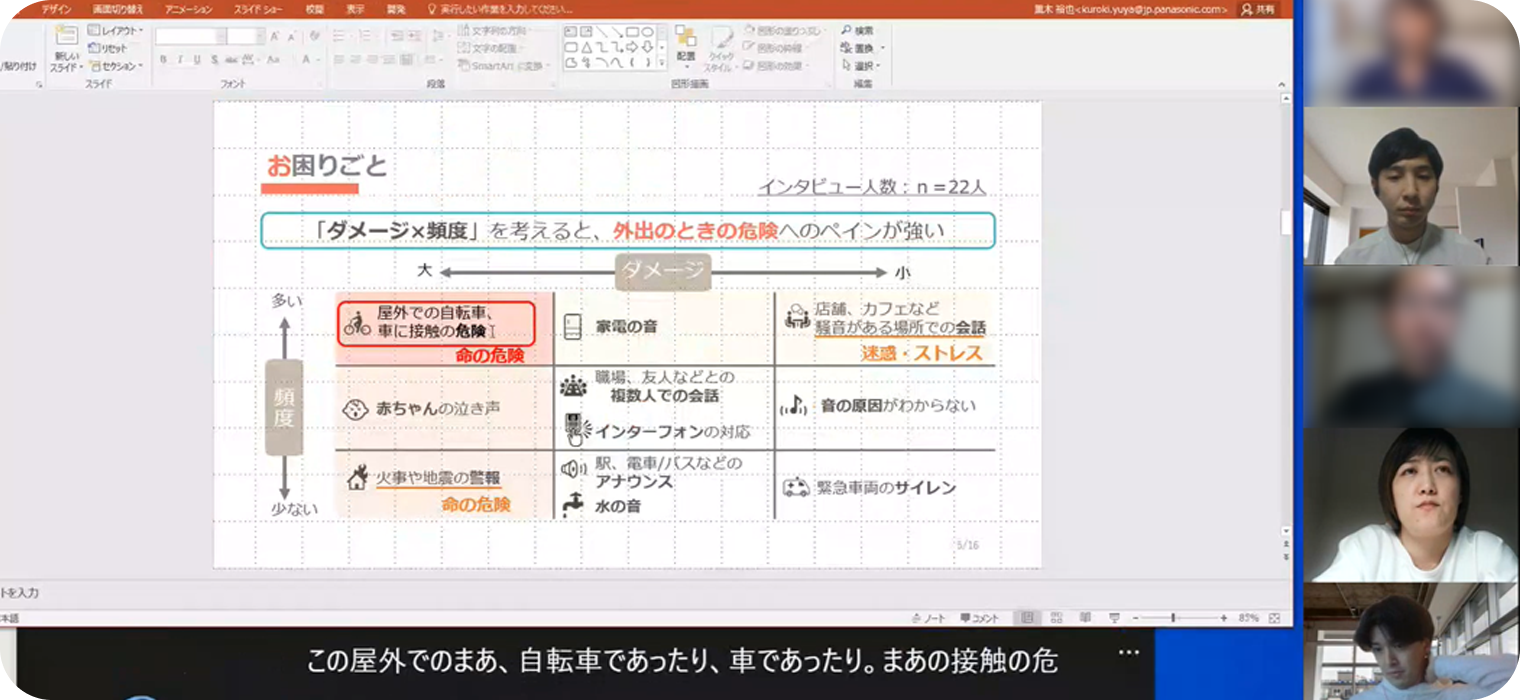
Hearing Session for People with Hearing Impairments


Refining the solution method through repeated dialogue
Through dialogue, we identified three key perspectives related to going out: “noticing notifications” “not needing to look at the screen,” and “no burden of continued use.” This led us to finalize a design featuring proximity notifications via both a neck-worn and wrist-worn vibration device.
During prototype testing and a preliminary trial with 13 participants, many people with hearing impairments shared positive feedback, stating: “My anxiety and fear about things approaching from behind while walking decreased,” and “I feel more at ease when walking.” However, some participants expressed concern about attracting attention from others due to wearing the detection device around their neck, prompting us to refine the design.
Furthermore, we designed the overall experience to enhance motivation for daily outings, mental ease, and the ability to casually expand one's range of activities. This was achieved by adding a navigation function to the smartphone app that suggests routes considering safety factors like traffic volume, sidewalk availability, and road width.
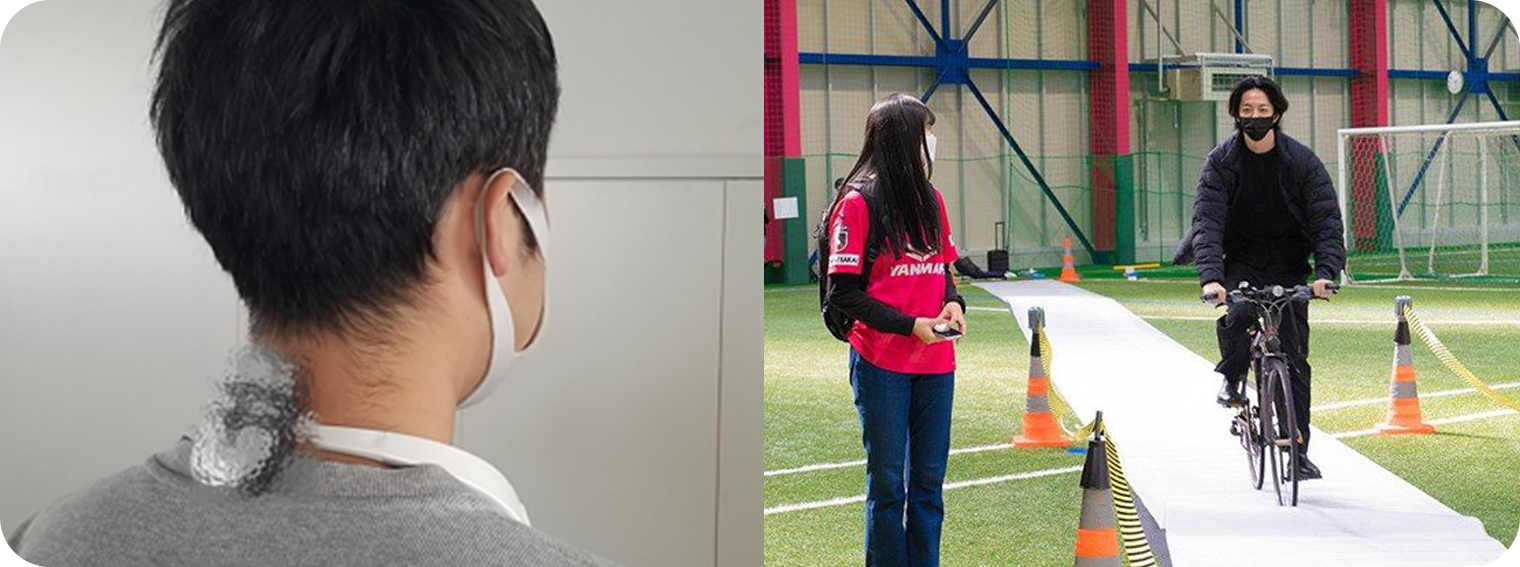
Left photo: First Prototype, Right photo: Early experience in an environment close to going out


Verification to see if the problem has been solved
The improved prototype was validated through field testing in urban settings. Participants reported feedback such as: “The vibrations let me walk without worrying about my back” and “I feel safe going farther now.”
Additional requests emerged, including: “Integration with smartwatches would make it easier to use” and “Beyond notifications, the reassurance of route selection is appreciated.” These insights provide valuable perspectives for future improvements.
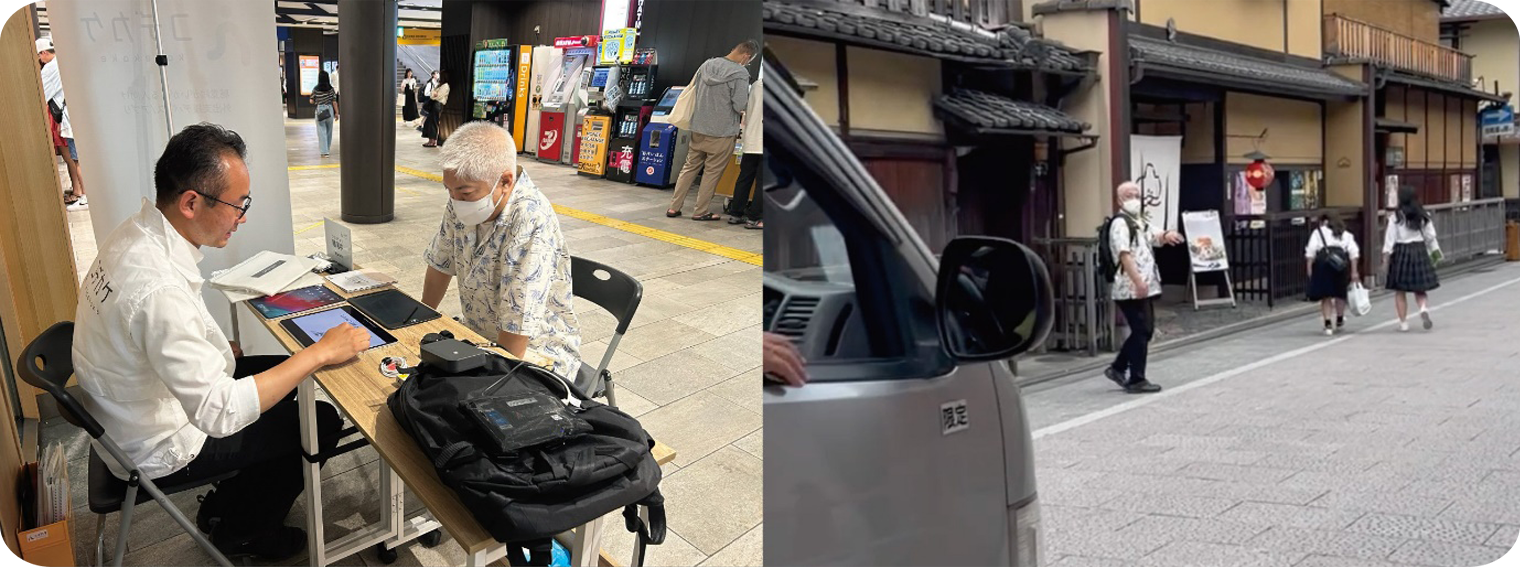
Hearing Session for People with Hearing Impairments
Gain insights from dialogue at conceptualization stage
The project's starting point was feedback from conversations with people who are hard of hearing or deaf: “I feel anxious when going out because I can't notice bicycles or cars approaching from behind.”
Through repeated conversations, it became clear that even with hearing aids or cochlear implants, sounds approaching from behind are often difficult to detect, frequently leading to accidents and heightened tension. Additionally, venturing into unfamiliar places requires the effort of researching safe routes beforehand, often make outings feel burdensome and limiting their range of activities.
Furthermore, hearing-impaired people with children face additional challenges: they must focus not only on their own safety but also on their children's, leading to mental fatigue and difficulties in communication.
Participants also shared that when navigating unfamiliar areas, increased reliance on smartphone screens creates secondary stress by making it harder to notice changes in their surroundings. We began exploring solutions to address these challenges together.
Hearing Session for People with Hearing Impairments
Refining the solution method through repeated dialogue
Through dialogue, we identified three key perspectives related to going out: “noticing notifications” “not needing to look at the screen,” and “no burden of continued use.” This led us to finalize a design featuring proximity notifications via both a neck-worn and wrist-worn vibration device.
During prototype testing and a preliminary trial with 13 participants, many people with hearing impairments shared positive feedback, stating: “My anxiety and fear about things approaching from behind while walking decreased,” and “I feel more at ease when walking.” However, some participants expressed concern about attracting attention from others due to wearing the detection device around their neck, prompting us to refine the design.
Furthermore, we designed the overall experience to enhance motivation for daily outings, mental ease, and the ability to casually expand one's range of activities. This was achieved by adding a navigation function to the smartphone app that suggests routes considering safety factors like traffic volume, sidewalk availability, and road width.
Left photo: First Prototype, Right photo: Early experience in an environment close to going out
Verification to see if the problem has been solved
The improved prototype was validated through field testing in urban settings. Participants reported feedback such as: “The vibrations let me walk without worrying about my back” and “I feel safe going farther now.”
Additional requests emerged, including: “Integration with smartwatches would make it easier to use” and “Beyond notifications, the reassurance of route selection is appreciated.” These insights provide valuable perspectives for future improvements.
May–July 2023 Field Test Scenes
