

Maximizing the Potential of Diverse Talent and Organizations*1 (Initiatives)
-
Developing and Appointing Transformational Leaders Who Will Shape the Future

-
Organization Culture Transformation
-
Promotion of Diversity, Equity & Inclusion (DEI) (Japan region)
-
Transformation of HR Functions (AI Utilization)
-
Creating a Safe, Secure, and Healthy Workplace
-
Consultation and Whistleblowing Channels
- *1 The information provided regarding DEI and diversity set forth policies, initiatives, and indicators is applicable to PHD, PEX, operating companies and affiliated companies in the Japan region, as well as certain other regions, and does not intend to refer to the United States. Employment practices in the United States are administered in accordance with applicable laws and regulations and other relevant requirements.
Developing and Appointing Transformational Leaders Who Will Shape the Future
To achieve sustainable business growth for the Group, high-quality decision-making is indispensable. To this end, the development and appointment of transformational leaders are essential. In developing successors for management positions, the Panasonic Group emphasizes not only leadership behaviors based on the Panasonic Leadership Principles (PLP), but also relevant experience (such as business management, overseas management, and business creation), as well as knowledge and skills (including decision-making and judgment capabilities, and the ability to formulate and execute strategies).
In order to continuously develop such leaders, we are establishing talent requirements and succession plans for all key positions across the Group, and conducting medium- to long-term, deliberate identification, development, and monitoring of successors. A central role in this process is played by the Group Talent Management Committee. This is a body in which presidents of operating companies and Executive Officers of Panasonic Holdings Corporation (PHD) discuss and make decisions regarding succession planning from groupwide and global optimization perspectives. The achievements in fiscal 2026 and future initiatives are as follows.
▪Building a Strong Management Team
In fiscal 2026, we continued to promote the development of a strong management team led by transformational leaders. In April 2026, we welcomed Ken Sain, CEO of the Panasonic Connect Group, as an Executive Officer and Business CEO of PHD, and the PHD management team (Executive Officer structure) now comprises a total of 20 members, including 9 mid-career hires, 4 women, and 2 non-Japanese members, with a diversity ratio of 55% (excluding overlaps). We will continue to maintain a diversity ratio of 50% or higher and further strengthen the management team.
▪Establishing a System for Successor Development
In fiscal 2026, to further enhance the effectiveness of succession planning, we strengthened talent visibility through the use of a 9-block framework. This framework evaluates candidates along two axes—“Performance” and “Value (the degree of leadership behavior aligned with the PLP)”—and classifies them into a total of nine blocks across three levels for each axis, enabling visualization.
As a result of our ongoing efforts, we accelerated the early identification and development of transformational leaders in fiscal 2026. However, at present, the proportion of Directors appointed in their 40s remains at 35%. Going forward, in regions other than North America, we aim to increase the ratio of Directors appointed in their 40s to 60% by FY2029. To achieve this, we will systematically implement tough assignments for succession candidates.
▪Development of Successor Career Paths
In fiscal 2026, we promoted initiatives such as onboarding and creating opportunities for engagement with senior executives as part of development support tailored to candidates’ aspirations (their desired direction and future vision).
Going forward, we will further leverage the proprietary Panasonic Triangle Potential Model*7 to foster transformational leaders who demonstrate behavioral traits that embody “Develop People” and “Welcomes Uniqueness and Differences.”
- *7 A proprietary Panasonic Group model for identifying individuals with high potential to demonstrate transformational leadership behaviors, particularly those that “Develop People,” in addition to delivering strong performance.
▪Successor Readiness
The number of successors for presidents of operating companies and Executive Officers of PHD is categorized by time frame for appointment—immediate, within five years, and within ten years. In fiscal 2026, the number of successors was revised based on the reorganized business portfolio.
| Fiscal 2024 | Fiscal 2025 | Fiscal 2026 |
|---|---|---|---|
Appointment possible immediately | 25 people | 24 people | 24 people |
Appointment possible within 5 years | 34 people | 35 people | 29 people |
Appointment possible within 10 years | 70 people | 66 people | 48 people |
Total | 129 people | 125 people | 101 people |
Organization Culture Transformation
Organizational culture is the culmination of the actions of individual employees, and it is important to design it deliberately in order to maximize business performance. Accordingly, we have developed, as a groupwide framework, the “6 Principles of Organization Design” (the “6 Principles”) based on the Organization Performance Model (OPM), and have clearly defined the organizational culture we aim to achieve. The 6 Principles are effective only when they are mutually aligned and work together as an integrated whole.
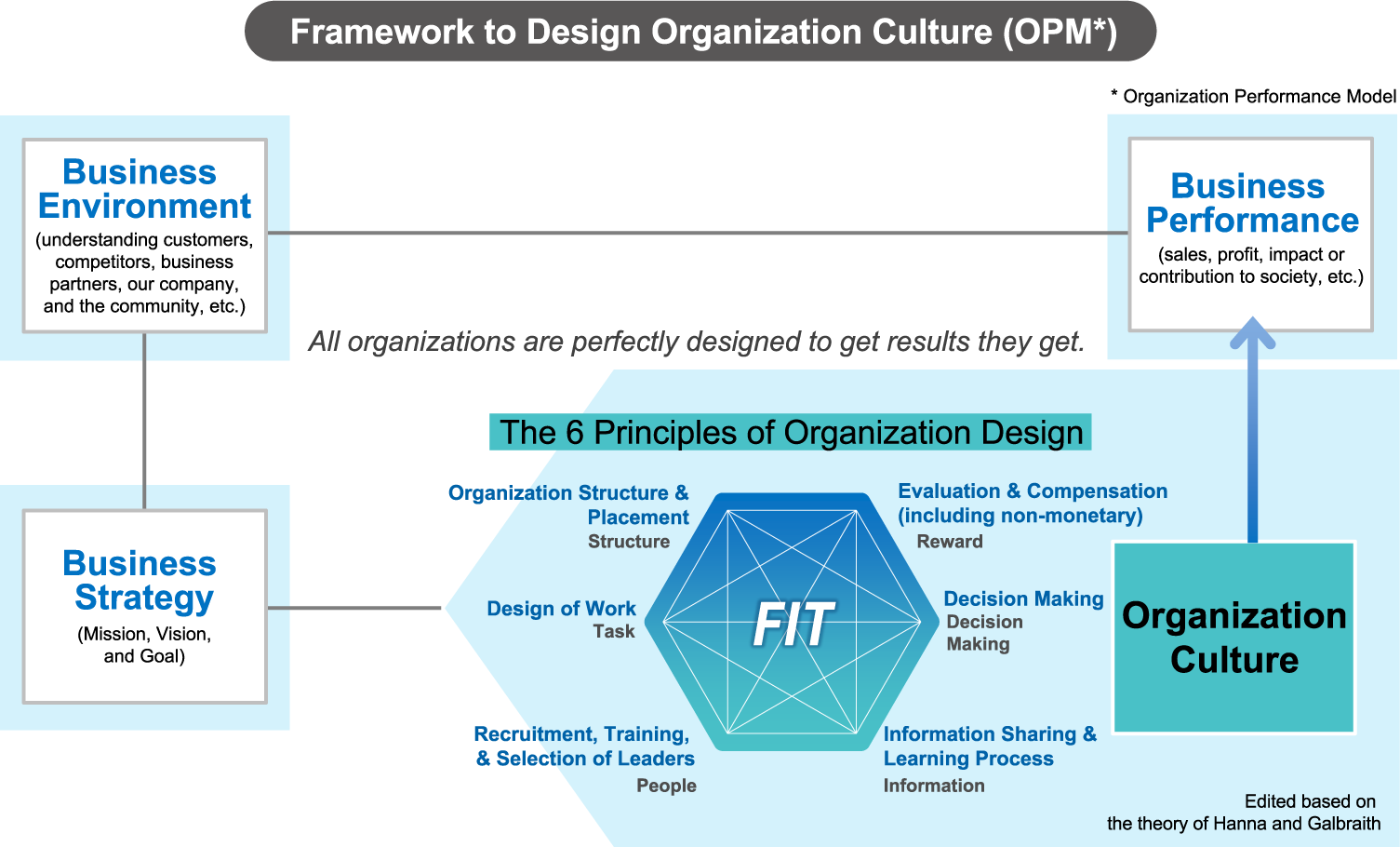
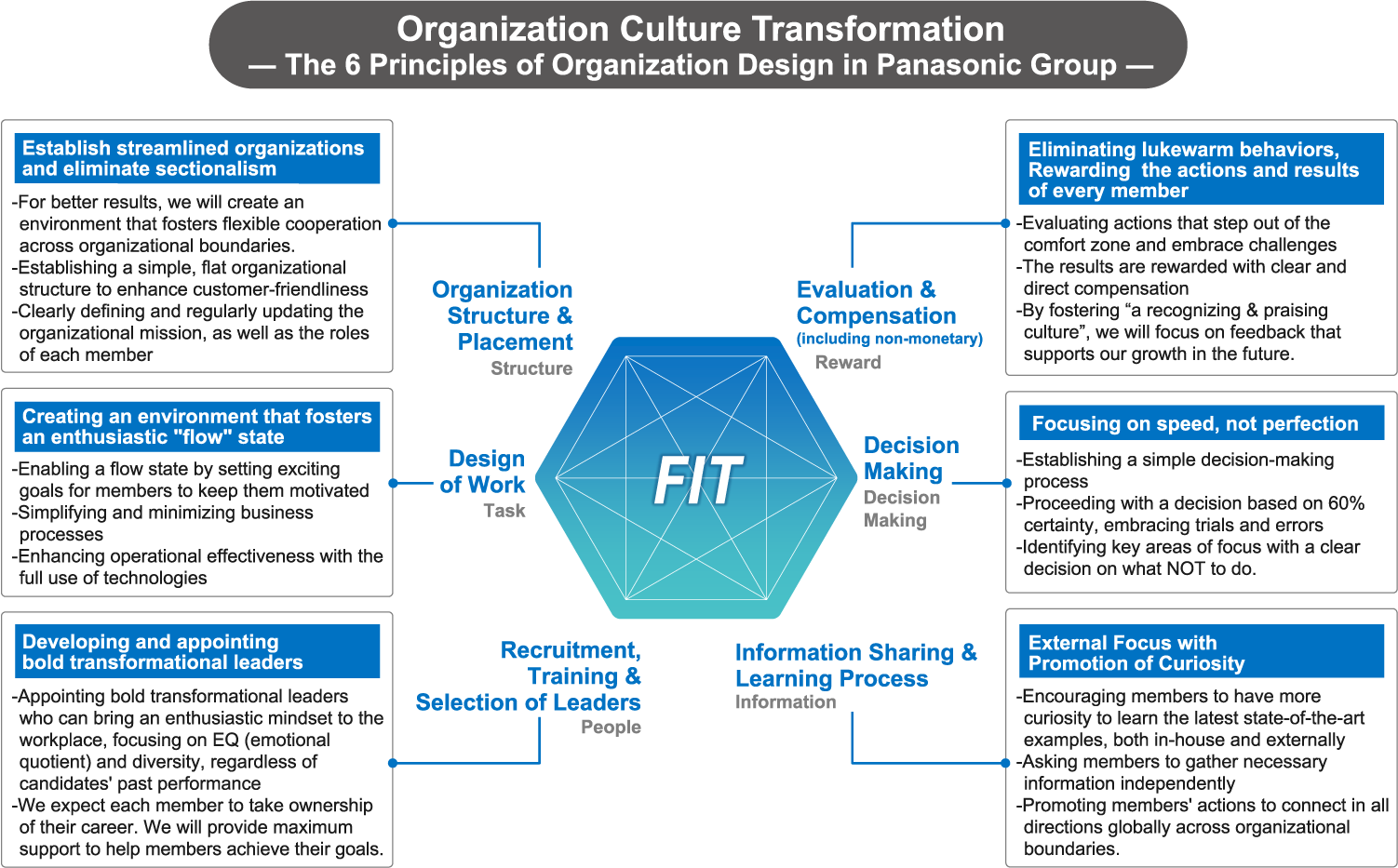
At the same time, each organization has its own unique design. Under these principles, executives and organizational leaders, such as division leaders and Business Unit (BU) heads, are leading organization culture transformation within their respective organizations.
In fiscal 2026, we implemented programs primarily for executives to share case studies related to organizational culture transformation and to develop relevant skills, with 564 participants in total. In addition, a groupwide cross-organizational community for organizational culture transformation was established, with selected members from each operating company beginning to support executive-led transformation efforts.
Initiatives | Outline | The total number of participants |
|---|---|---|
Organization Design Workshop | Develop practical knowledge and skills for strategically shaping organizational culture, based on The Six Principles of Organization Design. | 168 people |
Group Management Workshop | Study leading examples of organization culture transformation from both inside and outside the Group. | 343 people |
Program for Organization Culture Transformation | Combine case-study learning with hands-on workshops to build skills for organizational culture transformation. | 108 people |
Resilience Program | A training program grounded in medical and psychological insights that enhances individual performance, enables people to turn adversity into growth for themselves and their organizations, and strengthens their ability to leverage diversity. | 113 people |
As we advance management reforms, through these initiatives and the leadership of executives and organizational leaders, approximately half of the Business Units (BUs) in Japan improved their UNLOCK indicators compared with the previous fiscal year. In these organizations, significant improvements were observed not only in the UNLOCK Index and related survey scores, but also in key business indicators directly linked to business management, such as production and development lead times and inventory levels, leading to tangible business outcomes.
Below, we present specific examples of initiatives for each element of the “6 Principles of Organization Design.”
▪Evaluation & Compensation
“Evaluation and Compensation,” one of the six principles, means moving away from a “lukewarm” environment and ensuring that each individual is appropriately rewarded for their results and actions. We emphasize recognizing and valuing employees’ willingness to take on challenges, offering clearly differentiated rewards, and providing feedback that supports their future growth.
PHD, PEX, and the operating companies determine the Role/Grade System that forms the basis of employee compensation based on the responsibilities of each individual’s role. This system aims to compensate the Group’s diverse employees based on the scope of their work and responsibilities. This approach helps enhance the transparency of our human resources systems and fosters a greater understanding among employees. Clarifying goals for new challenges encourages people and organizations to take on these challenges boldly, without fear of failure.
We conduct annual evaluations of each employee’s actions and achievements in relation to the goals they have set for themselves. These evaluations involve engaging employees and their supervisors in dialogue to ensure that employees understand their evaluations and to foster a desire to take on further challenges.
We have adopted a performance-linked compensation system that sets bonuses for the current fiscal year based on corporate performance during the previous fiscal year. Corporate performance is reflected in compensation more at higher levels of management. Moreover, individual bonuses are determined based on an individual’s performance in their job during the previous fiscal year. With corporate and individual performance impacting compensation to some degree, Panasonic inspires the desire to improve both aspects of performance.
All Group companies implement or revise their systems by tailoring them to their respective industries and markets, such as introducing job-based talent management.
▪Decision-Making
In the Six Principles, “decision-making” refers to prioritizing speed over perfect decisions. We promote simple decision-making processes that allow us to move forward through trial and error, while maintaining a clear focus on priorities.
For example, across Panasonic Group sites in Japan and overseas, we have introduced “Obeya” (large room) activities to accelerate the resolution of frontline issues. In this approach, business division leaders, together with those responsible for production engineering, quality management, and other functions, regularly come together in one place to share progress and issues in real time and make prompt decisions on next steps.
▪Information Sharing & Learning Process
The “information sharing and learning process” within the 6 principles is designed to encourage a shift away from an inward-looking mindset and foster curiosity. By learning from leading practices both within and outside the Group, we encourage employees to actively seek out the information they need.
For example, in the Japan region, employees who share common interests or challenges voluntarily come together to form communities (Employee Resource Groups (ERGs)), regardless of their affiliated operating company or position. Motivated by a desire to improve the workplace environment, organizational practices, and management, these groups engage in a wide range of activities. Community themes cover a wide range of areas, including childcare and caregiving, disabilities, gender, LGBTQ+, mid-career recruitment, business model development, and technology development. For employees, these activities provide opportunities to make proposals to the Group, participate in management initiatives, address challenges they face, and foster a sense of belonging. For the Group, they contribute to addressing management challenges, fostering innovation, improving the work environment, mitigating turnover risk, and enhancing employee motivation. The Group places strong value on these voluntary, employee-led initiatives.
In addition, since April 2024, we have launched and have been expanding the “Panasonic Group Alumni Community,” a community that maintains connections with former employees (alumni) and promotes ongoing collaboration and co-creation.
▪Recruitment, Training & Selection of Leaders
Under the “Recruitment, Training, and Selection of Leaders” principle in the 6 Principles of Organization Design, we focus on developing and boldly appointing transformational leaders. We actively appoint transformational leaders who can bring energy to the workplace, while encouraging employees to take ownership of their careers.
Global Recruitment Screening Based on Our Behavioral Guidelines
We introduced a global recruitment screening process based on the Panasonic Leadership Principles (PLP), our behavioral guidelines for implementing the Group’s Basic Business Philosophy. Our goal is to recruit individuals who align with our Basic Business Philosophy and are capable of implementing it effectively. Specifically, we are designing a screening process that utilizes selection criteria based on the PLP and standard models for conducting interviews. We are implementing them in each country, region, and company, tailored to their unique labor markets and business environments. Prioritizing action allows us to attract a diverse range of talent without bias toward specific attributes.
Recruitment Strategy (Japan Region)
In the Japan region, we continue to promote both new graduate hiring and mid-career hiring to recruit future leaders and maintain systems that support their development.
New graduate hiring aims to cultivate a diverse pool of young talent that underpins our business foundation, and approximately 1,100 new graduates are expected to join us in fiscal 2028. Also, starting in fiscal 2028, we will abolish the school recommendation system for technical hires at universities and graduate schools and accept applications from all candidates through an open application process, as is already done for administrative positions. Through this initiative, we will provide broader opportunities for students from diverse fields of study, backgrounds, and cultures to apply, thereby enabling us to attract a diverse pool of talent that supports transformation. Under our comprehensive collaboration agreement with the National Institute of Technology, we will further enhance practical manufacturing education and promote personnel exchanges, thereby strengthening both the recruitment and post-entry training and development of students from KOSEN (colleges of technology).
For mid-career hiring, we are strengthening our recruitment efforts to acquire expertise not currently available within the Group, particularly in areas required for business transformation and enhancing competitiveness, across both hardware (manufacturing) and software (digital and software domains). While continuing to recruit specialized professionals who can contribute immediately, we will accelerate technological innovation and link it to business growth (For fiscal 2027 hiring results, see “Social Data”).

Basic Human Resource Development System
Nurturing and motivating the precious people society entrusts to us is the foundation of our management. The Group’s human resource development system offers a wide range of programs tailored to different levels and job types; however, we believe that the driving force behind these programs should come from within each workplace. At each workplace, we encourage employees to develop a growth mindset through one-on-one meetings with their supervisors. Daily, detailed on-the-job training (OJT) forms the foundation of talent development. Effectively combining OJT with group training complements and reinforces the knowledge, skills, and experience necessary for growth. Rather than the company providing educational opportunities unilaterally, we support employees in clearly envisioning their ideal selves and actively pursuing learning opportunities to achieve those goals.
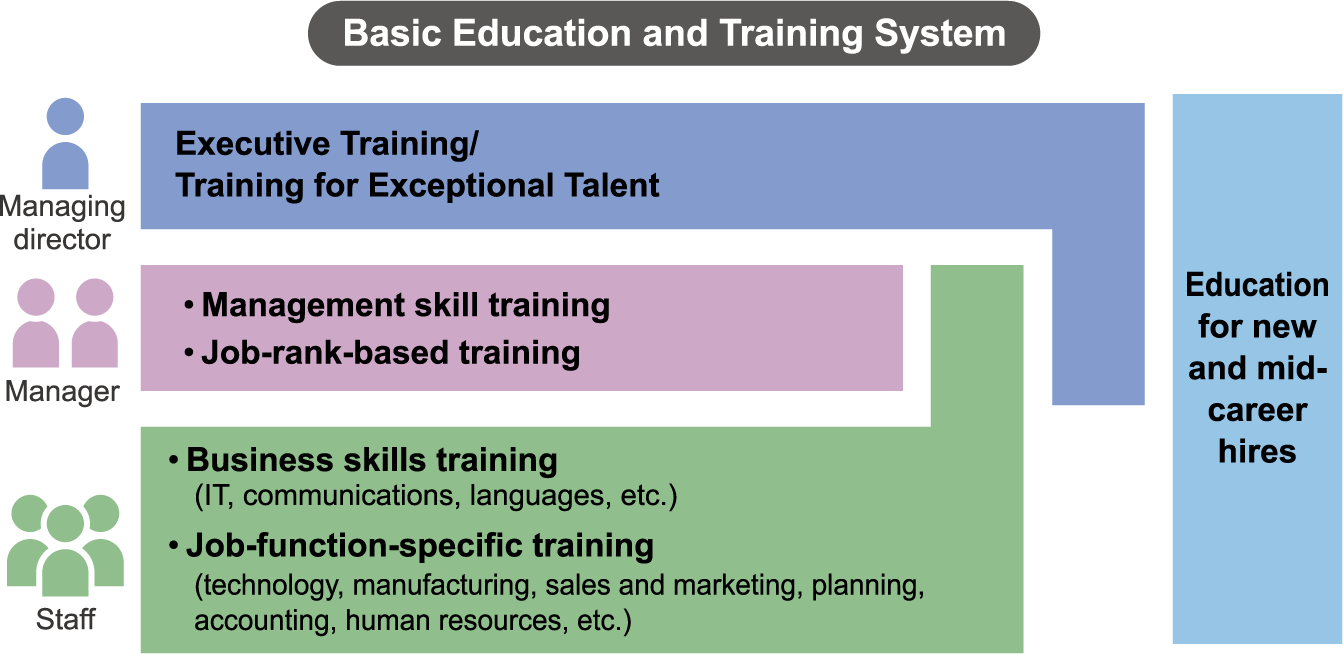
In each country and region, we design and deliver tailored, selective executive development programs in cooperation with Japan to bolster our business leadership development.
Human Resource Development in Each Country and Region
Against the backdrop of intensifying global competition and rapid changes driven by digitalization and advances in AI, the Panasonic Group is strengthening its human resource development initiatives in each country and region. For example, in the APAC region, we are promoting a talent management cycle under the concept of “UNLOCK” to maximize the potential of our people by integrating the identification, development, evaluation, and assignment of high potential talent. For executive-level personnel, we provide an Executive Development Seminar to strengthen strategic leadership, the Accelerated Management Development Program to enhance team management and coaching capabilities, and individualized executive coaching. In addition, we are driving behavioral transformation and business results through the introduction of 360 degree evaluations and programs linked to organizational challenges including their solutions. In Thailand, we have established position-based training roadmaps and offer e-Learning on globally shared knowledge covering organizational culture, strategy, and problem-solving within a consistent development framework spanning from staff to executives. In Malaysia, we conduct cross-regional training programs for executive candidates, training in collaboration with external institutions, and function-specific specialized training in areas such as manufacturing, accounting, and human resources. Furthermore, we are strengthening cross-organizational talent development by sharing information among companies and linking talent data.
In the North American region, we offer a one-year, structured executive development program, “LEAD,” to foster future global leaders. Through practical training and coaching in cross-BU and cross-functional groups, participants strengthen the leadership capabilities required to lead complex business environments while developing multifaceted perspectives, thereby enhancing their ability to execute strategies and build networks. In addition, we host the Panasonic Leadership Summit each year for executive leaders. This brings together approximately 150 Director-level and above leaders from businesses across North America for a three-day program to discuss the latest management strategies, organizational transformation, and leadership themes, and to share insights. Through these activities, we strengthen senior leadership capabilities and build cross-Group networks.
Voluntary Challenges and Self-Directed Career Support (Internal Open Recruitment; Japan)
Internal open recruitment is one framework that supports each individual’s desire to take on challenges voluntarily and direct how their career develops. Groupwide programs include e-Challenge, e-Appeal Challenge, e-Matching, and Multiple Internal Roles, and our organizations remain open to the recruitment system even after becoming operating companies.
e-Challenge is a program in which employees apply for open positions and, if selected, transfer to those positions. Employees review recruitment information disclosed by business divisions and decide independently whether to apply. e-Appeal is a program that allows employees to proactively express their interest to departments of their choice. By presenting their strengths to their preferred departments, those selected are given opportunities to take on new roles. e-Matching is a program to be introduced in fiscal 2027. It allows recruiting departments to review resumes registered in advance by employees and identify potential candidates. This mechanism facilitates matching with roles that employees may not identify on their own. In fiscal 2026, use of these groupwide and operating company specific programs resulted in 3,470 applications and 1,282 transfers.
Additionally, the Multiple Internal Roles program allows employees to apply for open positions and, if selected, take on additional roles within the Group while remaining in their current departments. By applying their abilities and exploring their potential, employees can further their personal growth.
▪Design of Work
Under the 6 principles, “Design of Work” means creating an environment where employees can work in a state of passionate flow. We encourage each individual to set engaging, challenging goals, streamline business processes, and fully leverage technology.
Transformation of Work through the Promotion of Groupwide AI Utilization
In line with Panasonic Transformation (PX)—our Companywide initiative to drive corporate transformation centered on digital transformation (DX)—we are advancing initiatives across all regions globally.
In the Japan region, we are promoting the use of AI in the workplace by leveraging the Group’s AI infrastructure through initiatives such as PX Ambassadors and workplace PX contests. According to an annual survey of employees in Japan, the rate of generative AI use in the workplace reached 66% in fiscal 2026 (based on a survey of approximately 70,000 employees, with a response rate of 57%), an increase of 29 percentage points year on year. We will continue to advance initiatives to foster an organizational culture that supports AI use and further accelerate the adoption and utilization of AI.
In the China region, we have developed a proprietary AI infrastructure, “OoKoO,” and are promoting an integrated approach that encompasses fostering a culture that supports AI use, applying AI in operations, building AI platforms, and establishing governance frameworks. In fiscal 2026, OoKoO had 8,500 users and was used approximately 2.92 million times, resulting in an estimated reduction of about 730,000 working hours.
-
Panasonic Group Human Capital Management Website > Signs of Change in Panasonic Group > Best Practices across Group > Promoting AI Utilization ((1) Japan)

-
Panasonic Group Human Capital Management Website > Signs of Change in Panasonic Group > Best Practices across Group > Promoting AI Utilization ((2) China)
▪Organization Structure & Placement
In the 6 Principles of Organization Design, “Organization Structure & Placement” refers to eliminating organizational silos and creating a simple, streamlined organization. We are creating an environment that enables collaboration across organizational boundaries, building organizational structures from the customer’s perspective, and clearly defining organizational missions as well as the roles of each individual.
In fiscal 2026, the Group strengthened its management base through measures such as personnel optimization. Going forward, we will build on these efforts to enhance our long-term competitiveness, including by reallocating resources to growth areas and acquiring the capabilities required (for details, see “Human Resource Portfolio Transformation”).
In addition, each organization is advancing initiatives to strengthen cross-organizational collaboration. For example, at the IH Cooking Heater SBU of Panasonic Corporation, revising the organizational structure and consolidating operations onto a single floor to strengthen collaboration among development, manufacturing, and sales have improved the speed of information sharing and decision-making, resulting in better business performance.
Promotion of Diversity, Equity & Inclusion (DEI) (Japan region)
The Panasonic Group promotes DEI in line with the Panasonic Group DEI Policy, aiming to realize participative management through collective wisdom by leveraging each individual’s unique differences as strengths, regardless of their attributes. To drive these efforts, we have established the Group DEI Promotion Council, chaired by the Group CEO and comprising operating company presidents and employees. The Council not only shares company-specific initiatives but also identifies and advances key actions across the Group. Each Group company promotes its own initiatives in accordance with applicable laws and regulations in its respective country and region.
Furthermore, we position DEI as essential to organization culture transformation, as it unlocks employees’ potential and enables both business growth and contributions to society.
The promotion of DEI is helping to create an environment where diverse talent can fully demonstrate their capabilities. In recent years, for example, mid-career hires have taken on increasingly prominent roles within the Group. As of April 2026, mid-career hires accounted for 24.6% of employees in the Japan region (up 2.1 percentage points from fiscal 2024), and 22.8% of managers (up 5.6 percentage points from fiscal 2024). This indicates that a more diverse workforce is thriving and that opportunities to participate in decision-making are expanding.
▪Gender Equity
Despite no differences in capabilities based on gender, the proportion of female managers within the Panasonic Group remains low in the Japan region. We regard this as a representative example of the challenges in promoting participative management through collective wisdom, and have positioned the ratio of female managers as one of our key indicators. We are strengthening our initiatives with a target of increasing the ratio of female managers to 16% by 2031. Looking ahead to the future, we are committed to attracting and systematically developing female leaders to leverage the insights of an increasingly diverse workforce and foster the creation of innovative products and services. To achieve this, we are strengthening recruitment efforts, expanding flexible work options, and providing career development support.
Changes in the Ratio of Female Managers (%)
Fiscal Year | 2018 | 2019 | 2020 | 2021 | 2022 | 2023 | 2024 | 2025 | 2026 | 2027 |
|---|---|---|---|---|---|---|---|---|---|---|
Ratio of Female Managers | 3.4 | 3.6 | 4.1 | 4.5 | 4.8 | 5.4 | 6.1 | 7.0 | 7.9 | 8.3 |
Target: Japan region (PHD, PEX, PCO, and other operating companies)
Transformation of HR Functions (AI Utilization)
The Panasonic Group is strengthening its management foundation to achieve long-term, sustainable growth by leveraging digital technologies under its corporate transformation program, “PX: Panasonic Transformation.”
In the HR domain, we leverage HR data and generative AI to enhance the experience value of all employees. At the same time, we are improving the sophistication and efficiency of organizational and talent management by organizational leaders, as well as increasing the productivity of HR functions.
Creating a Safe, Secure, and Healthy Workplace
We have established the Panasonic Group Code of Ethics & Compliance (“Code of Ethics & Compliance”) and the Panasonic Group Occupational Health and Safety Policy (“Occupational Health and Safety Policy”) to ensure the health and safety of all workers within the Panasonic Group. We implement these across the Group, including for subcontractors and other companies operating within our facilities. PHD’s Board of Directors formulates and revises the Code of Ethics & Compliance, while the Group CEO issues the Occupational Health and Safety Policy. We also strive to ensure the safety of all persons not affiliated with Panasonic when they visit our workplaces.
To establish a foundation for occupational safety and health management activities, prevent occupational accidents, maintain and enhance the health of employees, and contribute to business development, the Group has established the Safety and Health Management Rules, which apply to all occupational safety and health management activities across Group sites. In addition, important policies and measures are reviewed annually by the Central Safety and Health Committee, which consists of labor union representatives and representatives from the Group’s occupational safety and health management function. Each year, during Japan’s National Safety Week in July and National Occupational Health Week in October, the Group’s occupational safety and health management function raises awareness of the key initiatives for the fiscal year and promotes their thorough implementation both in Japan and globally.
The Group is also advancing initiatives to prevent harassment in accordance with the laws and regulations of each region.
▪Creating a Safe and Secure Workplace
Risk Assessment Initiatives (Japan)
The Panasonic Group conducts regular risk assessments at least once a year for machinery, equipment, and hazardous substances, in accordance with the provisions of the Occupational Health and Safety Act, to identify hidden risks such as the potential for industrial accidents, injuries, or illnesses, and reliably mitigate these risks in order of greatest priority. Moreover, we promptly share cases of occupational accidents that have occurred within the Group via the intranet, deploy countermeasures across the Group, and conduct activities to prevent recurrence at all workplaces. Each of our business sites in Japan has a Health and Safety Committee composed of both employees and management (representatives of the union committee and the company committee) and charged with investigating measures to decrease risks at workplaces, prevent the causes and recurrence of industrial accidents, promote the maintenance or improvement of workers’ health, and prevent harm to workers’ health. To prevent industrial accidents among employees of contractors operating on our premises, we also require that all contracts include provisions for ensuring a safe and appropriate workplace environment. We regularly hold Health and Safety Meetings with these contractors and manage overall health and safety, including facilitating communication between operations.
Promoting External Certification
◇ISO 45001
Workplaces within the Panasonic Group are working to obtain and implement ISO 45001 certification. This process involves clarifying the roles of all employees using the standard while setting goals and driving forward health and safety activities. Site general managers must also conduct regular reviews, revising their operations accordingly based on the results of those reviews. As of December 31, 2025, 177 of the Group’s 217 manufacturing sites globally have obtained ISO 45001 certification, with two sites scheduled to obtain certification in fiscal 2027.
◇Certified KENKO Investment for Health Outstanding Organizations Recognition Program (Japan)
In Japan, the Group has been working toward being recognized as an Outstanding Organization for Health and Productivity by the Ministry of Economy, Trade and Industry. As of March 2026, all Group operating companies have received this certification for four consecutive years. Furthermore, three Group companies have been recognized as White 500 companies (the top 500 companies with notably outstanding initiatives within the large enterprise category of the Outstanding Organization for Health and Productivity certification). The Group positions health and productivity management as a key measure of management that enables all employees to reach their full potential. It promotes the mental and physical well-being of our employees and their families while fostering a workplace culture that supports the growth and development of all employees.
◇WELL Certification*8
The Panasonic Group has received the following international certifications for creating well-being-oriented workplaces where all employees can perform at their best.
• Jan. 2022:
Panasonic Yizhuang Manufacturing (Beijing, China) - WELL Health Safety Rating
• Jan. 2022:
Matsushita Memorial Museum (Beijing, China) - WELL Health Safety Rating
• Jan. 2022:
Panasonic System Communication Company (Beijing, China) - WELL Health Safety Rating
• Mar. 2022:
Panasonic Tokyo Shiodome Building (Tokyo, Japan) - WELL Health Safety Rating
• July 2022:
Panasonic Hiroshima Nakamachi Building (Hiroshima, Japan) - WELL Health Safety Rating
• Jan. 2023:
Panasonic Wellness Smart Town (WST) Showroom (Jiangsu, China) - WELL Performance Rating
• May 2023:
Panasonic Electric Equipment (Jiangsu, China) - WELLv2 Platinum
• Aug. 2023:
Panasonic Wellness Smart Town (WST) Showroom (Beijing, China) - WELL Performance Rating
• Jan. 2024:
Panasonic XC KADOMA, Panasonic Operational Excellence (Japan) - WELLv2 CORE Silver Certification
• Jul. 2024:
System Solutions Development Center, Panasonic Electric Works Company (Japan) - WELLv2 Platinum Certification
• Feb. 2025:
Technology CUBE, Technology Division (Japan) - WELL_v2 Precertification
• Mar. 2025:
SHIOMER, Solutions Development Division, Panasonic Electric Works Company (Japan) - WELLv2 Platinum Certification
• Jun. 2025:
worXlab, Solution Engineering Division, Panasonic Electric Works Company (Japan) - WELLv2 Platinum Certification
• Jun. 2025:
Panasonic XC OSAKA, Panasonic Operational Excellence (Japan) - WELLv2 CORE Gold Certification
•Feb. 2026:
Technology CUBE, Technology Division (Japan) - WELLv2 Platinum Certification
*8 Established in 2014 by the U.S.-based International WELL Building Institute (IWBI), a public benefit corporation, this is an office space assessment system that aims to create better living environments by incorporating the perspective of “human health” into the design, structure, and use of spaces. There are four certification levels in WELLv2: Platinum, Gold, Silver, and Bronze. The WELL Health Safety Rating evaluates the health and safety of a space, while the WELL Performance Rating assesses the indoor environmental quality, including factors such as light, sound, and air quality. There are no certification levels except for WELLv2.
The International WELL Building Institute™ and related logo are trademarks used with permission from the International WELL Building Institute.™
Safety
◇Developing the Guidelines for Formulating Equipment Safety Standards
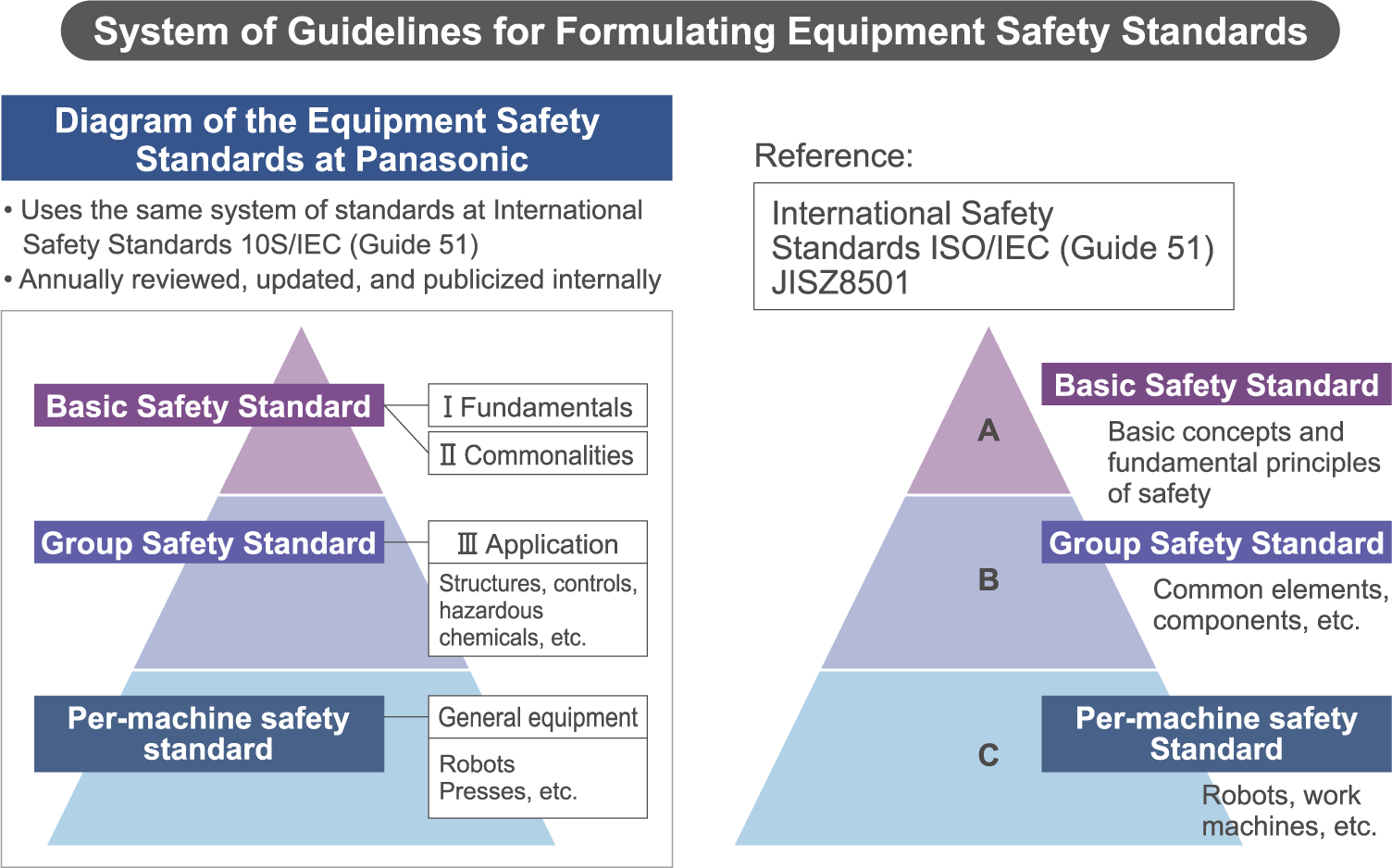
To prevent occupational accidents involving equipment, we identify risks and implement protective measures during the equipment design stage based on the Equipment Safety Standards. This process occurs whenever we develop, introduce, or purchase new production equipment or technology/quality evaluation equipment and devices at our business sites. After multiple conformity assessments using our proprietary evaluation tools, the Health and Safety Committee reviews the conformity assessment at the final use stage, ensuring that we use equipment that meets safety standards. The Guidelines for Formulating Equipment Safety Standards apply globally to all business sites’ Equipment Safety Standards. These guidelines systematize international machinery safety standards, laws, and regulations, as well as safety expertise garnered throughout the company, and measures to prevent the recurrence of accidents. The Equipment Safety Standards Revision Committee, comprising experts from production technology, human resources, and safety departments across all Group companies, meets annually to discuss revisions, update provisions, and publicize the standards (translated into multiple languages). Additionally, we conduct hazard compatibility assessments to identify potential risks arising from mismatches between human behavior and capabilities and the work environment, and we implement ergonomic measures and considerations in the workplace to ensure safe operations.
◇Response to Industrial Accidents
When a workplace accident occurs, the Panasonic Group follows our “Steps to Take in an Emergency Situation Like an Industrial Accident.” The Operating Site Supervisory Health and Safety Administrator where the workplace accident has occurred makes a prompt and accurate report to the Operating Company Supervisory Health and Safety Administrator. We have established mechanisms to manage industrial accidents at each global site, report serious incidents within 24 hours, and monitor them for a period of 365 days to share the case among the Group. We also share case studies and other knowledge gained from workplace accidents with the entire Group. At work sites where an industrial accident has occurred, we investigate the cause and implement measures to prevent recurrence, share the details of the accident throughout the Group, and ensure that other operating sites take preventive measures based on past accidents.
◇Major/Serious Accidents and Recurrence Prevention
We are committed to eliminating serious accidents (fatal accidents or accidents resulting in long-lasting physical disabilities) and major accidents (those involving at least three employees). In fiscal 2026, seven serious accidents and one major accident occurred. The Panasonic Group recognizes these accidents as a critical issue that requires immediate attention. We analyze key accident patterns that the Group should address and share the results of our analysis to prevent serious accidents, prioritizing preventive measures for accident patterns that are highly likely to occur at each workplace. The most likely cause of serious accidents is performing non-standard operations on equipment that is in operation, which can lead to entrapment and entanglement in the equipment. Such incidents account for approximately 70% of past serious accidents. Our analysis suggests that we require safety measures for existing production equipment, particularly those installed before the introduction of the Equipment Safety Standards. To prevent recurrence, we ensure that employees are well-informed about the guidelines for safe work during non-standard operations and are fully compliant with the Group’s Equipment Safety Standards. We also operate an Equipment Safety Education System to train individuals who can develop, practice, and establish equipment risk assessments and safety technologies on the production floor. Specifically, our certified instructors use three training programs: (a) training for employees who develop and install equipment, (b) training for employees who use equipment, and (c) in-house Equipment Safety Standard workshops. In China and other Asian regions, efforts are underway to develop local managers to promote equipment safety and ensure compliance with regulations. We will continue to expand these activities globally.
◇Equipment Safety Education System
| Learning about international standards | Learning about Group standards | |
|---|---|---|---|
Course title | (a) Seminar on Equipment Safety for Engineers | (b) Seminar on Equipment Safety for Managers | (c) Workshop on Equipment Safety Standards |
Target participants | Production engineers who primarily design and improve equipment (including those responsible)
| Those in production engineering or safety who primarily manage the use of equipment
| Anyone learning about the Group’s policies for drafting, updating, and sharing Equipment Safety Standards
|
Occupational Health
For hazardous work such as handling chemicals, we conduct hazard reviews using Safety Data Sheets (SDS), provide appropriate protective equipment, and attempt to reduce the necessity of such work. We regularly measure environmental impact and conduct health examinations to monitor employee exposure levels to substances specified by law, as well as substances we have independently defined as hazardous. We continually monitor these substances and implement environmental improvements to ensure a sustainable approach.
The Panasonic Group has established its Chemical Substance Management Standards to prevent exposure to chemical substances. In addition, it has established the Chemical Substance Management Working Group to define shared policies, rules, and training programs, and is implementing groupwide initiatives aimed at enhancing risk assessments and making the self-directed management of chemical substances a routine practice.
◇Chemical Substance Management Standards (Japan)
The Group established the Chemical Substance Management Standards to create the compliance provisions required by the Occupational Health and Safety Act and other relevant laws and regulations. We implement these Standards to manage health effectively and appropriately by eliminating and mitigating sources of danger or hazards, thereby preventing work-related illnesses caused by chemical or other substances in the workplace.
◇Promotional Framework (Japan)
Industrial Health and Safety Promotion Committee (Biannual) | ||
|---|---|---|
| Objectives | Deciding on policy and measures |
Chairperson | Executive officer in charge of HR | |
Members | Company committee representatives, Union committee representatives, Health Insurance Organization committee representatives | |
Chemical Substance Management Working Group (four times per year, in principle) | ||
| Objectives | Deciding on the specifics of measures |
Members | Company committee representatives, Health Insurance Organization committee representatives (Science Center of Industrial Hygiene) | |
Health and Safety Committees at each workplace (Monthly) | ||
| Objectives | Executing measures |
Members | Company committee representatives, Union committee representatives, Occupational health physician and nurse | |
Training (Japan)
Panasonic Group provides education to employees, managers, occupational health and safety personnel, and external contractors based on the Occupational Health and Safety Education Guidelines and the Mental Health Education Guidelines it has established. The Group Health and Safety Management Division hosts and conducts management-level and groupwide training. In addition, each operating company and business site utilizes facilities such as the Anzen Dojo (safety training hall) to provide safety education to external contractors and other temporary employees upon their commencement of work. We also provide and promote training for managers, offering specialized training tailored to each manufacturing process, as well as training to develop qualified personnel. Moreover, we strive to raise awareness among contractors by providing them with the required information and educational content. (Examples of specialized training and training for qualified personnel held by the Group (also available to contractors): https://phio.panasonic.co.jp/kagaku/roudou-eisei-kyouiku/c02.htm (Japanese only))
Every year, we hold the Employee Personal Health/Occupational Health and Safety Symposium, attended by the Group’s safety and health personnel. During this symposium, the Group CEO shares insights on health and safety with all business managers and relevant individuals. The symposium also aims to set a high standard for health and safety activities by sharing best practices for initiatives on occupational health and safety, as well as employee personal health, from all business sites, and allowing attendees to learn from outside experts.
▪Promoting Health Management
Employee Health
We have sent out a message on health to the entire Group, clarifying our policy of boosting health investments to realize employee well-being. In Japan, all operating companies participate in various Panasonic Health Promotion Activities, a unified effort involving the company, labor unions, and health insurance organizations that meets health maintenance and betterment standards. We also review the results of periodic health checkups, EOSs, and stress checks to confirm that our efforts have been successful and further enhance our initiatives.
◇Health Maintenance and Promotion Standards (Japan)
In the interest of appropriately and effectively undertaking measures to maintain both employees’ physical and mental health, these Standards outline procedures for health checks and follow up measures, guidelines for interviewing individuals working long hours, methods for assessing psychological burdens, and procedures for preventing those who are ill from returning to work. They also stipulate the creation of Health Maintenance and Betterment Plans, as well as mental health promotion plans. We are coordinating the Group’s health maintenance and betterment measures with the Panasonic Health Insurance Organization’s healthcare business to create synergy between all their initiatives.
◇Promotional Framework (Japan)
Healthy Panasonic Promotion Committee (held twice a year) | ||
|---|---|---|
| Objectives | Deciding on policy and strategy |
Chairperson | Executive officer in charge of HR | |
Members | Company committee representatives, Union committee representatives, Health Insurance Organization committee representatives | |
Healthy Panasonic Working Group (held quarterly) | ||
| Objectives | Deciding on the specifics of strategies |
Members | Company committee representatives, Union committee representatives, Health Insurance Organization committee representatives | |
Health and Safety Committees at each workplace (held monthly) | ||
| Objectives | Executing strategies |
Members | Company committee representatives, Union committee representatives, Occupational health physician and nurse | |
◇Health Issues and Initiatives (Japan)
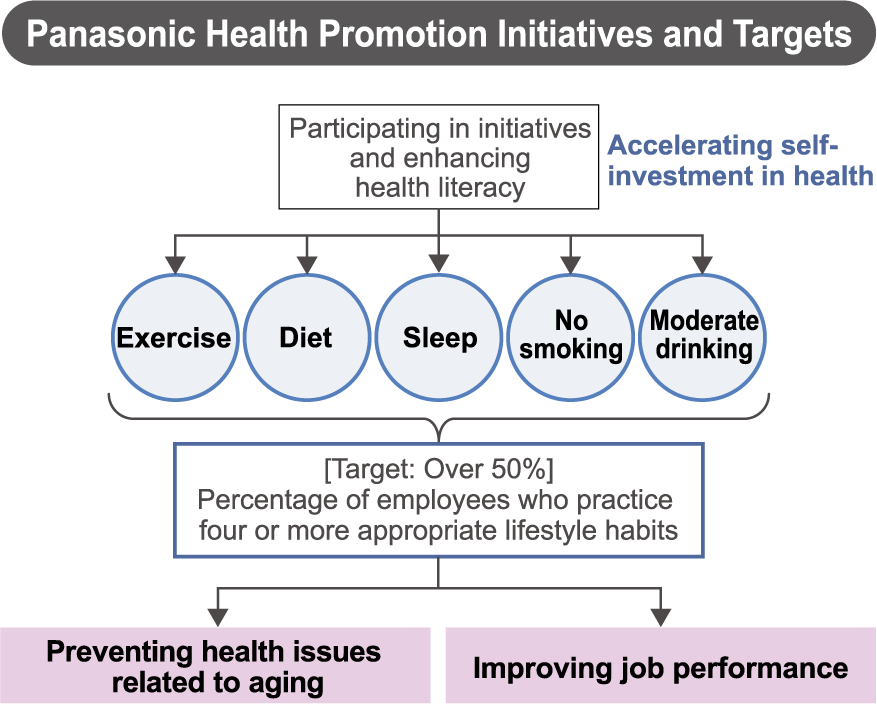
As the number of senior employees at Panasonic Group grows, the number of individuals with obesity or other health problems is increasing. Along with the increased flexibility of work styles, issues such as reduced physical activity and communication gaps associated with remote work have also become increasingly evident. We need to raise employees’ health literacy and encourage more employees to adopt healthy practices. There is a tendency for individuals with good lifestyle habits in all five areas (exercise, diet, sleep, no smoking, and moderate drinking) to be less likely to have health risks and have better job performance (based on self-evaluation). One of the goals of the new Panasonic Health Promotion Six-Year Plan starting in fiscal 2025 is to increase the proportion of individuals who have good habits in four or more of these categories to at least 50% by the end of fiscal 2030. In fiscal 2026, the figure was 36.3%, representing a 3% increase over the previous six years.
Panasonic offers ICT-based health promotion solutions through web services and lifestyle habit apps. These solutions provide health information, health checkup records, health challenges, effort-based health care point programs (exchange points for products related to health promotion), and tools for measuring health age after periodic health checkups.
◇Environmental Improvements (Japan)
We are promoting the development of workplace environments where employees can work in good health at all business sites through health promotion, disease prevention, mental health care, and other related initiatives.
As part of our measures to curb smoking, we are promoting indoor smoking bans (implementation rate: 93.7%). We will further achieve smoke-free environments at all Group business sites in Japan by the end of March 2029 and prevent involuntary exposure to secondhand smoke. In addition, some operating companies have introduced a no-smoking policy during working hours.
In fiscal 2026, we conducted mental health training for all groupwide managers and supervisors, with 96% participation. We will continue to implement this training in the coming years to deepen understanding of mental health issues.
For employees assigned overseas and their accompanying family members, periodic health checkups had previously been conducted during home leave. We have newly introduced a health management leave program to ensure that, in principle, they have opportunities to undergo medical checkups in Japan. Through these measures, we aim to prevent the exacerbation of illnesses.
Additionally, we conduct an annual food conditions survey in 102 Group cafeterias nationwide and promote healthy eating environments in collaboration with approximately 35 contracted food service companies. Currently, 32 cafeterias have obtained external certifications under the Healthy Eating and Dining certification system (two more than last year). Panasonic also prioritizes statutory employee safety by actively offering health guidance and occupational physician counseling, primarily through its 144 health management offices across Japan. These efforts are targeted at individuals who are subject to specific health guidance and are at high risk of experiencing health problems. For telecommuters, we have developed a “Guide to Working from Home in a Healthy and Safe Manner,” which provides essential points to consider when working from home and offers simple exercises that can be done at home, thereby helping employees proactively maintain their health.
◇Stress Checks (Japan)
All Panasonic group companies conduct stress checks annually to promote group analyses and workplace improvements at the corporate level, alongside the conventional response for those under high stress. In conjunction with these stress checks, we also recommend that employees practice self-care in terms of sleep, diet, and exercise as a crucial part of maintaining their health. The stress check test results provide employees with an opportunity to notice their own stress levels and offer organizational managers and workplaces feedback in the form of a diagnostic analysis. This analysis is used to develop measures aimed at preventing the occurrence of mental illness by revitalizing the workplace. Employees who work long hours or whose regular health screenings suggest a need for monitoring their safety receive a consultation from an occupational physician, based on the Panasonic Group’s own criteria. We also take measures to prevent harm to the employee’s health, including addressing working conditions and workplace environments. Furthermore, the Group is working to address excessive working hours in order to protect employee health and ensure compliance with laws and regulations. To support this, the Group is undertaking a fundamental review of work processes and is continuously improving working styles and leave practices.
▪Initiatives for Preventing Harassment and Ensuring Compliance (Japan)
The Group aims to respect the individuality and abilities of each employee in all workplaces, ensuring that everyone feels motivated and comfortable in their work environment. Therefore, to encourage Panasonic employees to create a company free of harassment that everyone is proud of, we are strengthening our harassment prevention efforts in accordance with the Equal Employment Opportunity Act, the Child Care and Family Care Leave Act, the Power Harassment Prevention Act, and other relevant laws and regulations.
- We designated December as Harassment Prevention Month and have been raising awareness about harassment.
- We are strengthening our disciplinary rules against harassment as part of a groupwide effort to deter harassment.
- We established Workplace Harassment Prevention Rules at PHD and operating companies (April 2025).
- In July 2025, we provided harassment prevention training to managers and employees at all Group companies in Japan (PHD, PEX, operating companies and other affiliate companies). Approximately 92,000 employees (with a utilization rate of roughly 97%) have attended this training. They learned how to avoid committing harassment and how to proceed if they receive reports of workplace harassment. We plan to offer this course on a continual basis.
- In addition to the training above, we conducted a harassment recognition survey and shared its results on the intranet.
Consultation and Whistleblowing Channels
▪Mental and Physical Stress Prevention and Response for Employees (Japan)
The Panasonic Group has established the following support lines to help employees prevent or manage mental or physical stress.
Health Management Offices
Panasonic Group staffs these offices with full-time occupational physicians and occupational health staff to provide health support for preventing lifestyle-related diseases and helping individuals stop smoking, as well as consulting on mental and physical health.
EAP*9 Counseling Offices
We contracted with external agencies that allow employees to receive consultations without their concerns being disclosed to the company or health insurance association. Clinical psychologists and mental health counselors provide support, including return-to-work programs that help employees transition from leave to return to work.
*9 EAP: Employee Assistance Program
▪Whistleblowing Regarding Discrimination and Harassment
The Group has set up a hotline where employees can anonymously report discrimination or harassment if they receive, see, or hear about it.
Global Hotline EARS
For more details, see the “Whistleblowing System” in the “Ethics and Compliance” chapter.
Equal Partnership Counseling Offices (Japan)
We have established equal partnership counseling offices staffed with consultants at both PHD and the union, alongside separate offices at all operating companies to receive consultations from employees, including external contractors and freelancers, regarding sexual harassment (including LGBTQ+-related issues), harassment related to pregnancy, childbirth, and childcare leave, power harassment, and all other forms of harassment. Consultations are handled with care, ensuring the privacy of those seeking advice and obtaining their informed consent. Neither they nor any parties cooperating in the verification of the facts will be subject to any adverse treatment.
