
A Light for New Life — The Role of Solar Lanterns in Afghanistan’s Medical Facilities
Giving birth safely remains one of the greatest challenges for women in Afghanistan.
As of 2023, the country’s maternal mortality rate stands at 521 deaths per 100,000 live births — the highest in the Asia-Pacific region and among the most alarming in the world.
Yet even these figures may underestimate the true scale of risk, as population data and health records remain incomplete.
Out of Afghanistan’s estimated 38.2 million people, about 9.5 million — nearly one in four — live in remote areas known as “White Areas.”
In these isolated communities, medical facilities and midwives are scarce, and childbirth often carries life-threatening risks.
According to the 2023 Multiple Indicator Cluster Survey (MICS), only 67.5% of births nationwide are attended by skilled birth professionals — a number that drops to just 61.1% in rural areas.
The need for qualified health workers close to home is urgent and undeniable.
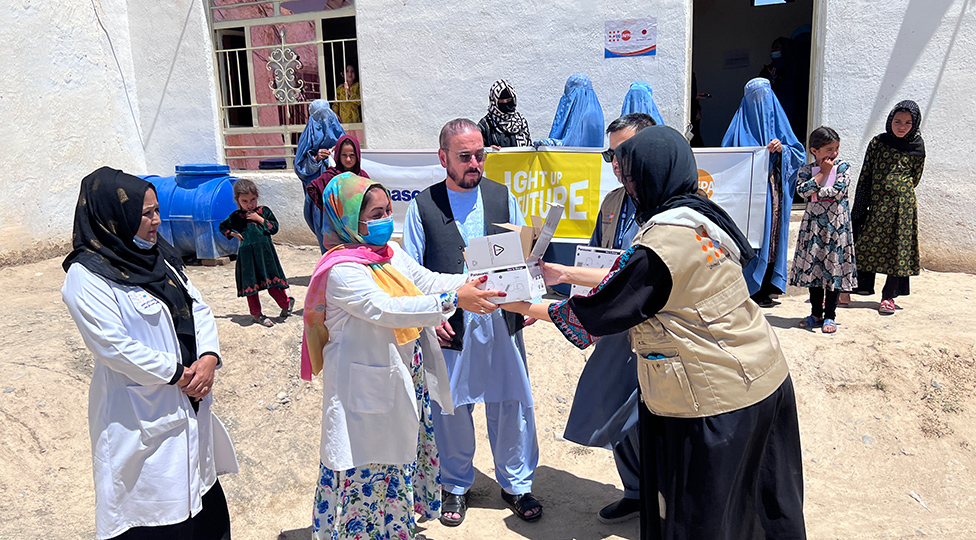
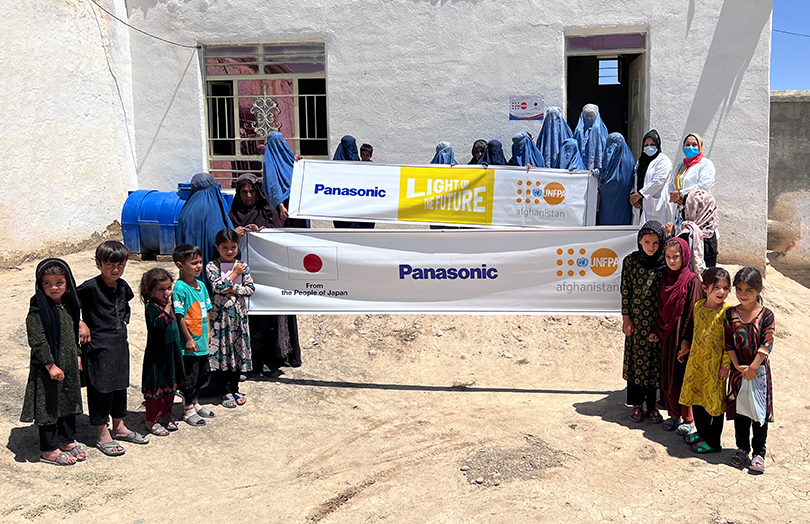
To bridge this gap, UNFPA established Family Health Houses (FHHs) in underserved communities — small, community-based clinics that provide essential maternal, newborn, and reproductive health services.
Strategically located in remote villages, FHHs often represent the only source of safe medical care for women and children.
But most of these health houses have no electricity.
That’s where Panasonic’s solar lanterns have made a difference.
Births in the Dark
In the northern province of Faryab, 70 kilometers from the city of Maymana, lies a small, off-grid clinic — the Charshanba Family Health House.
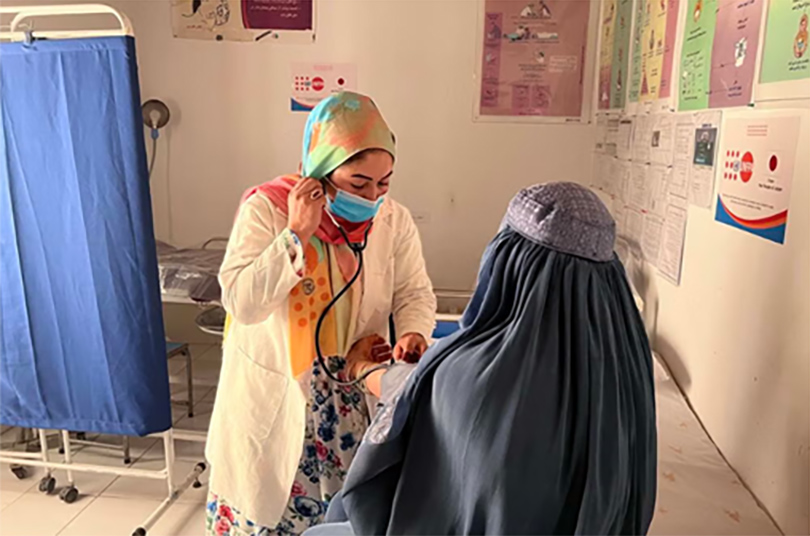
Here, Yulduz, the only midwife serving the area, responds to calls for help at all hours of the day and night.
One evening, shortly after 8 p.m., the first expectant mother arrived.
Not long after, another woman came in — pregnant with twins.
In the quiet of the night, under the faint glow of flashlights and mobile phones, Yulduz and a nurse tended to both women at once.
After midnight, the first mother gave birth safely.
But there was no rest; the second woman was still in labor.
By 2 a.m., Yulduz relied on her eight years of experience — and sheer determination — to safely deliver two tiny babies.
Their first cries broke the silence, filling the small clinic with joy and relief.
At 4 a.m., after hours of intense work, Yulduz finally locked the clinic door and headed home for a few hours of rest.
“I was exhausted,” she recalls, “but saving mothers and babies — that is my duty.”
Fighting the Darkness
Without proper lighting, every night-time delivery is a battle.
Yulduz has long depended on candles, flashlights, or the dim light from her mobile phone to perform critical procedures — from checking the birth canal to monitoring the baby’s breathing.
In such moments, light is not just illumination; it is safety.
A Brighter Change
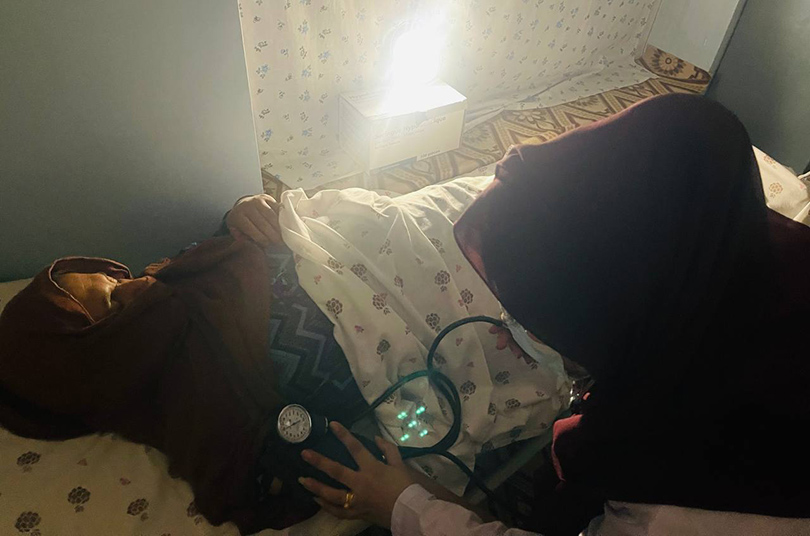
When Panasonic’s solar lanterns arrived, everything changed.
Yulduz still remembers the moment she opened the box and switched one on for the first time.
“With this light, deliveries at night will be so much safer,” she said.
“Mothers will feel calmer. And so will we.”
The gentle glow of the lanterns now fills the delivery room, creating a sense of peace and security even in the late hours of the night.
The light not only helps midwives make vital medical decisions — it brings reassurance to mothers as they welcome new life.
With the lantern beside her, Yulduz can now record medical notes, monitor patients, and assist in emergencies with confidence.
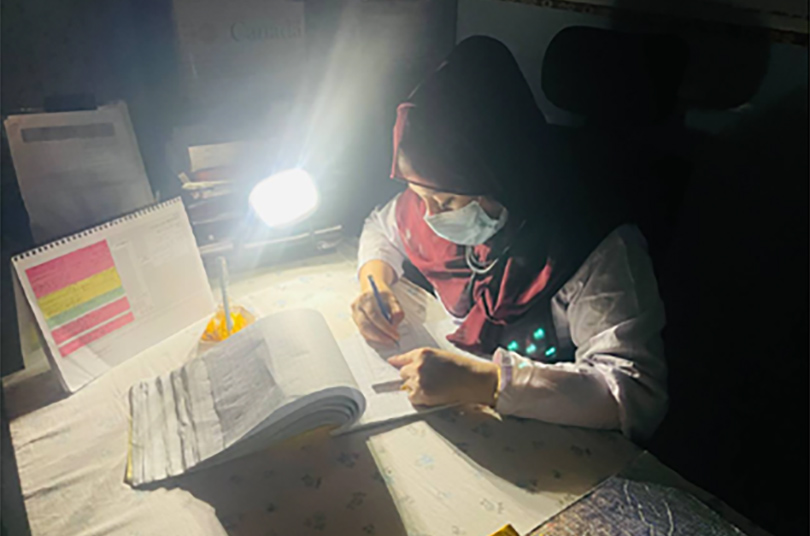
A Star That Lights the Way
In her native language, Yulduz means “star.”
And like a star shining through the dark Afghan night, her devotion continues to guide mothers and newborns to safety.
The light of Panasonic’s solar lanterns now shines beside her — supporting her mission, one birth at a time.
Through the power of light, Panasonic remains committed to illuminating the future of people everywhere.
【Related links】
Social media coverage:

Human interest story on the website:
LIGHT UP THE FUTURE related Projects