
[UNFPA Special Dialogue] The Light of Support Illuminates the Path Toward a Brighter Future for Women and Children
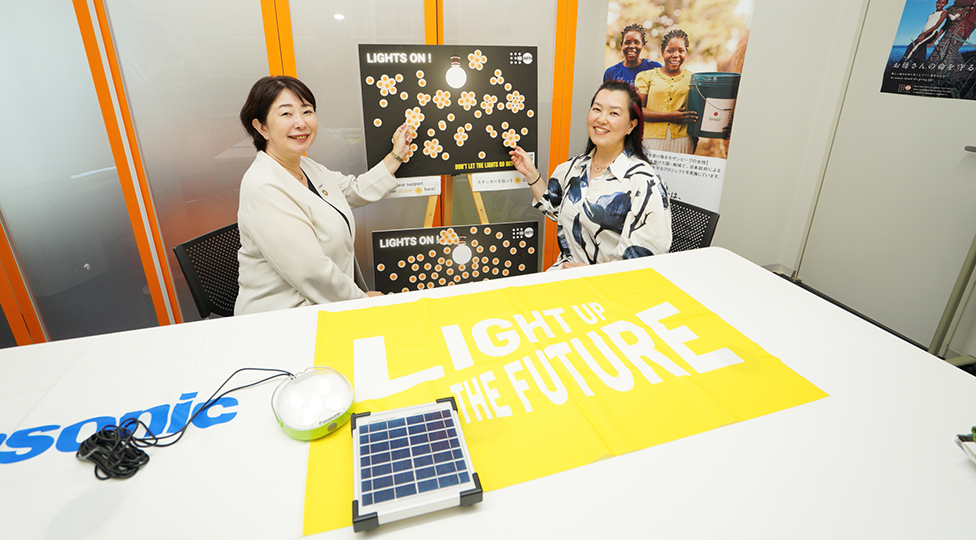
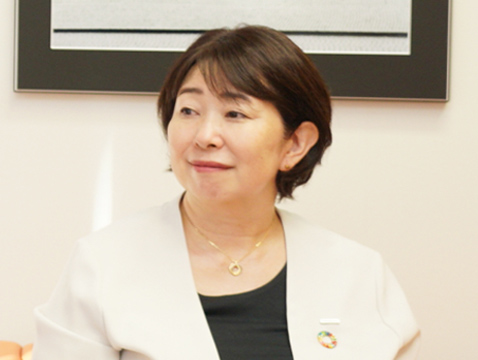
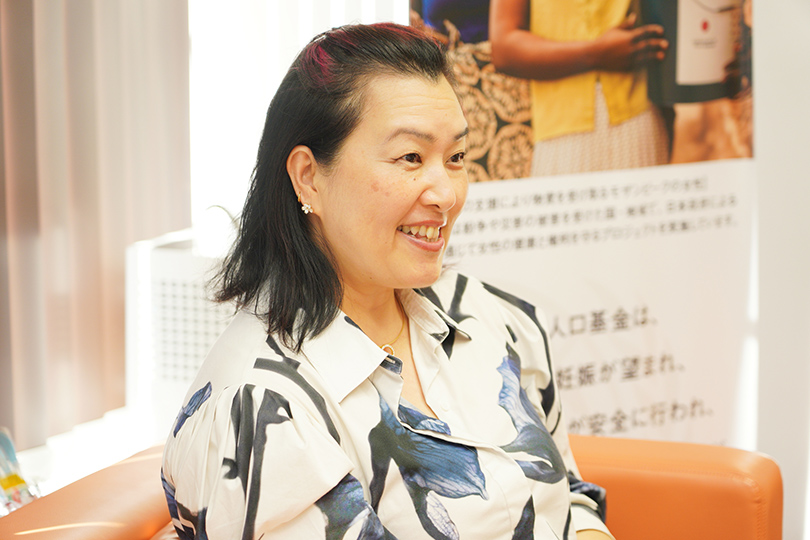
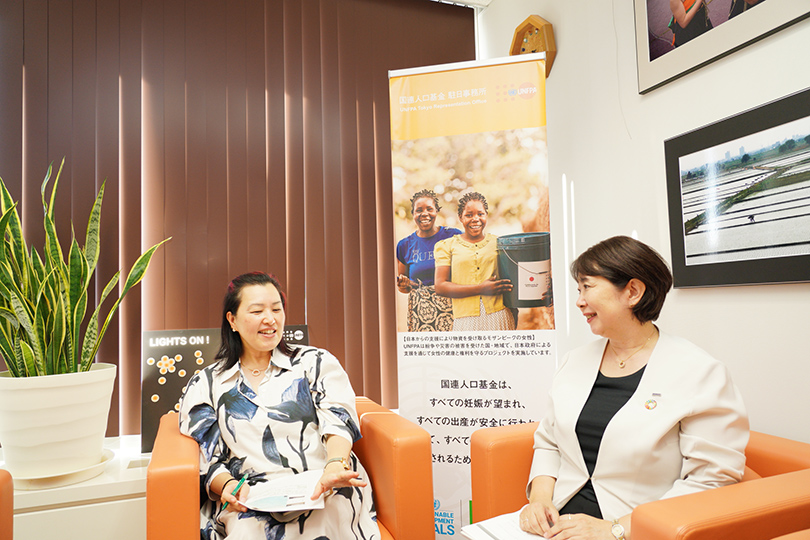
From left: Akiyo Doumoto (Panasonic) and Eiko Narita (UNFPA)
The United Nations Population Fund (UNFPA) is the United Nations sexual and reproductive health Agency. UNFPA’s mission is to deliver the world where every pregnancy is wanted, every childbirth is safe, and every young person’s potential is fulfilled. Since 2022, Panasonic has partnered with UNFPA to deliver solar lanterns to off-grid communities in Africa and Asia. What impact has this collaboration brought about so far?
In this special dialogue, UNFPA’s Eiko Narita and Panasonic’s Akiyo Doumoto discuss how light is changing lives and lighting the way forward.
United Nations Population Fund (UNFPA)
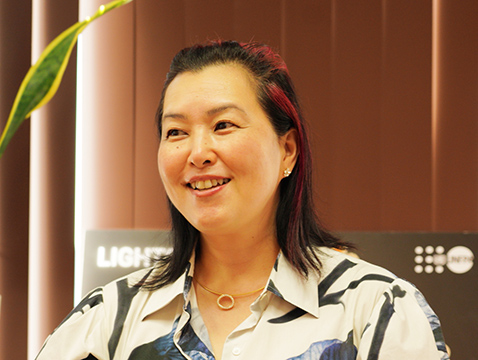
Eiko Narita, Chief, UNFPA Tokyo Office
Panasonic Holdings Corporation
Akiyo Doumoto, General Manager,
Corporate Citizenship office
A Changing World: Addressing Mounting Global Challenges through Stronger Support
— UNFPA’s activities cover a wide range of areas. Could you share some of the current challenges you face?
Narita: UNFPA is facing many challenges today, and it’s difficult to list them all. However, in the past three to five years, one of the biggest issues has been the drastic shifts in political landscapes around the world. Also, there are an increased number of humanitarian crises which make it increasingly difficult to secure adequate humanitarian funding to provide timely response in these regions. Beyond the financial aspect, the withdrawal of support from major donor countries has a ripple effect, as it can negatively impact the safety and security of staff and beneficiaries all together.
At the same time, the number of countries in need of assistance continues to rise. Even though maternal mortality has declined 40% between 2000 - 2023, progress stagnated since 2016.
During crises, many people are being forced to leave their homes, becoming refugees, and finding themselves in worsening circumstances. This vicious cycle is a major concern.
— Amid these circumstances, UNFPA has launched the “Don’t Let the Lights Go Out” campaign. Could you tell us more about it?
Narita: The phrase “Don’t Let the Lights Go Out” carries the message, “Don’t let the light of hope fade.” This campaign calls for urgent support for ten severely underfunded countries—Cameroon, Chad, the Democratic Republic of the Congo, Haiti, Mozambique, Myanmar, Somalia, South Sudan, Sudan, and Venezuela.
While global media attention often centers on high-profile conflicts, these ten countries receive far less visibility. Of course, addressing major conflicts is important, but we also want the world to remember the importance of steady, ongoing humanitarian aid.
Panasonic has long been conducting its LIGHT UP THE FUTURE project, providing solar lanterns to off-grid areas. When we launched “Don’t Let the Lights Go Out,” it felt serendipitous that both our initiatives share the same key word—light. This overlap has deepened the connection between our efforts.
Doumoto: The LIGHT UP THE FUTURE initiative began in 2013 under the philosophy of Panasonic’s founder, Konosuke Matsushita, who believed that “eliminating poverty from the world is a mission for business.” Through partnerships with NGOs, NPOs, and international organizations, we’ve been delivering solar lanterns to off-grid areas.
Through these efforts, we’ve witnessed the serious challenges people face due to the lack of electricity—limited access to healthcare, restricted opportunities for study or work at night, and heightened risks for women and children traveling after dark. We realized that light isn’t just about convenience; it’s a lifeline.
While we can deliver lanterns as a manufacturer, ensuring that they truly create lasting change for communities often feels like a challenge that goes beyond what a single company can achieve.
Narita: Early in my UN career, I was stationed in a country where power outages were frequent, even in areas near the capital. Each time the lights went out, I would hear the disturbing sounds of domestic violence echoing through the darkness. It was terrifying. I remember thinking that if there had only been light, such tragedies might have been prevented.
We often take it for granted that our nights are illuminated, but many communities around the world still live without light. Light can save women and children in ways we may not imagine. The solar lanterns provided by Panasonic hold profound meaning for these communities.
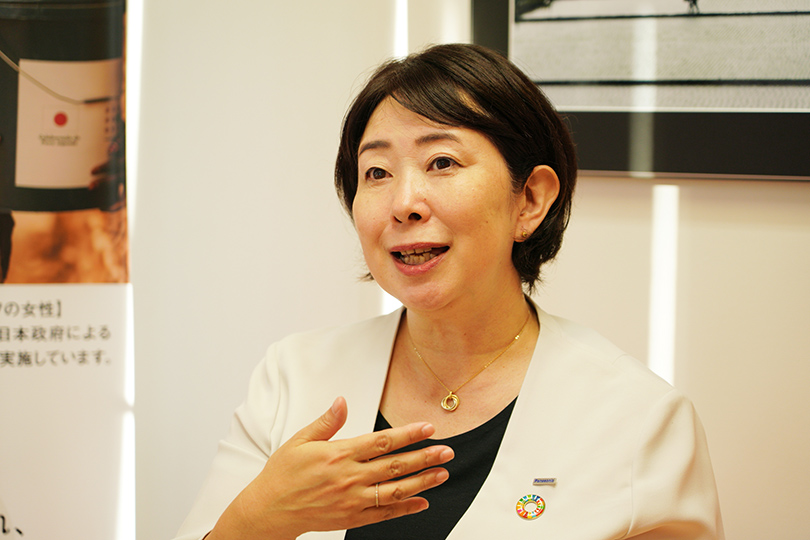
Doumoto: Hearing how our activities directly support local people, and receiving detailed reports on the positive changes brought by these lanterns, gives immense value to our collaboration with UNFPA. We are deeply grateful.
Lighting the Way Forward
Through this partnership, Panasonic has delivered solar lanterns to South Sudan, Kenya, and Afghanistan.
In a camp for internally displaced persons in Juba, South Sudan, the lack of light made it dangerous for women to go to the toilet or step outside at night. In Kenya, the lanterns have helped girls continue their studies after dark. Continued education empowers girls, helping prevent early and forced marriages and unwanted pregnancies, and contributes to better health outcomes.
In Afghanistan, the lanterns support Family Health Houses—community health clinics that now allow women to safely receive treatment and give birth even at night.
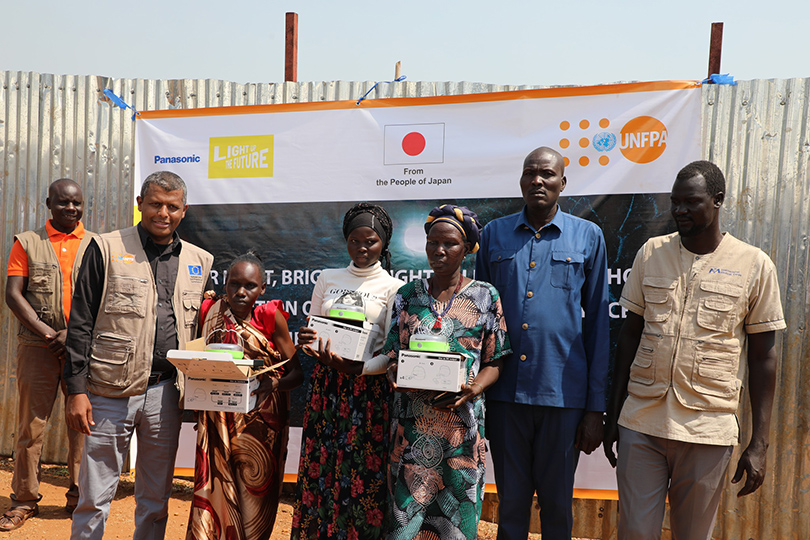
(Photo: UNFPA South Sudan Country Office)
Solar lanterns delivered to South Sudan.
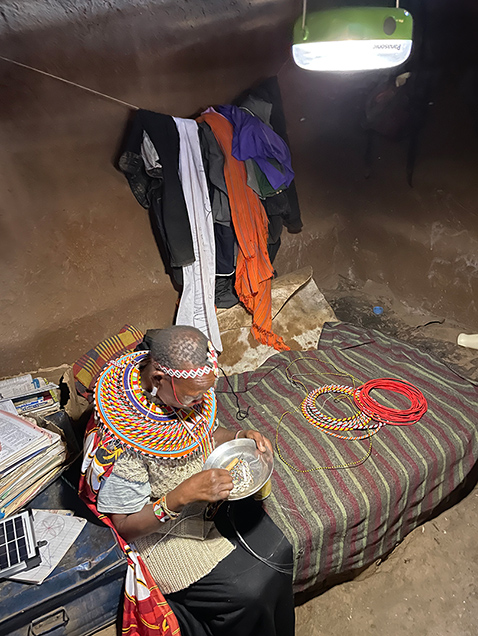
(Photo: UNFPA Kenya Country Office)
In Kenya, solar lanterns enable women to continue their handicraft work at night, increasing income through the sale of their creations.
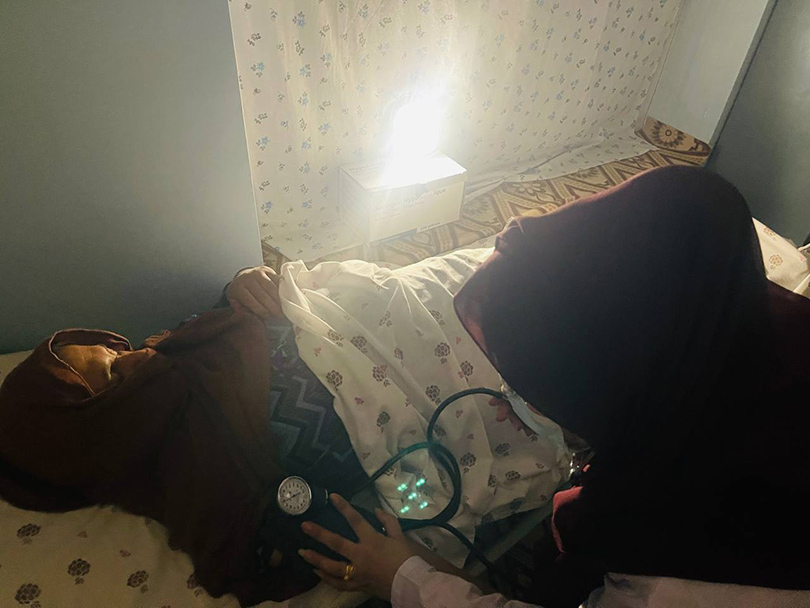
(Photo: UNFPA Afghanistan Country Office)
At Family Health Houses in Afghanistan, women can now safely give birth under the light of solar lanterns.
Reports from UNFPA offices in Kenya (left) and South Sudan (right) detail the outcomes of the LIGHT UP THE FUTURE project.
In 2022, Panasonic donated 2,045 lanterns to West Pokot and Samburu counties in Kenya, enabling adolescents to access quality, inclusive education. Women artisans also improved production and sales of high-quality beadwork.
In 2024, an additional 1,000 lanterns were delivered to West Pokot and Turkana counties. Reports showed a reduction in gender-based violence (GBV) and improved safety for adolescent girls, young women, and boys.
These results demonstrate that LIGHT UP THE FUTURE, in collaboration with UNFPA, has made tangible impacts on the ground.
Narita: Around the world, child marriage remains a problem around the world. Walking outside after dark can be dangerous, not only because of the terrain but also due to the risks of abduction or violence, particularly for women and children. In many places, even healthcare facilities are hundreds of kilometers away. Traveling at night for treatment can be life-threatening. Providing light in such areas makes a tremendous difference in daily life.
Light extends working hours, increases income, and enables parents to invest in their children’s education. Over time, it may help reduce practices like marrying off young daughters for financial reasons.
Doumoto: We greatly value our partnership with UNFPA, as their reliable on-site management ensures that each donation is used effectively. The cost of materials for solar lanterns has risen in recent years, but we are committed to delivering them efficiently and ensuring they reach the people who need them most. We sincerely hope these lights will continue reducing the risks faced by local communities.
Delivering Hope in the Dark
Narita: For people living in refugee camps, receiving solar lanterns from Panasonic is something truly special—far beyond what they could imagine. In my experience working in the field, when we tell communities that things have been donated by a Japanese company, their faces light up with pride and joy.
Hence a product from a leading Japanese company, Panasonic can give people more than just a light, it gives them courage, dignity, and motivation. We’ve witnessed the powerful impact of that many times.
I believe that light is simple tool that brings much hope and safety to people. It’s also symbolic of how the world needs light more than ever and it can spark greater awareness of the importance of humanitarian support worldwide. Panasonic’s LIGHT UP THE FUTURE project perfectly aligns with our Don’t Let the Lights Go Out initiative, illuminating the paths of women and children toward a brighter future.
Doumoto: Through this partnership, we’ve learned so much. It has strengthened our desire to continue supporting communities in meaningful, sustainable ways. In many ways, we’ve also been inspired and encouraged by their resilience. Thank you.
LIGHT UP THE FUTURE related Projects