

R&D Outlook
In order to achieve “an ideal society with affluence both in matter and mind”, the Panasonic Group aims to contribute to solving global environmental issues, which I consider to be our pressing and most important issue, and aims to contribute to the health, safety, and comfort of each and every customer throughout their lives.
In R&D, we have specified eight core technologies as a source of competitiveness from the areas of focus on the environment, lifestyle, as well as the common software platform that serves as a dam for technologies across the Group, and we are enhancing of the technologies through collaboration across the Group. Here are some of the initiatives by core technology.

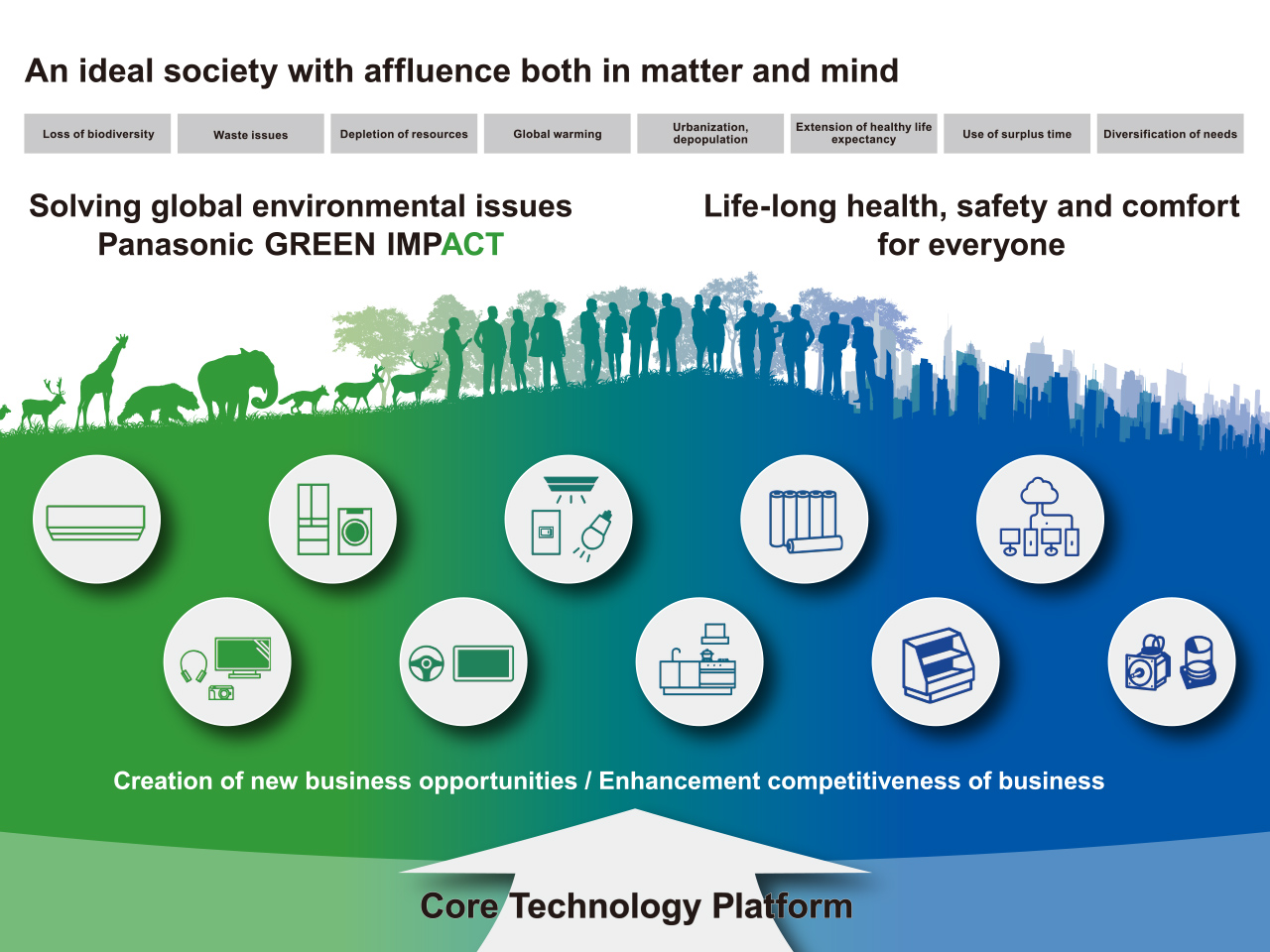
The Panasonic Group’s Technological Focus Areas
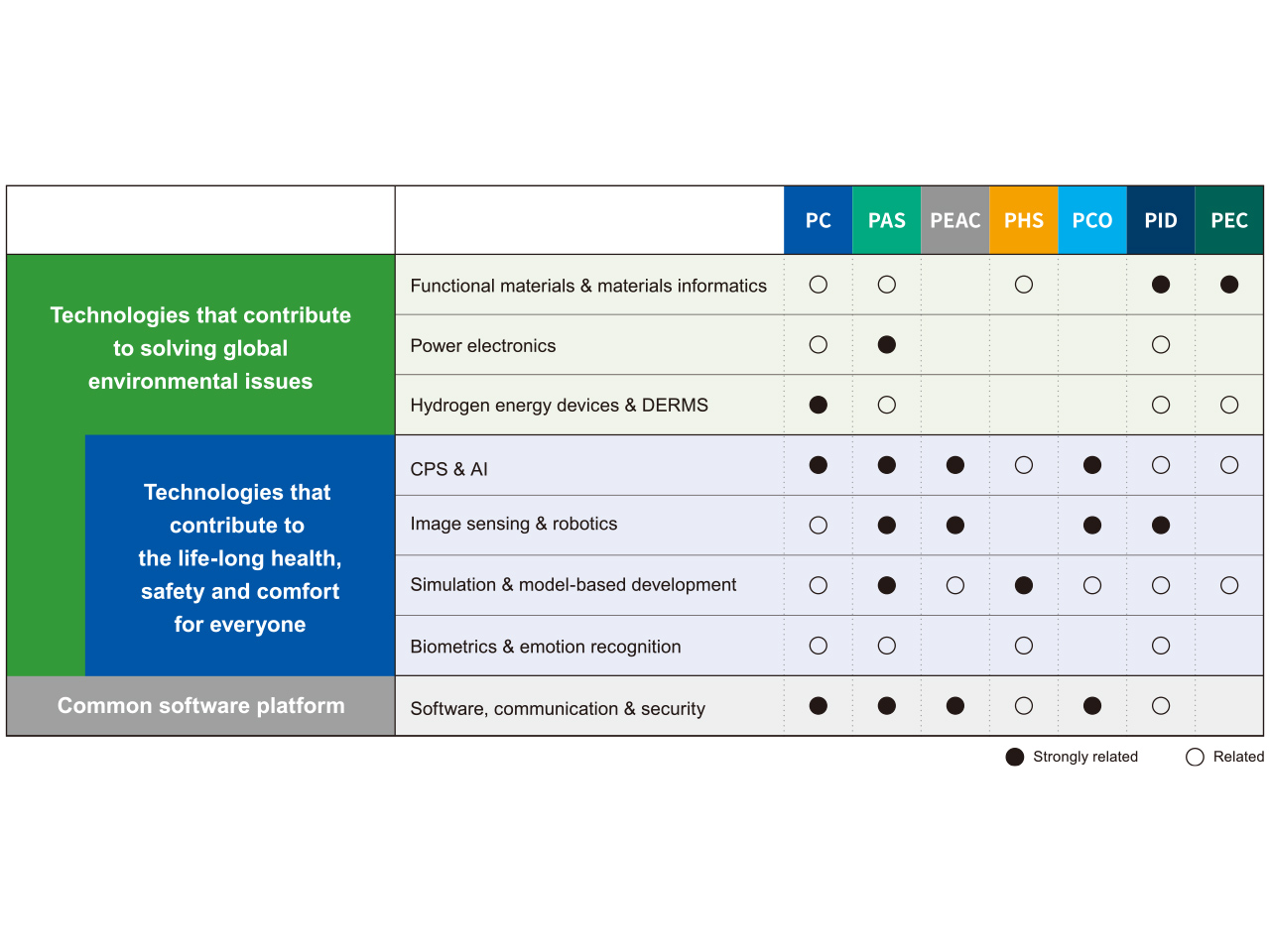
Core Technology Platform
Initiatives for Each Core Technology
01 Solving Global Environmental Issues
Perovskite Photovoltaic Glass
- Solar cells that can be installed even in places where conventional models would be unacceptable, such as on the windows of buildings, and are thus harmonious with community and daily life
- Achievement of an industry-leading 18.1% energy conversion efficiency in a practical-size perovskite solar cell module for building applications, while ensuring high reliability.
- Large cells that provide flexibility in size with high energy conversion efficiency due to the adoption of unique inkjet coating technology and materials technology


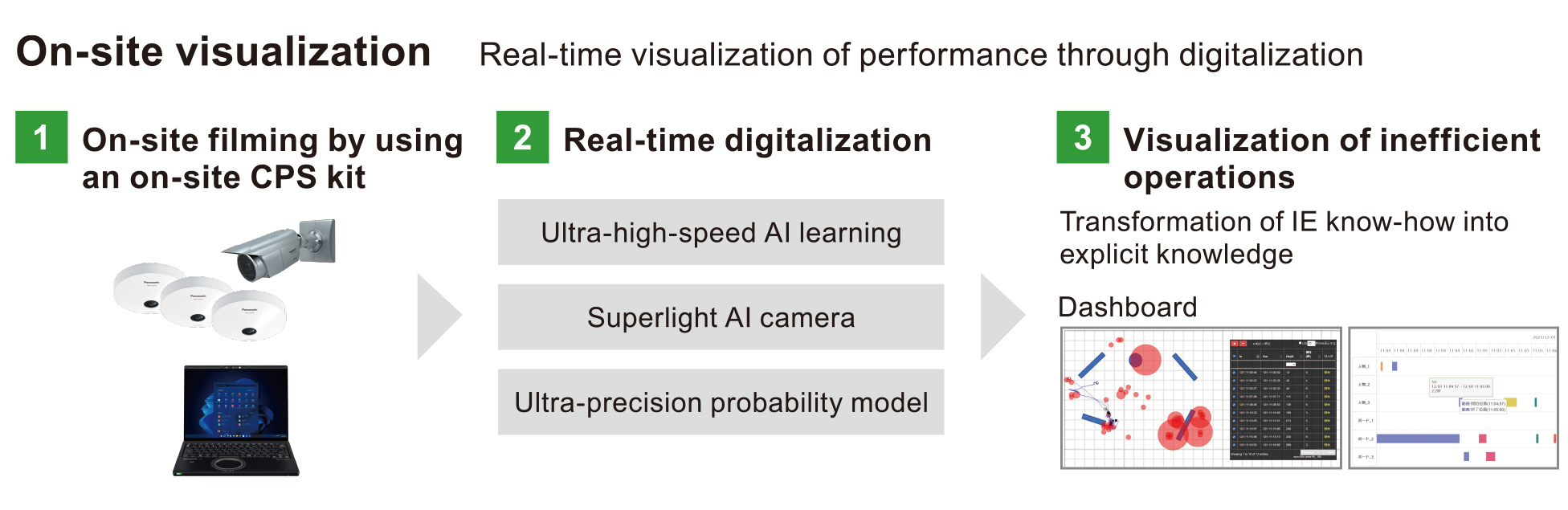
On-site Cyber-Physical System (CPS)
- On-site optimization: Simulation to minimize CO2 emissions and maximize profit
- On-site visualization: Automatic observation of the movements of people, things and equipment and automatic identification of bottlenecks
- Total optimization: Operation consulting
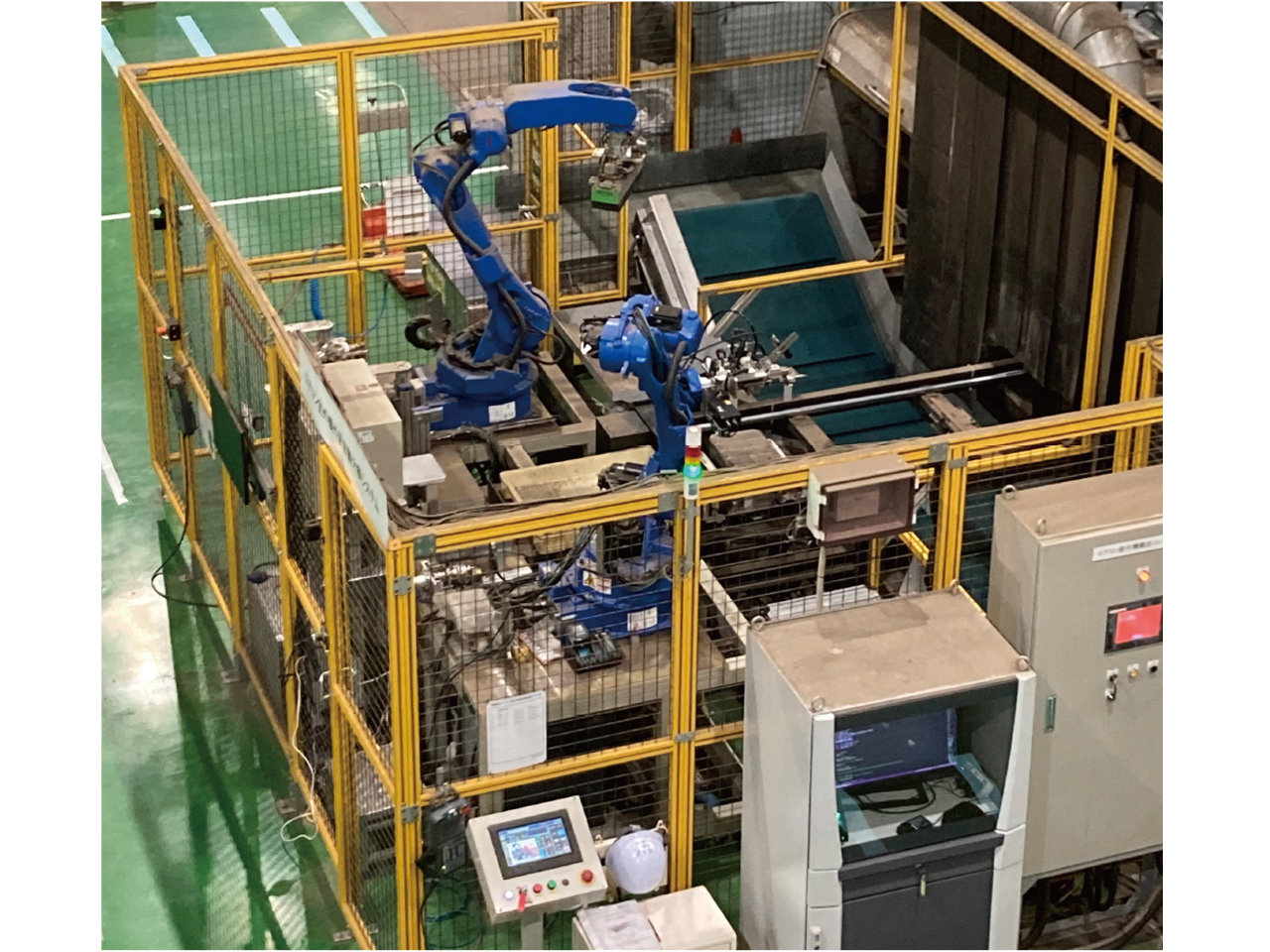
Automating the recycling of home electrical appliances for a circular economy
- Identification and removal of screws even where there is rust or stains
- Careful disassembly of the cover of an outdoor unit by a robot imitating the movements of an experienced worker
- Efficient operation by building a database of the numbers and locations of screws used in various outdoor units
Plant-derived sustainable material: Cellulose-based material
- Lighter and stronger than conventional petroleum-based resin due to the use of cellulose
- Performance on par with that of conventional petroleum-based resin
- Usability of a conventional petroleum-based resin molding machine
- Development under way to make the resin, including binder resin used in it, 100% biodegradable
02 Life-long Health, Safety, and Comfort for Everyone
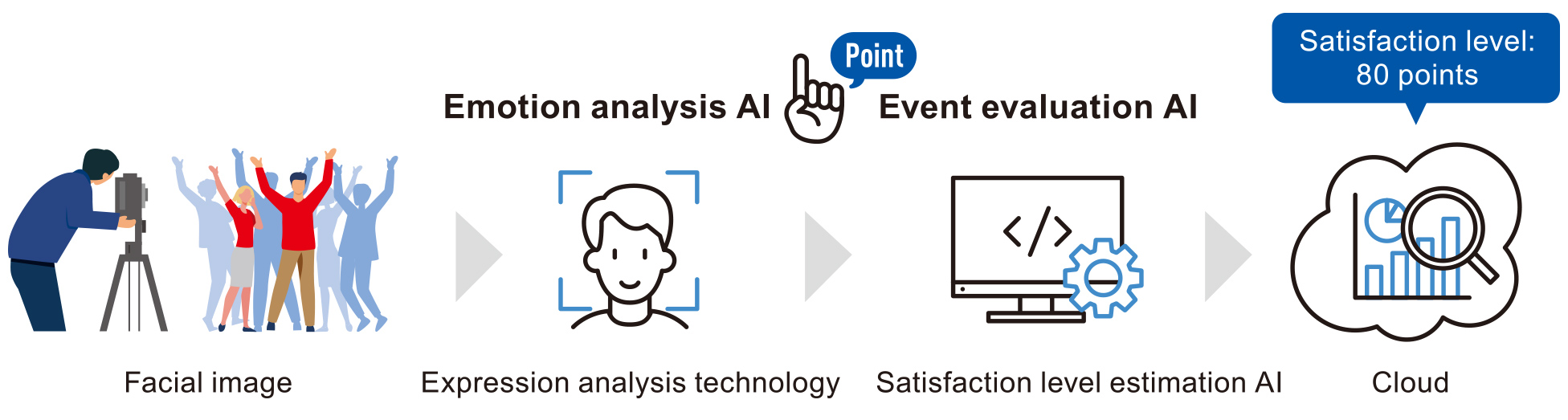
User experience (UX) management through emotion visualization and facial expression analysis
- Quantification of users’ facial expressions for real-time emotion recognition
- No need for questionnaires, as data can be obtained from users’ unconscious responses
Operational support robot-based solution fit for various situations
Creation of a future community where people live in harmony with robots
- Better service continuity based on a remote-control system that enables the operation of four units by one person
- Realization of a running platform that ensures safety and security even in an environment that includes both people and robots
- Support for service introduction and better operation based on risk-conscious simulation

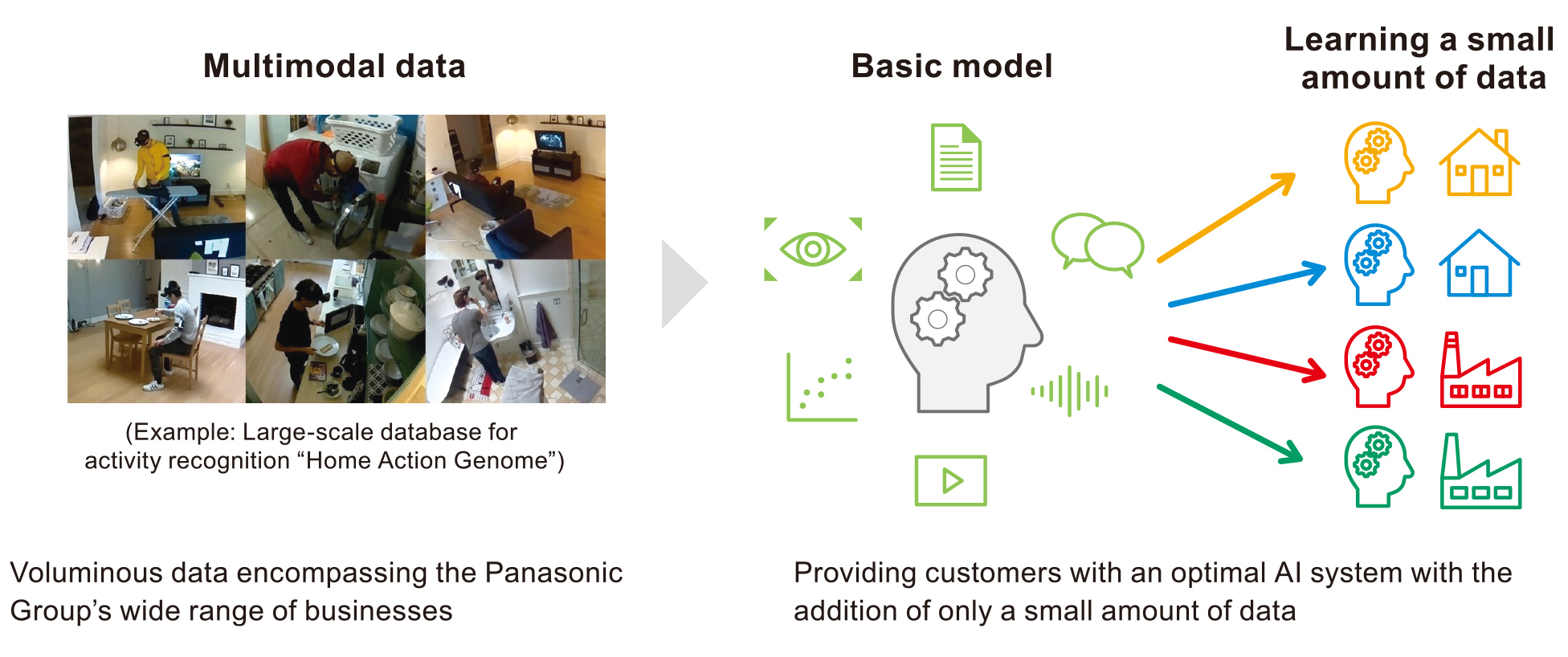
Scalable AI: Prompt delivery to all customers
- Establishment of a “basic generative AI model” as the basis for all learning
- Introduction of an AI system with the addition of a small amount of data and with the development period cut to one-fifth relative to the past
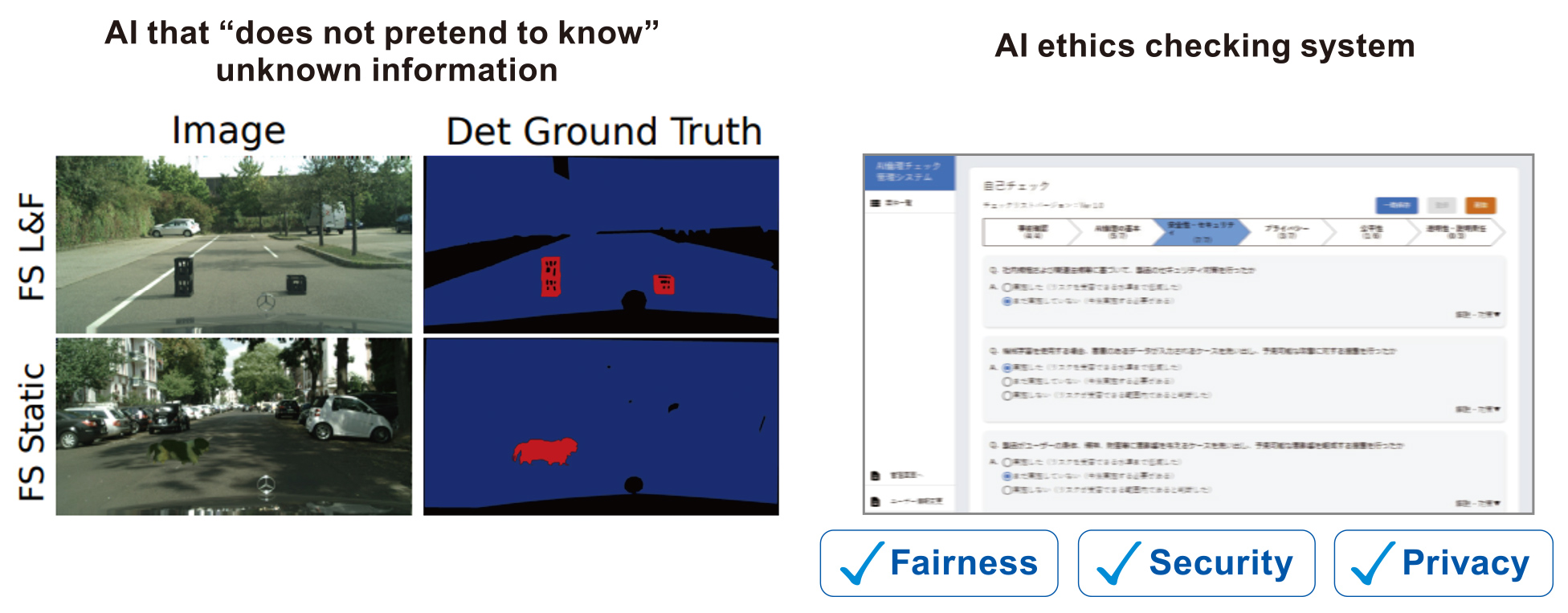
Responsible AI: Proving worthy of all customers’ trust
- Achievement of “Responsible AI” based on reliable technologies
- Enhancement of AI ethics and governance through company-wide education and checking systems
03 Common Software Platform
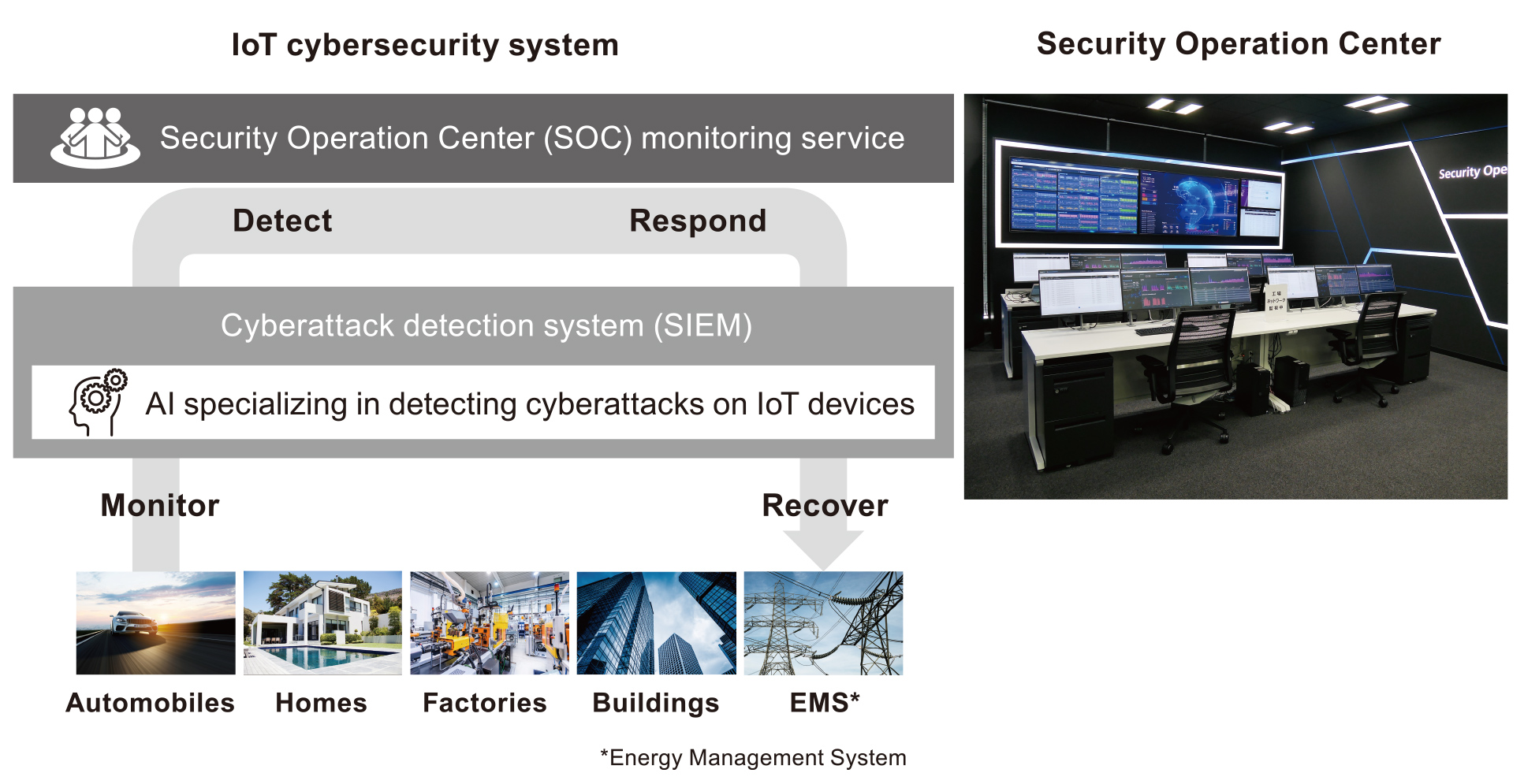
IoT cybersecurity monitoring system
- AI-based cyberattack detection technology that focuses on the control commands and networks of IoT devices
- Cyberattack detection system that visualizes attacks and saves time/labor on related analysis
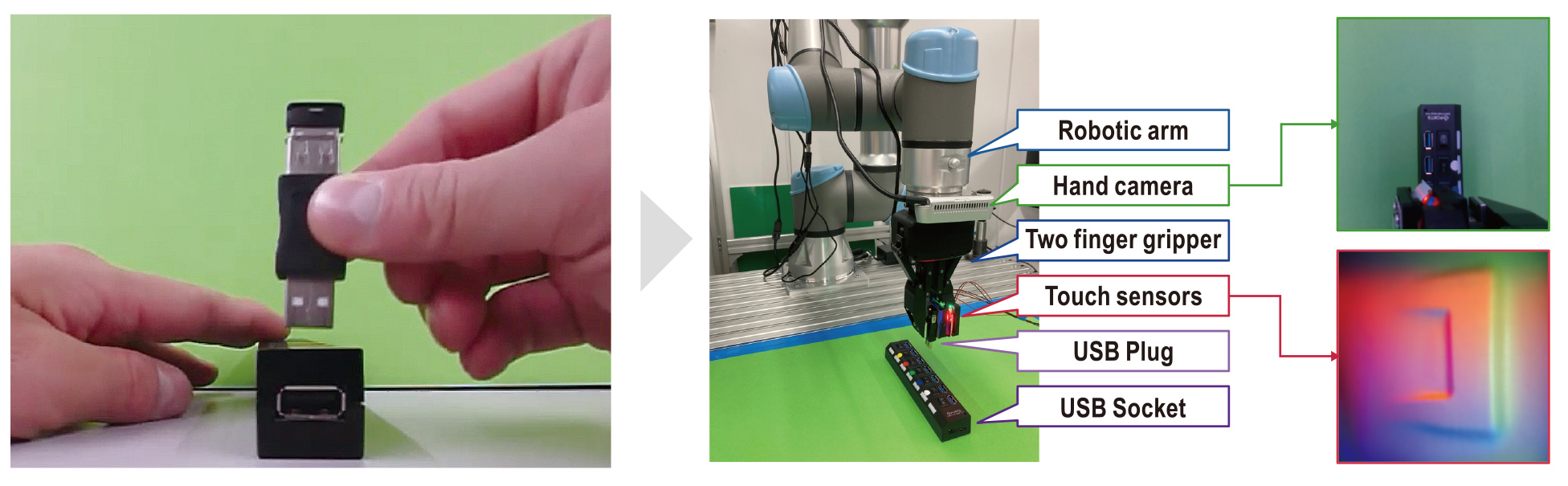
Automating precision work by fusing visual and touch sensors
AI-based reproduction of the advanced visual and touch sensing activities that are conducted unconsciously by humans
- Precise recognition of the socket location by visual sensing
- Recognition of the position of the plug held with the fingertips
- Calculation of the insert position with submillimeter precision
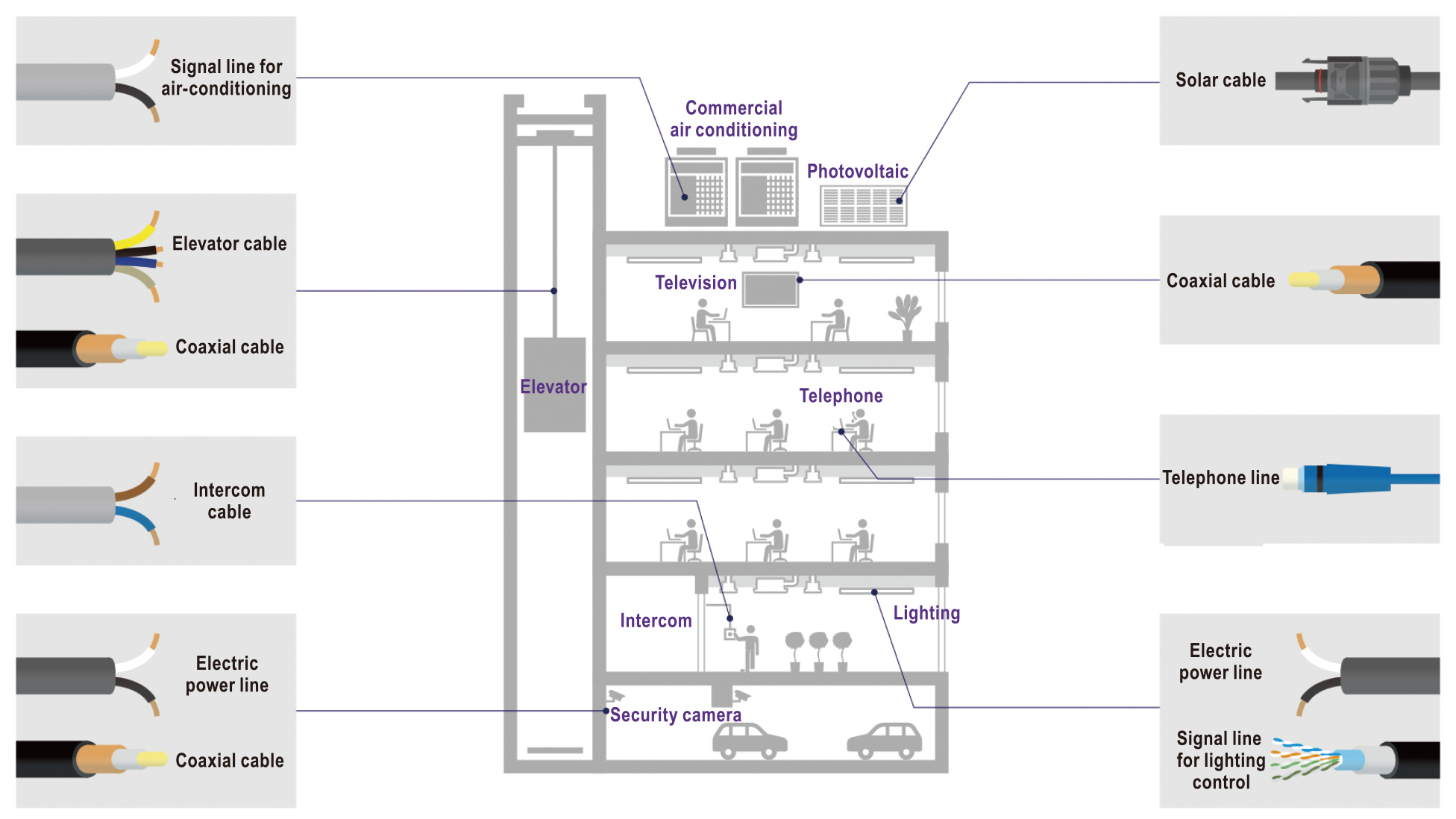
Secure IoT network of several hundred units that can be built without new wiring work
- Easy installation (at a low cost) by the use of existing lines
- Realization of an IP network of several hundred units, which is required for large-scale communication infrastructure for buildings, etc.
- Renovation of existing infrastructure to create a secure and high-speed communication network
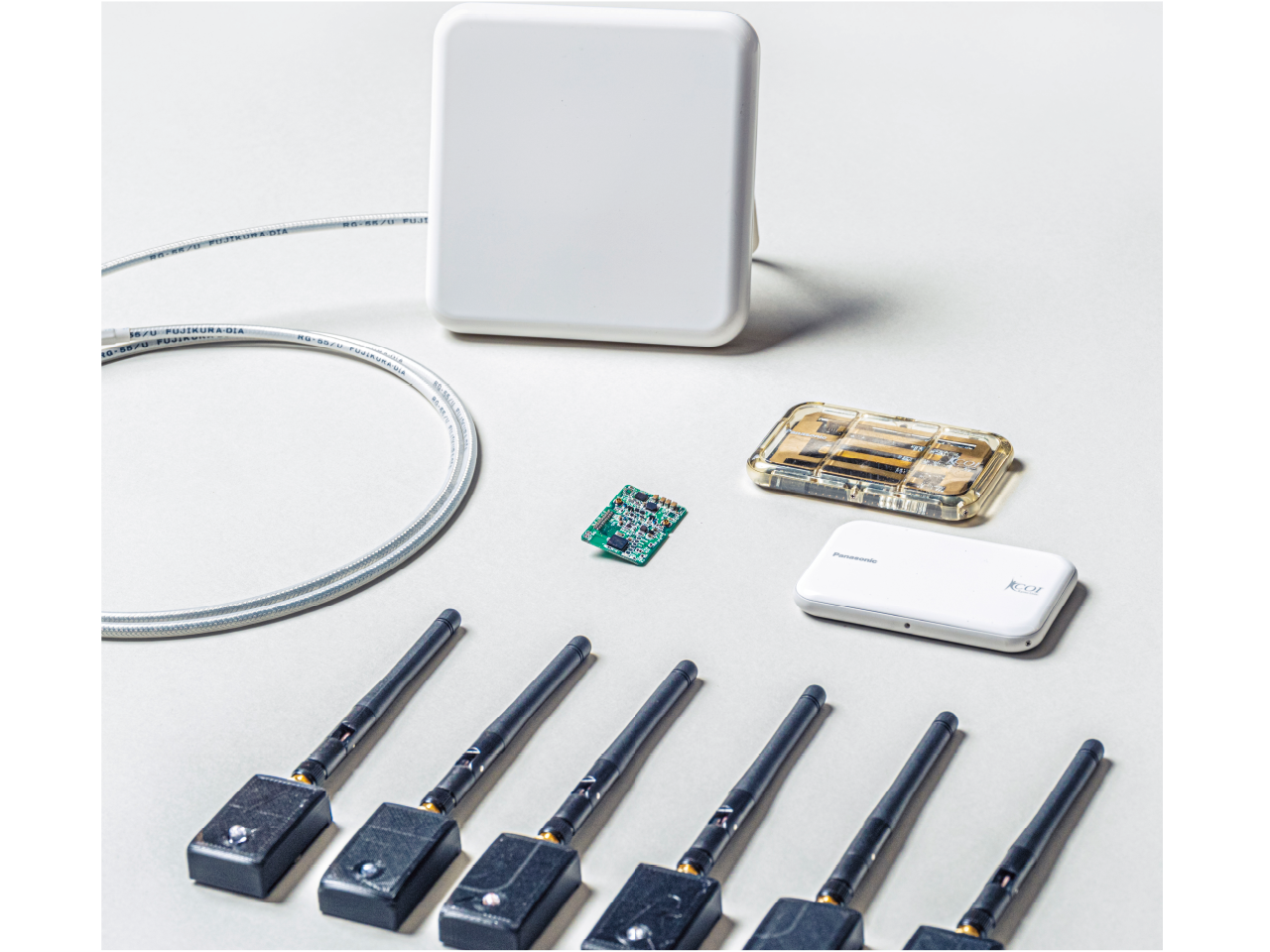
Wireless transmission system that does not require battery replacement or power supply cables
- Long-distance power transmission for the delivery of electricity to places unsuitable for wiring
- Simultaneous power transmission to multiple devices to eliminate the need for battery replacement
- Small footprint for installation even in tight spaces
Related Links